 |
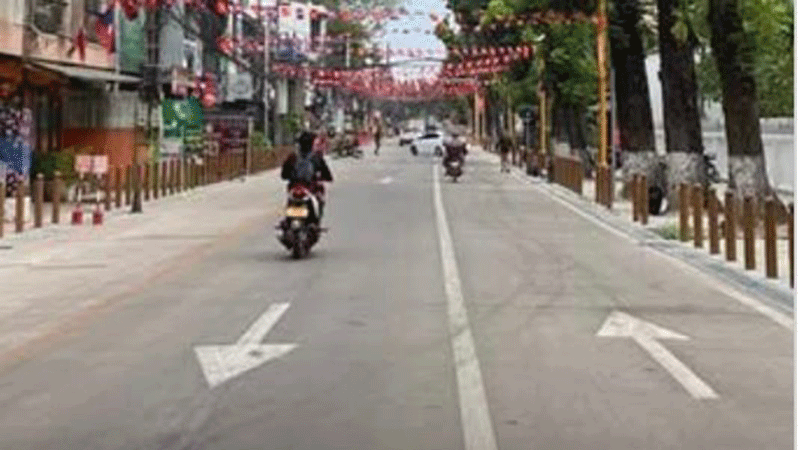
| This road near Ongtue temple in Vientiane will soon change from one-way to two-way, as indicated by the arrows. |
Final checks made ahead of traffic flow changes in city centre
Transport authorities carried out a final inspection on Sunday ahead of changes to traffic flow on seven roads in Vientiane as part of the Vientiane Sustainable Urban Transport Project.
The inspection was led by Deputy Project Manager Mr Souk Vongsa, together with officials from relevant agencies. The team reviewed overall readiness to ensure traffic safety, efficiency, and public awareness before the new system comes into force.
Officials assessed the appropriateness of traffic signs and warning boards, road markings including directional arrows and lane indications, the operation of traffic lights, and the general orderliness and safety of the roads.
While most were found to be ready for the planned change, the team noted that minor adjustments are necessary in some areas, particularly involving directional arrows and warning signage. Authorities said these changes will be made in the near future.
Under the new system, Don Chan Road alongside the Mekong River will become a two-way street instead of one-way as at present. Changes will also take place on Chao Fa Ngum Road, with the details to be clarified in maps.
Nokeokoummane and Manthathourath roads will both become two-way. Mahosot Road will introduce two-way dedicated lanes specifically for BRT buses, while Gallieni Road will also become two-way, with certain turning restrictions applied at designated locations.
Officials said the changes are being introduced to improve traffic flow, reduce congestion, and support the future operation of the Bus Rapid Transit system.
Transport authorities are expected to hold a press conference in the coming days to issue detailed traffic maps and provide comprehensive information to the public before the new system comes into force.
Motorists, particularly those who frequently travel through Chanthabouly and Sisattanak districts, are advised to stay alert for new blue and white BRT signs, which will indicate areas where the new traffic regulations and enforcement zones will apply.
By Times Reporters
(Latest Update January 29, 2026)
|

