 |
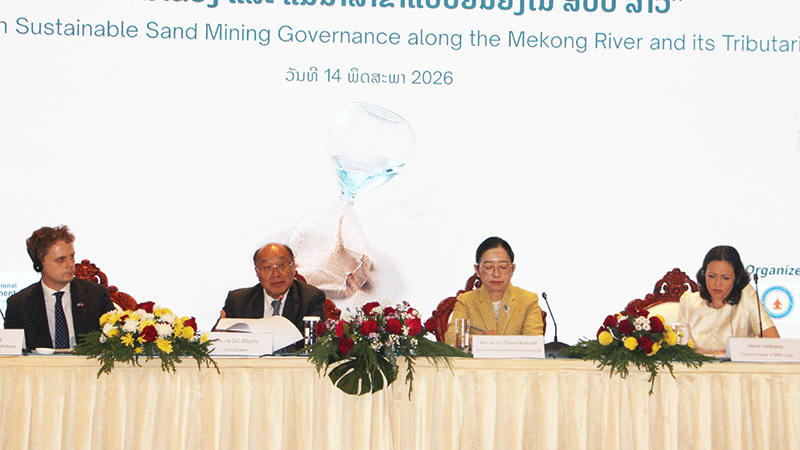
| Dr Leeber Leebuapao (second left), Ms Vilayvone Chanthalaty (second right), Ms Heron Holloway (right) and Mr Louis Mulvaney chair the meeting in Vientiane. |
Laos advances sustainable sand and gravel mining governance
Sand and gravel mining has long been a driver of economic development, providing essential materials for infrastructure such as roads, buildings, and land elevation in flood-prone areas.
However, unsustainable extraction is posing mounting environmental and social risks.
These risks include riverbed lowering, riverbank erosion, degradation of water quality, loss of aquatic habitats and biodiversity, and negative impacts on livelihoods that depend on river resources.
Recognising these challenges, the Lao Academy of Social and Economic Sciences (LASES), in collaboration with the National University of Laos and relevant agencies, has undertaken a comprehensive study with support from WWF-Laos and the Government of the United Kingdom.
The study reviews the legal, institutional, and coordination frameworks governing sand and gravel mining in Laos, aiming to identify gaps and provide evidence-based policy recommendations for sustainable management.
A seminar on sustainable sand mining governance along the Mekong River and its tributaries was convened in Vientiane on Thursday.
The meeting was chaired by the President of LASES, Dr Leeber Leebuapao, Vice Chairman of the Vientiane Administration Committee, Ms Vilayvone Chanthalaty, Head of Cooperation at the UK Embassy to Laos, Mr Louis Mulvaney, and Country Director of WWF-Laos, Ms Heron Holloway.
The seminar highlighted the urgent need for coordinated governance to balance economic benefits with ecological sustainability.
Globally, sand and gravel are the second most-used natural resource after water, with an estimated 50 billion tons extracted in 2022. In the Mekong River Basin, extraction levels are similarly high.
In 2012 alone, approximately 34 million cubic metres (about 55.2 million tons) were removed from the Lower Mekong mainstream. Such figures underscore the scale of demand and the importance of sustainable practices.
The ongoing study seeks to align Laos’s national development priorities with regional sustainability goals, ensuring that sand and gravel mining contributes to economic growth without undermining river ecosystems or community livelihoods.
By strengthening governance frameworks, Laos aims to set a precedent for responsible resource management in the Mekong region.
The study aims to identify gaps and weaknesses and provide evidence-based policy recommendations to strengthen sustainable management aligned with national development priorities and Mekong regional sustainability.
The meeting’s objectives were to gather additional technical and policy input to refine and finalise the study report, inform policymakers and senior officials of the study’s findings, identified gaps, and proposed policy recommendations; and validate the study to support its dissemination through a forthcoming National Policy Dialogue.
The ultimate goal is to improve the quality and relevance of the final study report, raise awareness among policymakers and stakeholders concerning sustainable sand and gravel mining governance, and formal validation of the study findings to support policy dialogue and implementation.
By Times Reporters
(Latest Update May 18, 2026)
|

