 |
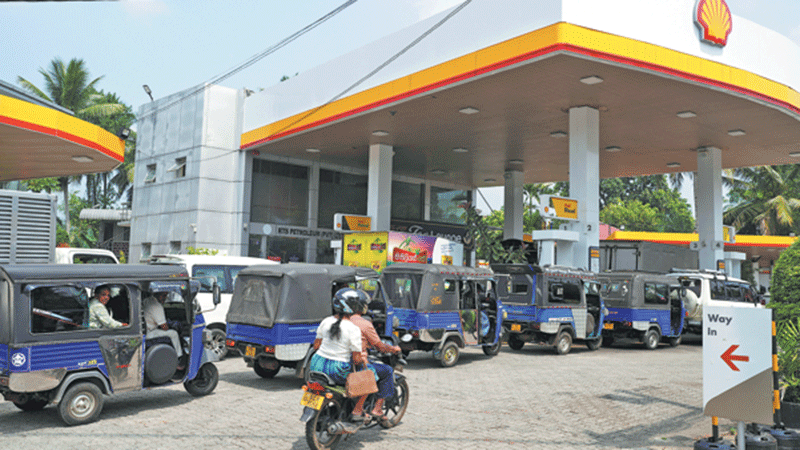
| Vehicles wait in line at a fuel station in Ratnapura, Sri Lanka, as concerns grow over fuel supply following the conflict in the Middle East. |
Asia-Pacific outlook darkens as tensions jolt markets
(China Daily/ANN) -- Escalating tensions in the Middle East are shrouding the economic outlook for the Asia-Pacific amid fears that disruptions to energy supplies could fuel inflation and dampen consumer sentiment, analysts say.
Many Asian economies rely heavily on oil and liquefied natural gas imports from Gulf producers. Concerns have mounted that crude shipments could take a big hit after continued bombardment by the United States and Israel prompted Iran to announce the closure of the strategic Strait of Hormuz.
Iran’s Revolutionary Guards said on Monday that the waterway was “closed” and warned that vessels attempting to pass through it would be attacked, Al Jazeera reported.
Vandana Hari, founder of energy intelligence firm Vanda Insights in Singapore, projected oil prices to hit US$90 per barrel if the strait continues to be blocked.
Benchmark Brent crude was trading at US$81.05 per barrel during Asian hours on Tuesday.
“At that point, the only way to arrest the spike would be to release substantial oil reserves,” Hari told China Daily. A prolonged supply disruption can trigger a price rally that would spike inflation, pressure economic outlook and even lead to stagflation, she said.
Malaysia’s Maybank said in its latest research paper that “war premiums” tend to lift oil prices, though such gains may not be sustained unless tensions persist.
Iran produces about 3 percent of global crude and condensate output, ranking as the third-largest producer within the Organisation of the Petroleum Exporting Countries, Maybank said. In response to the conflict, the OPEC+ group agreed on Sunday to boost oil output, a move that the bank said could help cushion supply disruptions.
Stock markets across Asia plunged on Tuesday, with South Korea’s KOSPI tumbling by more than 7 percent and Japan’s Nikkei ending 3 percent lower.
Manav Modi, a commodity analyst at Motilal Oswal Financial Services in Mumbai, said the energy supply disruption raises the risk of imported inflation through higher crude and freight costs for Asia-Pacific economies. “Higher fuel costs may spill over into food, transport and core inflation, complicating fiscal math ahead of growth-sensitive budgets,” Modi said.
Darren Tay, head of Asia country risk at BMI, a subsidiary of Fitch Ratings, said several Southeast and South Asian countries are among the most vulnerable in the event of a prolonged energy supply shock.
“The most vulnerable Asian economies combine heavy net energy import dependence, current account deficits and weak policy buffers. Pakistan and Sri Lanka sit at the top of the risk stack,” Tay said.
Michael Ricafort, chief economist at Rizal Commercial Banking Corp in Manila, said travel disruptions in the Middle East can deter Filipino workers from moving overseas, potentially dampening remittance inflows.
By Viengdavanh Banphahaksa
(Latest Update March 5, 2026)
|