 |
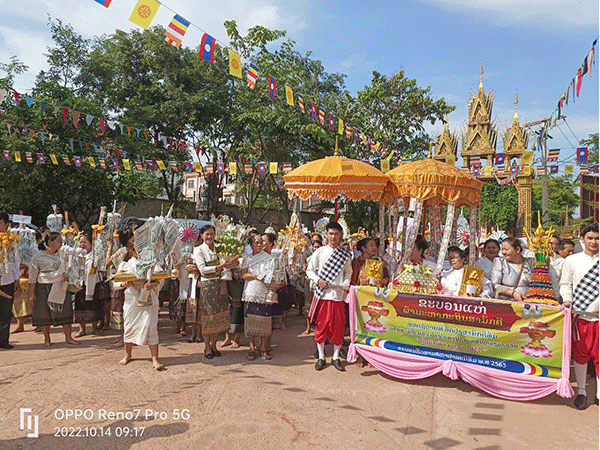
| This procession is known as Kathin Samakky, meaning kathin unity walk, when participants walk clockwise three times around a temple sim before offering new robes to monks. --Photo provided to Vientiane Times |
Boun Kathin: The offering of new robes to monks
Monks throughout the country are free to move from place to place after Buddhist Lent ended earlier this month, and now deserve to receive new robes as their old ones are considered to be worn out.
This necessity is fulfilled by the Boun Kathin festival, when new robes and other gifts are offered to monks and enables laypeople to take part in the highest form of merit-making.
The festival also serves to ensure monks’ wellbeing by providing them with the essentials of everyday temple life.
The origins of this event date back about 2,000 years, when 30 monks living in a town called Patha made robes from discarded fabric and started out on a long journey to see the Buddha. But Lent arrived before they got there and, having another 96km to travel to reach the town of Savatthi, they decided to spend the three-month retreat in Saket district.
When Lent ended, they visited the Buddha at Xetavan temple, but their robes were still wet from the rain that fell during their travels.
The monks suffered because of their mud-stained and rain-soaked robes. When he saw their discomfort, the Buddha arranged for the monks to organise a Boun Kathin.
This ceremony, also known as Thot Kathin, takes place only once a year and involves donors buying robes and laying them reverently in front of monks.
The word “boun” means festival, “thot” means making an offering to a monk, and the word “kathin” is the wooden device used for keeping robes taut while they are being made. In the early days of Buddhism, monks made their own robes.
The method of cutting and sewing was referred to as making kathin fabric and required five monks, with four monks using the wooden implements to hold the robe taut at each corner while it was sewn.
The whole kathin package that is donated to monks today consists of a bed, a mattress, a bamboo mat, a pillow, and a mosquito net, as these are the items that come with the kathin for use by monks in their daily life.
 |
 |
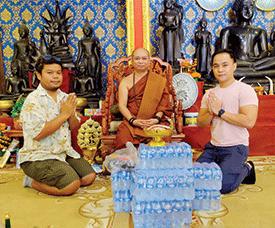
The person who offers a kathin, referred to as the host, can come from any background and may be poor, a person with a disability, or a millionaire, because everyone can be a devotee and make an offering.
When presenting the kathin, the host holds the robe and says the appropriate words as he or she places it in front of the monks and enjoys the satisfaction of making a worthy donation.
These days many people donate kathin cloth because in general people are richer and it’s easy to buy the robes because many shops sell them.
Vientiane resident Mrs Somphone Vongsa said that when people make merit by donating food and drink at a temple, they should not complain if someone takes too much, but should let them eat happily.
“No one complains or gets angry during Boun Kathin because that would be a sin,” she added with a smile.
Everyone wants to sponsor a kathin ceremony once in their lifetime, even though they must bear all of the expenses.
But it involves a lot of time, effort and money, and the chance to be the sole sponsor of a kathin may not be possible at some of the main temples.
Nevertheless, those who are unable to be the sole sponsor of a kathin can still take part in the ceremony which, in this situation, is called Kathin Samakky, meaning kathin unity. This means that the people of that village jointly sponsor the event.
The celebration of Boun Kathin across the country is yet another reflection of people’s enthusiasm about preserving Laos’ traditions and sustaining Buddhist rituals.
By Khonesavanh Latsaphao
(Latest Update October 27, 2022)
|

