 |
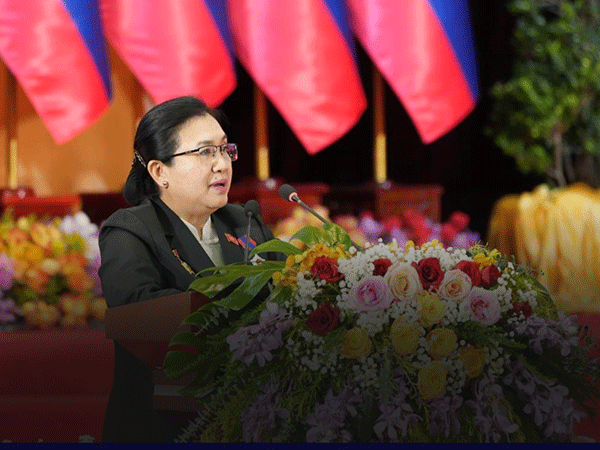
Deputy Minister of Education and Sports Dr Dalavone Kittiphan speaks at the 12th Party Congress on Tuesday. |
Education ministry vows to build a better-qualified workforce
The Ministry of Education and Sports has reaffirmed its intention to train up young people so they are better equipped to contribute to national development and meet the needs of today’s job market.
Speaking at the 12th National Congress of the Lao People’s Revolutionary Party on Tuesday, Deputy Minister of Education and Sports Dr Dalavone Kittiphan highlighted education as a central pillar in advancing Laos’ socio-economic progress.
Dr Dalavone said a well trained and highly qualified workforce was essential for the nation’s development, regional integration, and international competitiveness.
The Ministry of Education and Sports is committed to the development of science and technology as the key to raising the standard of education and modernising education programmes at all levels so they are relevant to modern-day development needs, she added.
The ministry will continue to invest in building standardised and modern educational infrastructure and facilities across the country.
Dr Dalavone said the ministry will focus not only on expanding access to education, but also on improving its quality and relevance.
This includes upgrading classrooms, laboratories, libraries, and digital learning facilities to ensure they meet modern standards and support effective teaching and learning.
Special attention will be given to ensuring equitable access to schools and training centres in both urban and rural areas.
Dr Dalavone said investment in educational facilities will go hand in hand with curriculum reform, teacher development, and the use of modern technology in education.
By creating a supportive and well-equipped learning environment, students will have a broader range of knowledge, skills, and values needed to contribute meaningfully to national development.
The school grade structure will be improved by replacing the existing 5+4+3 class year system with a 6+3+3 arrangement, meaning that primary education will comprise six years and the lower secondary level will be reduced to three years, bringing schools more in line with regional and global education systems.
At the same time, lessons will continue to focus on the nation’s history, customs and culture. Schools will also integrate more closely with those in other countries and incorporate new ideas to help spur the nation’s development.
The ministry will also promote research and the widespread use of artificial intelligence (AI).
Dr Dalavone stressed that education must respond to the country’s evolving labour market needs.
Improved technical and vocational education, higher education, and lifelong learning systems will help produce skilled workers, professionals, and innovators who can drive economic growth, industrialisation, and sustainable development, she said.
The ministry also reaffirmed its determination to implement the resolutions adopted by the 12th Party Congress.
In conclusion, through continued state investment and coordinated efforts with relevant sectors, the ministry aims to build a modern education system that produces competent and capable graduates and supports the country’s long-term vision for prosperity and development, Dr Dalavone said.
By Times Reporters
(Latest Update January 8, 2026)
|

