 |
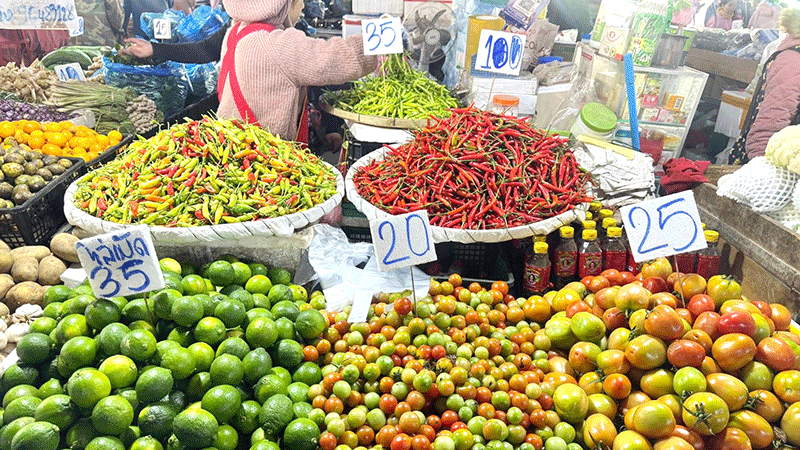
| The price of vegetables and other agricultural produce at several main markets in Vientiane has remained relatively stable compared to the overall inflation rate. --Photo Lao-Aussie Fresh Market |
BOL sets 2026 priorities as inflation falls and stability improves
The Bank of the Lao PDR (BOL) has set inflation control, adequate foreign reserves, institutional strength and modern payment systems as its key priorities for 2026, following a year in which inflation declined sharply and overall monetary and financial stability improved.
The policy direction was reaffirmed during the BOL’s first Board of Directors meeting of 2026, held on Wednesday, which reviewed the central bank’s performance in 2025 and outlined strategic actions for the year ahead.
The meeting was chaired by the Governor of the Bank of the Lao PDR and Chairperson of the Board, Mrs Bounkham Vorachit, and attended by the Vice Chairperson, board members, Deputy Governors and representatives of relevant BOL departments.
During the meeting, the Board assessed the implementation of resolutions made at the previous session and noted that the Bank had carried out its mandate with a high sense of responsibility, achieving encouraging results in maintaining macroeconomic and financial stability.
The Board reported that average inflation declined to 7.7 percent in 2025, down sharply from 23.13 percent in 2024, reflecting improved price stability. On a year-end basis, inflation fell from 16.9 percent in December 2024 to 5.6 percent in December 2025. Currency exchange rates remained broadly stable throughout the year.
External resilience strengthened, with international reserves rising to a level sufficient to cover 6.45 months of imports. Monetary conditions also showed positive developments, as the M2 money supply expanded by 18.72 percent year-on-year.
The financial system continued to demonstrate stability, supported by sound asset quality. The non-performing loan ratio stood at 1.18 percent, while most commercial banks and non-bank financial institutions complied with regulations issued by the central bank.
Progress was also recorded in payment system development. The BOL launched cross-currency payment services to support trade and investment and successfully linked cross-border retail payment systems with Thailand, Vietnam, Cambodia and China.
Several pieces of legislation were drafted and refined to strengthen financial sector governance.
In international cooperation, the BOL worked closely with the International Monetary Fund on the 2025 macroeconomic assessment and collaborated with Vietnamese experts under Taskforce 132/PM to address macroeconomic challenges.
Despite recent positive developments, the BOL said maintaining monetary stability remains challenging due to high external debt obligations and structural vulnerabilities in the domestic economy.
Bank Governor Mrs Bounkham Vorachit called on officials and Party members to perform their duties with responsibility, discipline, and resourcefulness.
She reaffirmed the BOL’s four priorities for 2026: keeping inflation within the government’s target, ensuring sufficient international reserves to cover imports, strengthening the resilience and sustainability of financial institutions, and developing payment systems that are secure, modern and well-integrated at the regional and international levels.
These priorities are in line with the government’s broader policy direction, which emphasises managing inflation and exchange rates to ensure stability, strengthening the value of the kip, and expanding the use of local currencies in payments for goods and services with neighbouring countries and bilateral trading partners.
By Times Reporters
(Latest Update January 16, 2026)
|

