 |
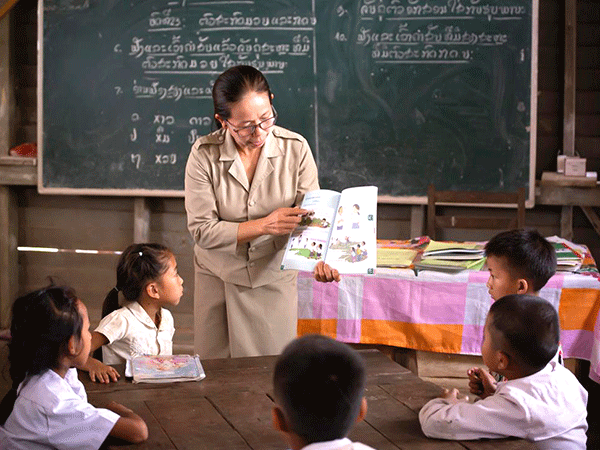
| A teacher explains a lesson to her young pupils. --Photo BEQUAL programme |
More than 4,000 volunteer teachers recruited as civil servants in 2025
More than 4,000 volunteer teachers were assigned civil servant status in 2025 as part of the government’s ongoing efforts to ease the country’s chronic teacher shortage.
Minister of Education and Sports, Associate Professor Dr Thongsalith Mangnomek, cited the figure while attending a government meeting on January 12.
He said the change in status, meaning this group is officially recognised as teachers rather than volunteers in the profession, strengthens the national education system and ensures more equitable access to quality education across the country.
For many years, several provinces have faced a persistent shortage of qualified teachers, particularly in rural and remote areas.
Thousands of volunteer teachers have been serving in schools with limited job security, low income, and minimal benefits.
Teachers face numerous problems, mainly family and financial difficulties, driven by the spiralling cost of living, which have a direct impact on their performance, including time spent in the classroom.
However, in the 2024-2025 academic year, changes were made to improve the education system and raise standards.
Dr Thongsalith said the decision to accept 4,234 volunteer teachers into the civil service was intended to address these long-standing challenges while also improving teacher morale, stability, and professionalism.
In support of this, the ministry has implemented the Decree on Teacher Civil Servants.
A revised salary and allowance structure for teacher civil servants has been finalised by the Ministry of Finance and will be rolled out later this month.
In other areas, the education and sports sector has made improvements to early childhood education, general education, vocational education, and higher education, all aimed at raising standards in these fields.
Guidelines have been compiled and updated in relation to primary school preparatory classes, community-based child development groups, and primary preparatory class monitoring e
Also in the 2024-2025 school year, new curriculums were developed in various fields of vocational education, including electrical equipment repair and installation, agricultural product processing, electric motorcycle repair, cooking, and basic computer training.
The school grade structure will be improved by replacing the existing 5+4+3 class year system with a 6+3+3 arrangement, meaning that primary education will comprise six years and the lower secondary level will be reduced to three years, bringing schools more in line with regional and global education systems.
Education officials have also upgraded teacher training institutions in the central, northern and southern regions of Laos, and taken steps to ensure ethnic boarding schools are more inclusive and of higher quality.
Investment has also been made in building standardised and educational infrastructure and facilities in rural areas.
By Times Reporters
(Latest Update January 20, 2026)
|

