 |
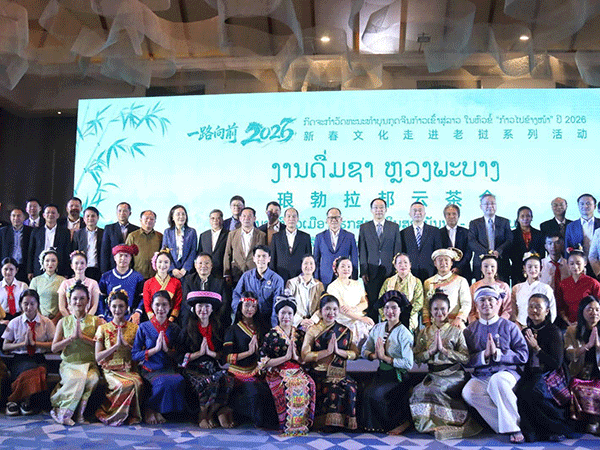
Deputy Head of the Propaganda and Training Committee of the Party Central Committee, Mr Khammone Chanthachith, other senior Lao and Chinese officials and performers attend the event in Luang Prabang City on Wednesday.
|
Laos-China media ties take centre stage at Lunar New Year event
Luang Prabang City: An event titled “Chinese Lunar New Year Enters Laos” under the theme “Moving Forward 2026”, together with the Luang Prabang Tea Drinking Ceremony and the announcement of the Top 10 news highlights of Mekong-Lancang Cooperation for 2025 took place here on Wednesday evening.
The event brought together representatives from Lao and Chinese institutions to celebrate their close links, particularly in the fields of media, communication, and people-to-people ties.
Those in attendance included the Deputy Head of the Propaganda and Training Committee of the Party Central Committee and Standing Vice Chairman of the Party Central Committee Theory Council, Dr Khammone Chanthachith; Deputy Director of the China Foreign Languages Publishing Administration, Mr Yu Yuquan; and Deputy Secretary of the Luang Prabang Party Committee, Mr Khamla Lienpadith.
The Counsellor of the Department of Asian Affairs of China’s Ministry of Foreign Affairs, Mr Wang Dexin, also took part in the event via video link.
Addressing the gathering, Dr Khammone said relations between Laos and China continue to grow, evolving from longstanding ties characterised by good neighbourliness, mutual trust, long-term stability and comprehensive cooperation, to a Comprehensive Strategic Partnership for long-term stability guided by the “Four Goods” principle.
He explained that the “Four Goods” concept reflects the two countries’ desire to be good neighbours, good friends, good comrades and good partners, providing a strong foundation for long-term cooperation.
He noted that media cooperation has become an important foundation in building the Laos-China Community with a Shared Future. In recent years, Lao and Chinese media organisations at all levels have established close, practical and efficient partnerships, significantly enhancing the professional skills and technical capacity of Lao media personnel.
Dr Khammone highlighted milestones in cooperation between Lao media outlets and Yunnan provincial media, including cultural exchange activities under the theme “Same River, Harmonious as One Family”, as well as media forums held within the framework of the Belt and Road Initiative.
He also pointed to joint reporting initiatives, with Champa Magazine and official outlets such as Pasaxon newspaper collaborating on reporting that reflects shared development goals and cooperation outcomes.
Inclusive media initiatives were also highlighted, notably the launch of sign language news programmes for the hearing impaired in Laos through cooperation between Lao National Television, the Yunnan South Asia & Southeast Asia Regional International Communication Centre, and the China Southern Power Grid (Mekong-Lancang International Energy Co., Ltd.), which vividly present stories of Laos-China cooperation.
In addition, Yunnan Radio and Television and Lao media organisations have jointly produced and broadcast a range of television programmes, films and series, enriching the cultural life of people in both countries.
Looking ahead, Dr Khammone proposed further strengthening ties by encouraging Lao and Chinese media to publish more articles on shared development themes, deepening people-to-people links by leveraging the potential of the Laos-China Railway, and expanding collaboration in areas such as film, television, publishing, performances, and academic studies.
He also stressed the importance of investing in youth development, and of deepening practical cooperation in media technology and specialised personnel training, describing the Laos-China Railway as a “road of happiness, development and friendship”.
Beyond the formal proceedings, the event featured a range of cultural activities that attracted strong public interest. These included demonstrations of Lao and Chinese cuisine, displays of traditional handicrafts, beverage offerings, and exhibitions of artworks and paintings reflecting the cultural heritage of both countries.
The programme also included performances by Lao dancers, particularly from Luang Prabang, alongside performers from Xishuangbanna Dai Autonomous Prefecture in China’s Yunnan province, highlighting the shared cultural roots and close ties between communities along the Mekong River.
By Bounfaeng Phaymanivong
(Latest Update February 6, 2026)
|

