 |
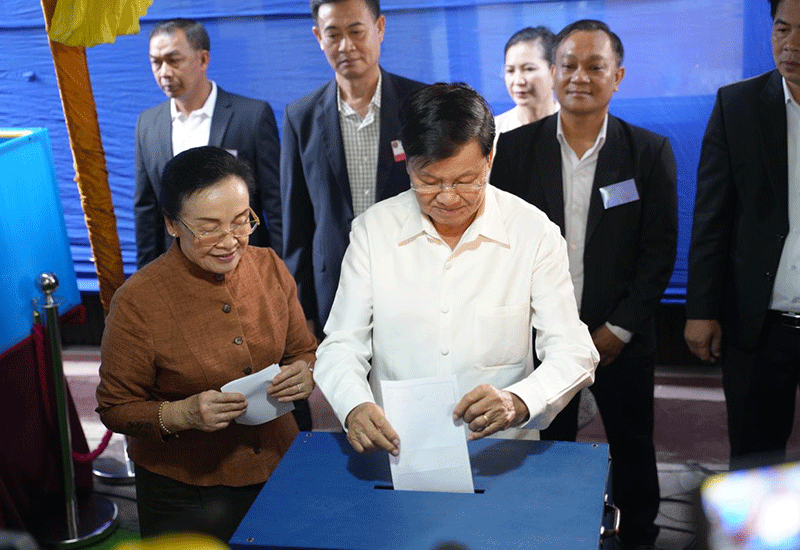
President Thongloun Sisoulith casts his ballot at a polling station in Thaphalanxay village, Sisattanak district, Vientiane.
|
Party and State leaders join general public in Election Day voting
Party and State leaders joined members of the public across the country on Sunday to cast their ballots in the election of members to the 10th National Assembly and 5th Provincial People’s Councils, reflecting national unity and civic pride.
From early in the morning of February 22, polling stations in villages, districts and provincial centres nationwide opened their doors to a steady stream of voters. Officials were on hand to check voter lists and guide people through the process in an orderly and transparent manner.
At the Thaphalanxay Village Office in Sisattanak district, Vientiane, Secretary General of the Lao People’s Revolutionary Party and President of Laos, Mr Thongloun Sisoulith, and his wife arrived early to vote, welcomed by the Mayor of Vientiane, Dr Athsaphangthong Siphandone.
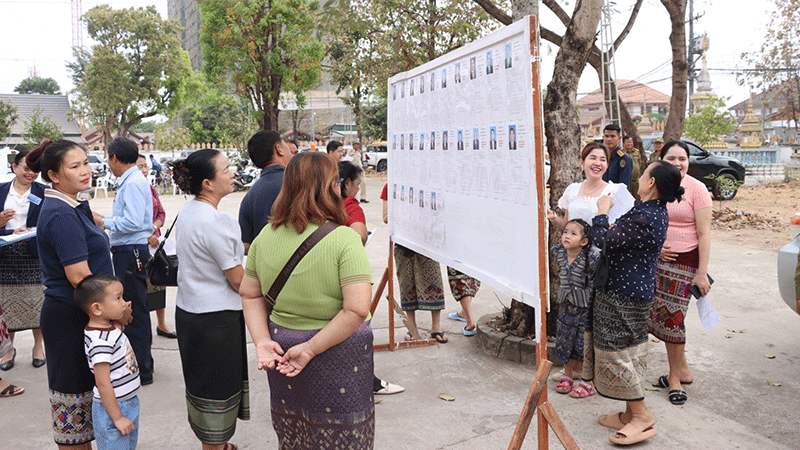 |
Voters read the profiles of candidates standing for election in the National Assembly and Provincial People’s Councils.
|
Mr Thongloun greeted local residents and election officials before placing his vote in the sealed ballot box, underscoring the leadership’s commitment to democratic participation and national responsibility.
Other Party and State leaders, including members of the Party Central Committee Politburo such as Prime Minister Sonexay Siphandone and President of the National Assembly Xaysomphone Phomvihane, also cast their ballots at polling stations in their respective constituencies, fulfilling their civic duty as enshrined in the Constitution.
Across Vientiane and in provinces from Phongsaly in the north to Attapeu in the south, voters formed neat lines and greeted their neighbours in a spirit of solidarity.
Elderly citizens were assisted by officials and youth volunteers, while first-time voters expressed pride at taking part in such a significant event.
Dr Khuanvilay Chanlasanichone, a voter at a polling station in Thaphalanxay village, Sisattanak district, Vientiane, said this was the third time she was voting in an election and commented on the strong sense of engagement at polling stations.
“I am pleased to see so many people turning out to exercise their right to vote,” she said. “I hope those elected to Provincial People’s Councils and the National Assembly will carry out their duties and truly serve as the voice of the people.”
Village Party Secretary and Chief of Thaphalanxay village, Mr Phouvong Thammavone, described the atmosphere as lively and orderly. He said everyone aged 18 and above had shown strong interest in the elections and was keen to vote.
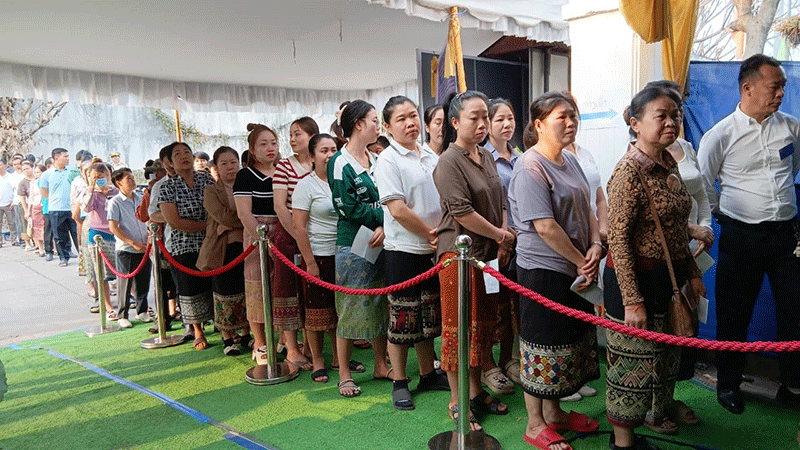 |
Voters wait in line to cast their ballots at a polling station in the capital.
|
The village was honoured by the presence of Party and State leader Thongloun Sisoulith, who also came to the polling station to vote. Mr Phouvong said comprehensive preparations had been made, including venue arrangements, facilities and security, to ensure voting took place smoothly.
In Khammuan province, a teacher named Keuthmany Phonexayyalath, speaking on behalf of the School Administration Board of Chom Thong Lower Secondary School in Thakhaek district, told reporters he was proud to participate in what he described as a historic political event.
He observed that eligible voters aged 18 and above were exercising their lawful right to select capable, experienced and morally upright representatives to safeguard the interests of the Lao multi-ethnic people in Constituency 12 (Khammuan province) and to help ensure the election achieved its intended goals.
According to the National Election Committee, a total of 4,764,384 people, including 2,384,104 women, are registered to vote. Of these, 23,378 Lao citizens currently living in other countries are also casting their ballots in person.
Vice President of the National Assembly and member of the National Election Committee, Prof. Dr Chaleurn Yiapaoher, publicised the official number of voters in all 18 constituencies earlier this month, to ensure transparency and keep the public informed.
Savannakhet province has the largest electorate with 723,129 voters, followed by the capital Vientiane with 679,952, and Champasak province with 457,302. The smallest constituency, Xaysomboun province, has 58,363 eligible voters.
In these elections, 243 candidates are contesting 175 seats in the National Assembly, while 1,041 candidates are vying for 745 seats in Provincial People’s Councils.
The candidates represent a broad cross-section of Lao society, including government officials, teachers, business operators, members of the armed forces, and representatives of mass organisations.
The elections serve to reinforce the people’s democratic regime under the leadership of the Lao People’s Revolutionary Party.
Every Lao citizen aged 18 years or older, regardless of gender, ethnicity, socio-economic status, belief, or place of residence, has the right to vote, while citizens aged 21 and above who meet set criteria may stand for election.
As ballots were carefully placed in sealed boxes under the watch of election committees and observers, voting across the country took place in an orderly and efficient manner, reflecting the success of preparations over recent months.
The strong turnout underscored people’s confidence in the electoral process and their shared responsibility in shaping the composition of legislative bodies over the next five years. The outcome of the elections is expected to advance the development process, strengthen governance, and ensure that the voices and aspirations of all ethnic groups across Laos continue to be represented at both national and provincial levels.
By Phonepaseuth Volakhoun
(Latest Update February 23, 2026)
|

