 |
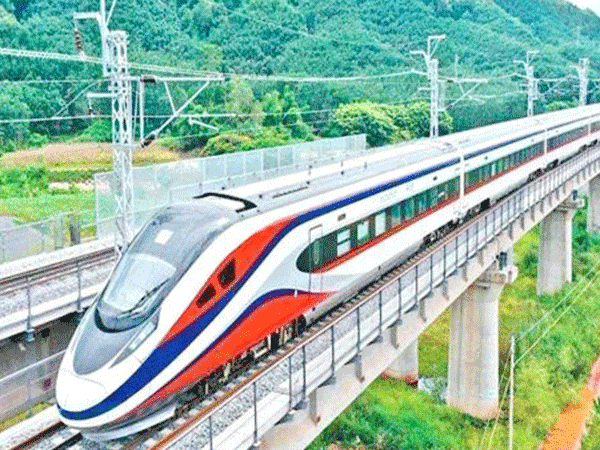
A passenger train on the Laos-China Railway.(File photo)
|
Laos-China Railway drives trade, tourism growth in 2026
The Laos-China Railway continues to play a pivotal role in Laos’ economic development, with both freight and passenger transport expanding steadily in 2026.
Government officials and business operators describe the railway as an economic lifeline, strengthening the country’s regional and global market links.
Exporters in Vientiane and several northern provinces report that agricultural products, processed goods, and other products are now reaching Chinese markets more efficiently than ever before.
Transport time has been significantly reduced, helping preserve the freshness of produce and minimise losses during transit. In addition, freight charges have become more stable, enabling companies to better manage logistics costs and plan long-term trade strategies.
A recent milestone highlighted this growing trade momentum when a freight train carrying 85.5 tonnes of Lao bananas arrived in Chongqing, China.
The shipment, transported in five 40-foot containers, travelled from Vientiane through the Boten-Mohan border crossing in Yunnan province before reaching its final destination, marking the first fully dedicated end-to-end rail shipment of Lao bananas to China.
Beyond trade, the railway is also contributing to job creation in sectors such as logistics and freight handling. Farmers in several provinces say their incomes have increased as they gain access to broader and more reliable markets.
Tourism has likewise benefitted as travel between Laos and China has become simplified and faster. Authorities predict that 5-6 million foreign tourists will come to Laos in 2026, with Chinese tourists projected to account for around 2 million.
Passenger travel is cheaper and easier than ever before, particularly during public holidays and in the peak tourism season.
Since the railway became operational in December 2021, around 12 million passengers have travelled between Vientiane and destinations in northern Laos, while freight volumes have reached millions of tonnes.
However, experts stress the need for further investment in logistics hubs, cargo distribution centres, and modern sorting and packaging systems to meet international standards. These improvements are essential to accommodate rising trade volumes and enhance Laos’ competitiveness.
Economic analysts believe that, if fully utilised, the Laos-China Railway will become an even more powerful engine driving Laos’ economic growth in 2026 and beyond.
By Khonesavanh Latsaphao
(Latest Update February 26, 2026)
|

