 |
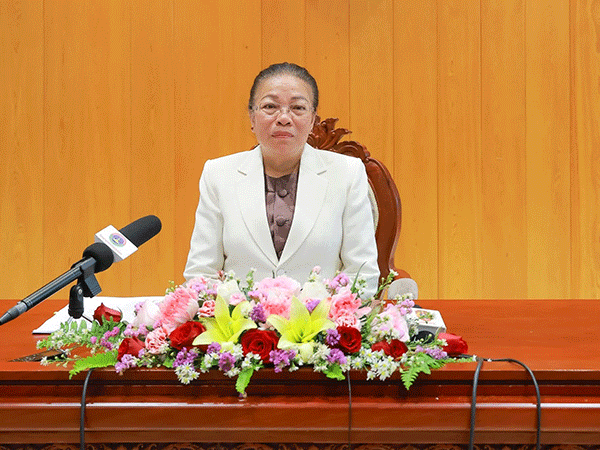
Dr Sounthone Xayachack announces the results of the 10th National Assembly election at a press conference in Vientiane on March 2.
|
Election results set stage for new government
The National Election Committee on Monday confirmed the final results of the 10th National Assembly election, paving the way for the formation of a new government to lead the country over the next five years.
Vice President of the National Assembly and standing member of the National Election Committee, Dr Sounthone Xayachack, announced the results at a press conference on Monday.
Dr Sounthone described the election as a success and said it reflected the trust placed by voters in their representatives. The results also signal political continuity, with senior leaders securing strong backing in their constituencies.
The four Politburo members of the Party Central Committee who stood for election were all elected to the National Assembly.
Dr Xaysomphone Phomvihane was elected to represent Vientiane, Prof. Dr Kikeo Khaykhamphithoune won a seat as a representative of Xiengkhouang province, Dr Sonexay Siphandone was elected to represent Champasak province, and Assoc. Prof. Dr Thongsalith Mangnomek was elected as a representative of Vientiane province.
Leaders in the national defence, public security, economic, and socio-cultural sectors also won seats thanks to solid support from their constituents.
Their election is expected to strengthen coordination between the legislative and executive branches.
The new National Assembly brings together representatives from all 18 constituencies in Laos. The results reflect efforts to ensure balanced participation, including the involvement of women in decision-making.
Vientiane is represented by 19 members in the National Assembly, including six women. Phongsaly province has seven representatives, including one woman; Luang Namtha has seven, including three women; Oudomxay has eight, including four women; Bokeo has seven, including three women; Luang Prabang has 10, including three women; Xayabouly has nine, including three women; Huaphan has seven, including three women; and Xiengkhouang has seven representatives, including three women.
In the central and southern regions, Vientiane province is represented by 10 National Assembly members, including four women; Bolikhamxay by seven, including one woman; and Khammuan by 10 members, including two women.
Savannakhet, the largest constituency, elected 21 members to the National Assembly, including four women.
Salavan province is represented by 10 members, including two women; Champasak by 15, including four women; Xekong by seven, including two women; Attapeu by seven, including two women; and Xaysomboun by seven members, including two women.
The announcement of the election results is an important step towards the inaugural session of the 10th National Assembly, expected to take place in late March or early April.
During the session, members will approve the state organisational structure and appoint a cabinet to guide Laos through the next five-year development period.
With the election process complete, all eyes are now on how the new Assembly will tackle economic recovery and social development and governance reforms, in the hope they meet public expectations.
By Times Reporters
(Latest Update March 4, 2026)
|

