 |
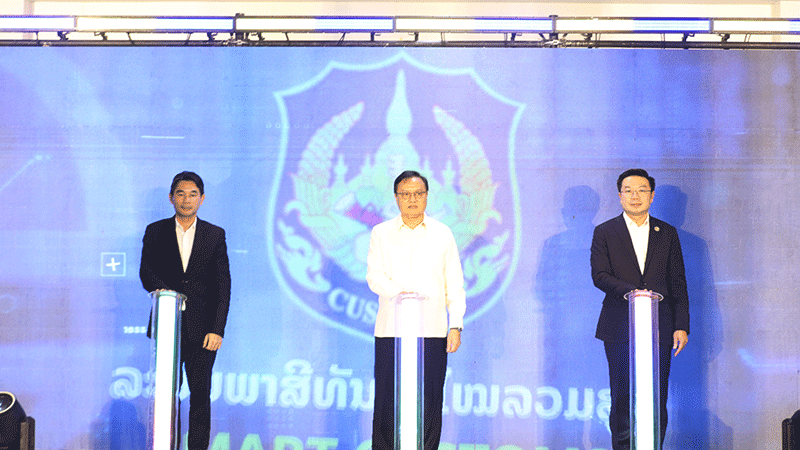
| The Deputy Prime Minister and Minister of Finance, Mr Santiphab Phomvihane (centre), and senior government officials launch the Smart Customs system at the Thanaleng Dry Port International Customs Checkpoint in Vientiane on Monday. |
Finance Ministry launches Smart Customs system to drive digital transformation, trade efficiency
The Ministry of Finance on Monday launched the Centralised Modern Customs System, known as Smart Customs, at the Thanaleng Dry Port International Customs Checkpoint, marking a major step in the digital transformation of customs administration in Laos.
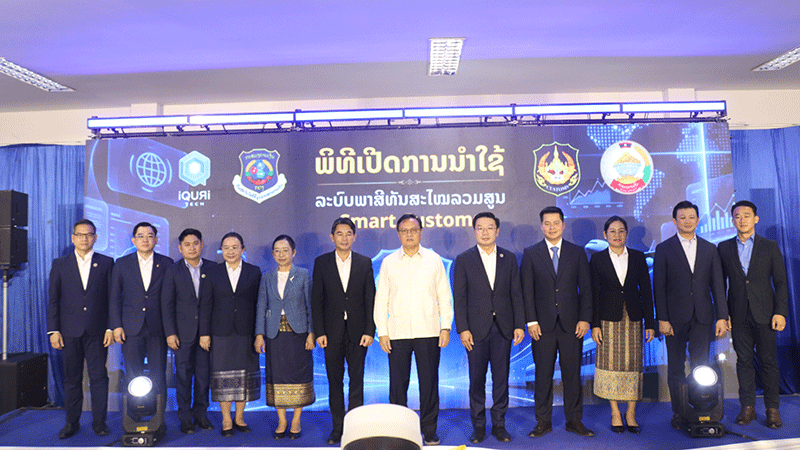
The launch ceremony was presided over by the Deputy Prime Minister and Minister of Finance, Mr Santiphab Phomvihane, and attended by senior government officials, customs authorities, development partners and private sector representatives.
Speaking at the event, the Deputy Director General of the Customs Department, Mr Vongvanpheng Phoumsavanh, said the new system forms part of broader efforts to modernise public administration and improve revenue collection in line with the National Digital Economy Development Strategy 2021-2030, and the government’s revenue collection modernisation plan for 2026-2030.
 |
| |
He noted that the Customs Department plays a vital role in facilitating trade, promoting investment, managing imports and exports, and ensuring effective collection of state revenue at border checkpoints, airports and dry ports nationwide.
According to Mr Vongvanpheng, the Smart Customs system will significantly reduce customs clearance times, minimise paperwork, improve inspection efficiency, and strengthen transparency in customs operations.
“The development of this centralised modern customs system represents a major advancement in applying technology to customs administration,” he said, noting that it will help build confidence among businesses and foreign investors in Laos.
He highlighted the evolution of customs modernisation over the past three decades, from manual record-keeping and cash-based revenue collection to electronic customs systems.
Key milestones included the introduction of the C2000 customs management system in 1999, the deployment of the ASYCUDA electronic declaration platform in 2015, and the nationwide implementation of the integrated NSWA+ customs system in 2024.
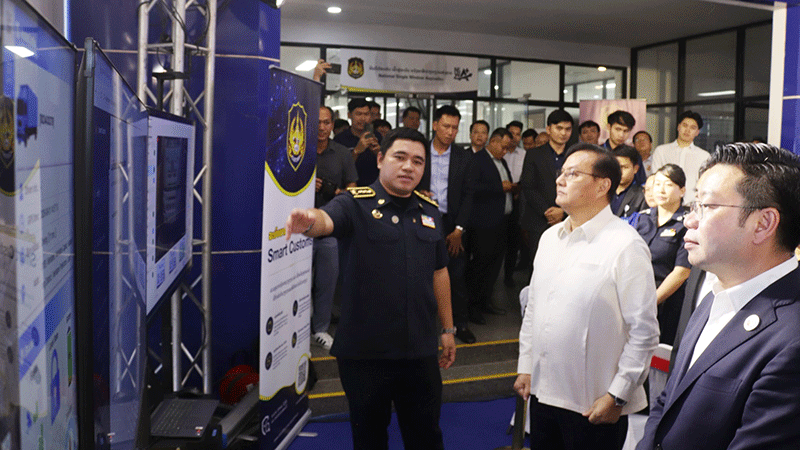
The new Smart Customs platform consolidates a range of customs-related systems under a single Modern Customs Command Centre. It integrates customs declarations, warehouse management, vehicle monitoring, X-ray scanning, smart weigh bridge systems, and electronic payment platforms into one interconnected framework.
 |
| |
Presenting the Smart Customs Development Plan 2026-2030, the Deputy Director General of the Department of Financial Information Technology under the Ministry of Finance, Mr Anousak Sisa-ad, outlined the project’s vision of establishing a centralised customs data ecosystem capable of linking government agencies, customs checkpoints and private sector operators.
A central component of the initiative is the creation of a national Data Hub to facilitate electronic information exchange, reduce duplication, and support future system development and maintenance.
The plan supports the Ministry of Finance’s objective of increasing state revenue collection to 20 percent of gross domestic product in 2026 through improved tax administration, digital payments and enhanced financial management.
Over the next five years, authorities will implement 19 key development modules covering advance cargo notification, optical character recognition (OCR), smart gate management, electronic container seals, warehouse management, risk management, customs valuation, data analytics, user administration, staff training and duty-free shop management.
The first phase of implementation in 2026 will focus on deploying completed modules at six priority international border checkpoints – Thanaleng Dry Port and the First Lao-Thai Friendship Bridge in Vientiane, the Second and Third Lao-Thai Friendship Bridges, Napao, Dansavanh and Boten.
Future expansion will extend the system to additional border facilities, including the Fourth and Fifth Lao-Thai Friendship Bridges and Vang Tao Dry Port.
The project also includes plans to develop a mobile application that will allow customs officers and businesses to receive notifications, conduct electronic inspections and use digital signatures, reducing paperwork and helping ease congestion at border crossings.
Speaking on behalf of the system’s developer, the Chairman of IQURI Tech Co., Ltd., Mr Sisoulin Xokxay, said the company is committed to supporting the government’s digital transformation agenda through the application of advanced digital technologies and artificial intelligence.
He said the Smart Customs initiative is designed to modernise customs operations and to create an integrated data ecosystem that enhances service delivery, facilitates trade and investment, and supports Laos’ transition towards a digital economy.
The Smart Customs system is expected to strengthen the efficiency, transparency and competitiveness of customs administration while contributing to national economic development.
By Times Reporters
(Latest Update May 2, 2026)
|

