 |
| |
French footprints: From Luang Prabang to Pondicherry!
Oddly enough, while travelling through Laos, I never actually missed home. India’s most visible remnant of French colonial presence, its own little pocket of French culture, is Pondicherry, a city in the country’s south with mustard-yellow buildings, leisurely cafes, old colonial facades and a relaxed rhythm of life.
In fact, my familiarity with Pondicherry helped me understand Laos better, leaving me very eager to understand how French colonial influence evolved across Asia. For Indian visitors especially, this familiarity softens the foreignness of Laos, making its French-inspired streets and cafes feel less distant and comforting right from the very first day of stay.
France may have left both Laos and Pondicherry decades ago, but the traces remain, faint, romanticised, woven into everyday life. At first glance, Luang Prabang, felt like a sister city of Pondicherry, with both towns spirited and moving at a gentler pace than the modern world around them.
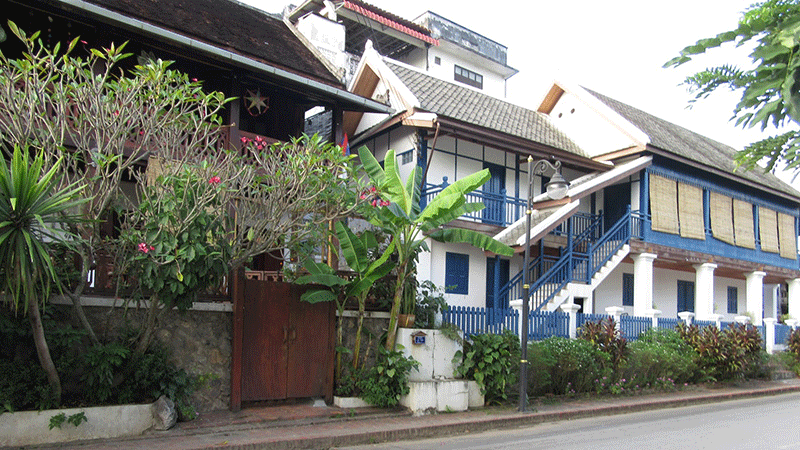
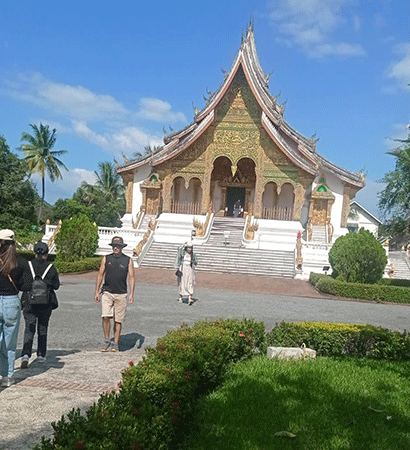
In Luang Prabang, French influence appears through colonial villas with wooden shutters, tiled roofs and balconies seemingly designed for long afternoons, structures that coexist naturally with Buddhist temples and monasteries.
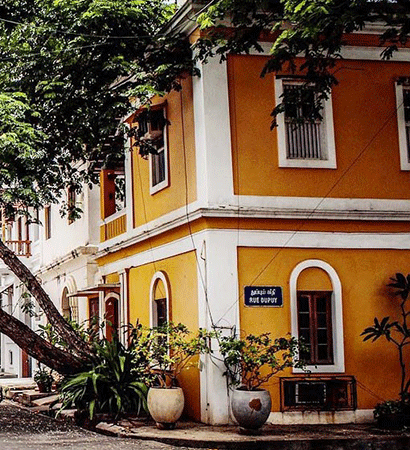
Pondicherry, with its famous French Quarter called “White Town”, feels carefully preserved and organised. Streets run in neat little grids lined with mustard-yellow colonial villas, high compound walls, bougainvillea spilling over gates and elegant wooden doors.
Walking there feels as if you are in Europe and that you have stumbled on a sleepy town in southern France. This visual resemblance perhaps explains why I felt instantly comfortable in Luang Prabang.
 |
 |
Pondicherry had already prepared me for this unique blend of French aesthetics with Asian life, a feeling of being both foreign and familiar at the same time.
There were differences too – French influence has blended quietly into the local culture, traces surviving in old administrative buildings, broad avenues and the enduring love for baguettes and coffee. Yet the city unmistakably seems Lao first, French second.
It was easy to spot colonial structures with traces of French influence, the local identity having absorbed the remnants into its own cultural rhythm.
Pondicherry, however, has consciously preserved its French connection. French street names remain visible. Institutions such as Alliance Francaise continue to promote French language and culture. Older residents continue speaking fluent French, while cafes serve croissants and pastries with an authenticity that seems to have been intentionally maintained.
Use of the French language was an eye opener. In Laos, French would have been important in administration and education, but today Lao and English dominate public life. I did not meet a single individual who would speak French.
In Pondicherry, although Tamil dominates everyday conversation, French signage, schools and cultural institutions have ensured that French has not retreated into history.
The food and cafe culture is wonderfully similar. Laos has superbly adapted French culinary habits into local life, with baguette sandwiches and strong coffee thoroughly Lao in character. Sitting in Le Banneton Cafe & French Bakery in Luang Prabang, felt relaxed and unpretentious.
Chic bakeries, elegant cafes and boutique guesthouses in Pondicherry consciously cultivate an undeniably French ambiance, where visitors may walk through narrow lanes shaded by trees and linger over coffee in restored colonial villas.
The visual echoes of Pondicherry create an instant connection in Luang Prabang, with its colonial facades, riverside cafes and unhurried streets reminding you of home. And perhaps that is why I never felt homesick in Laos, because the fragments of architecture, food, language and lifestyle emphasised that somewhere between the cafes of Luang Prabang and the yellow walls of Pondicherry, there exists a familiarity, a reminder that cultures travel far and linger longer, quietly settling into memory and everyday rhythms of local life.
Yet neither destination is trapped in its past. While both have absorbed French colonial legacy, they seem to have stepped gently out of the long shadow of French colonialism and chosen a different relationship with that inheritance.
The French may have planted similar architectural and cultural seeds across Asia, but both Luang Prabang and Pondicherry have decided for themselves whether these seeds should bloom, fade or quietly merge into local life. In Laos, the influence survives softly within everyday living; in Pondicherry, it is preserved, displayed and celebrated as part of the town’s identity.
Priyan R Naik is a columnist and independent journalist based in Bengaluru, India. He regularly writes for Indian, Sri Lankan, Bangladeshi and Malaysian newspapers. Currently, he is on the Advisory Board of the Equipment Times, India’s No 1 mining and construction equipment Industry magazine and is a member of the Jury for the prestigious Yellow Dot Award.
 |
| |
By Priyan R Naik
(Latest Update June 12, 2026)
|

