 |
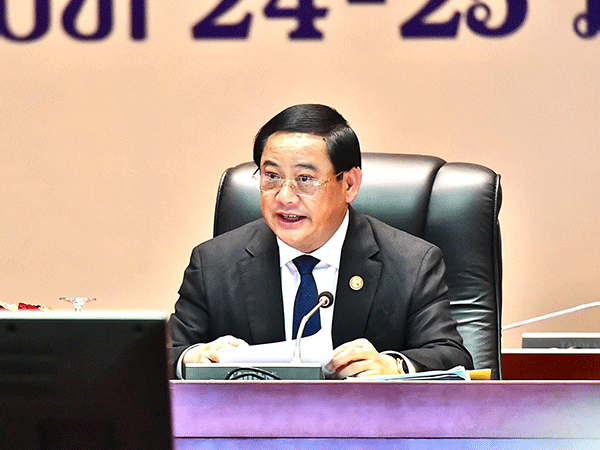
| Prime Minister Sonexay Siphandone on Thursday delivers the closing remarks at the first expanded government cabinet meeting of 2026. --Photo The Prime Minister’s Office |
Govt sets path for rural development, governance reform
The government’s first expanded cabinet meeting of 2026 has agreed in principle to adopt a draft National Agenda on Rural Development and Poverty Reduction and a draft decree on the organisation and operations of sub-district administration committees, signalling a stronger focus on grassroots governance and improved living standards in rural areas.
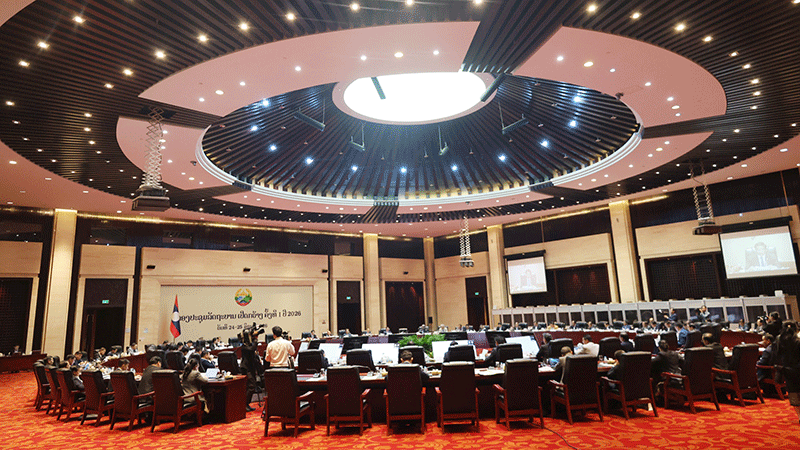
The two-day meeting, chaired by Prime Minister Sonexay Siphandone, ended on Thursday after reviewing national development progress and setting priorities for the remainder of the year.
 |
| |
Speaking to reporters after the close of the meeting, Deputy Minister and Deputy Head of the Prime Minister’s Office, Dr Kheungkham Keonouchan, said participants agreed in principle to the two draft legal instruments and instructed relevant sectors to further refine their content, organisational structures, standards, policies, responsibilities and implementation mechanisms to ensure they are practical, comprehensive and consistent with existing laws.
The meeting also reviewed a revised draft decree on administrative positions for officials and civil servants. Relevant agencies were directed to make further improvements before submitting the draft for consideration at a future cabinet meeting.
Looking ahead, the government identified priority tasks for the second half of 2026, including maintaining macroeconomic stability, strengthening budget revenue collection, controlling inflation, stabilising the value of the kip, and ensuring fuel supplies are sufficient for consumer needs.
Ministries, other government bodies and local authorities were instructed to accelerate implementation of the resolutions adopted by the 12th National Party Congress, the 10th Five-Year National Socio-Economic Development Plan (2026-2030), and the national strategy on building a self-reliant economy.
Other priorities include expanding productivity so that more goods are produced in Laos and imports reduced, boosting agricultural and industrial exports, strengthening small and medium-sized enterprises, improving investment management, expanding digital infrastructure, and accelerating the development of transport networks and other key infrastructure projects.
The government also called for stronger efforts to combat drug trafficking, cybercrime, illegal mining, illegal logging and other violations of the law, while improving natural disaster preparedness and environmental protection.
In other fields, authorities were instructed to improve the quality of education, address the teacher shortage, strengthen healthcare services and social welfare programmes, create a skilled workforce, and upgrade tourism infrastructure and services.
Prime Minister Sonexay called on ministries, other government agencies and local authorities to translate the agreed priorities into detailed action plans, assign clear responsibilities and establish implementation timelines to ensure concrete results over the remainder of the year.
The meeting heard that encouraging progress was made during the first six months of 2026. Political stability and social order were maintained, while authorities intensified efforts to tackle drug trafficking, cybercrime, illegal mining, and other unlawful activities.
The economy grew by 5 percent, state revenue collection reached 52 percent of the target for the whole of 2026, inflation was maintained at an average of 8 percent, and foreign exchange reserves remained sufficient to cover more than five months of imports.
Progress was also reported in infrastructure development, domestic production and exports, investment promotion, education, healthcare, tourism, land administration, and foreign affairs, laying a solid foundation for fulfilment of the government’s development goals for 2026.
By Bounfaeng Phaymanivong
(Latest Update June 26, 2026)
|

