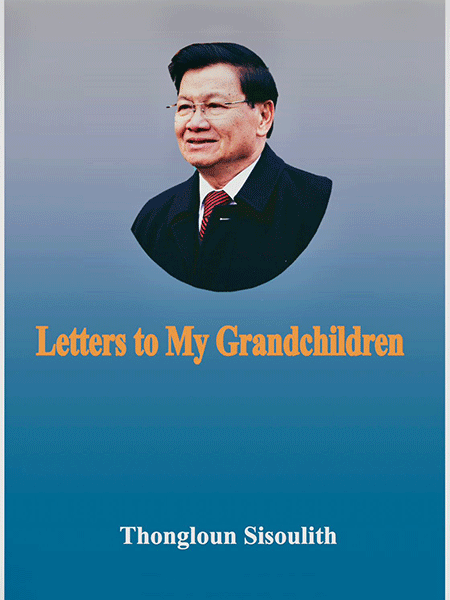
What lessons would a nation’s leader choose to leave for future generations?
In Letters to My Grandchildren, President Thongloun Sisoulith opens a window into his life through a collection of heartfelt letters written during official journeys abroad between 2014 and 2019. More than a family memoir, the book recounts an extraordinary journey from a humble childhood in a remote village in Huaphan province to the highest office in the Lao PDR.
Through vivid recollections of hardship, perseverance, education, and public service, President Thongloun shares the experiences and values that shaped his character and leadership. Readers will encounter the story of a young boy who crossed rivers to attend school, overcame poverty and adversity, and remained steadfast in his pursuit of knowledge and service to the nation.
Rich with personal reflections and life lessons, Letters to My Grandchildren offers a rare and intimate portrait of the man behind the presidency while providing inspiration for young people, parents, and leaders alike. It is a story not only of one individual’s journey but also of resilience, dedication, and the enduring belief that determination can transform even the most modest beginnings into a life of remarkable achievement.
The book comprises 12 chapters, and the Vientiane Times will present each chapter in the newspaper.
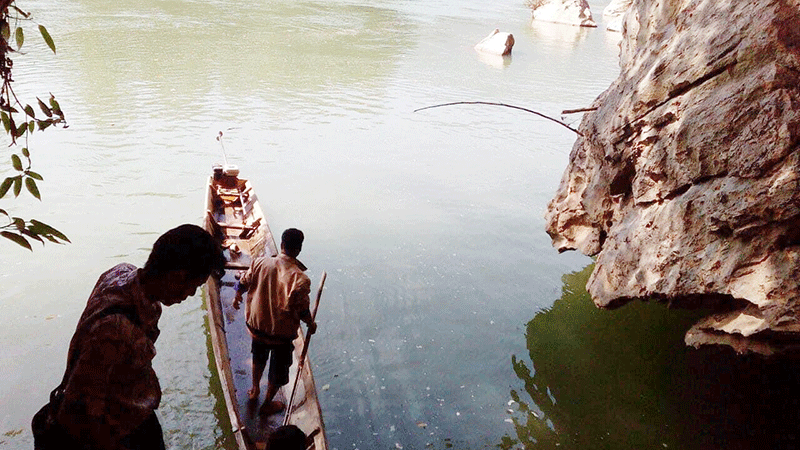 |
| Ma River. |
Chapter 2 - The Road to School
From Nachon village to the primary school in Nonghan village, Sobhao sub-district, is only a little over four kilometres— but the way is on foot through forest and rice fields, skirting along the Ma River and then crossing it to the eastern bank to reach the school. From Monday to Saturday I had to go back and forth like that every day. My mother rose at about three in the morning daily (of course, no one had clocks then—we went by the roosters: the first crow around three a.m., the second near four, and the third just before dawn). As soon as she heard the crowing, she would jump up, light the fire, and go pound rice at the mortar. If there was fish or meat, she’d grill it and tuck it into a basket of sticky rice with a chili dip—so her child could take it to school. That one small basket had to cover the whole day’s food (breakfast and lunch). After class I would walk home. I kept to this routine until school holidays. Sundays I helped my parents—working the paddies and the upland plots, tending the kitchen garden, gathering firewood, and securing enough food to last several days. At first, about 20–30 children of my age, as well as a few older and younger, went from Nachon village to study together. But week by week they began to drop off, one or two at a time. By the second term only two or three were left; by the final term I was the only one still making the trek to school. People felt that schooling would bring them nothing—that it was better to stay home and help their parents in the fields. My parents didn’t see it that way. They urged me to keep studying. When they saw me going alone and worried I might feel lonely, they comforted me: “If you want to study, then keep going. We’ll support you—don’t give up. No one in our village has ever finished primary school, not even one.” Fearing for my safety, they even said, “If you want, stay with relatives in Sobhao and come home on Saturdays. We’ll ask them to take you in.” But I couldn’t bring myself to stay away, I worried about my mother and father, so I kept going back and forth just as before.
Because our country was still in hardship—at war, with only brief and uncertain moments of peace—everything carried some risk. But going to school had been my strongest wish since childhood. My parents did everything they could so I could keep studying, and I gave it my all as well. Every morning I got up early, using the light of the fire where my mother was steaming rice; I recited my lessons, did my chores, and even helped tend the rice for her. When it was time to pack the food, I would call her
in from the mortar so she could scoop the rice into my basket.
Continued to the next issue
By Times Reporters
(Latest Update June 29, 2026)
|