 |
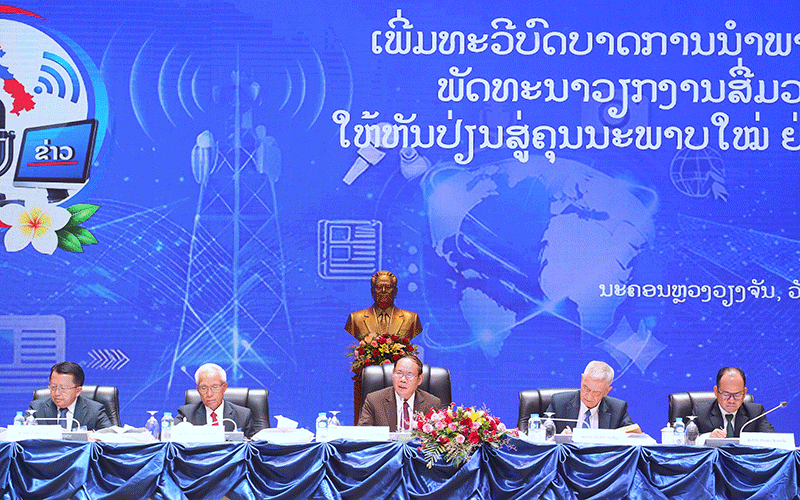
| General Vilay Lakhamfong (centre) addresses the congress, with Mr Khamphanh Pheuyavong (second left) and other senior Party leaders in attendance. |
First National Media Congress opens, charts development roadmap
The first National Media Congress opened in Vientiane on Tuesday, outlining an ambitious five-year roadmap to modernise the media, accelerate digital transformation and strengthen the Party’s leadership over the press, with artificial intelligence, wider public access to reliable information and stronger measures against misinformation at the centre of the country’s future media strategy.
Politburo member and Standing Member of the Party Central Committee’s Secretariat, General Vilay Lakhamfong, declared the congress open.
He called on participants to explore creative ways to present news that aligns with the changing media landscape driven by digitalisation, so that mainstream state media can occupy more information space and shape public opinion more effectively.
Held under the theme “Strengthening the Party’s leadership role, developing media work to transform it to a new quality vigorously”, the congress brought together senior Party and state leaders, media executives, editors, journalists and communication professionals from across the country to discuss the future direction of Laos’ media industry.
The congress, which ended on Wednesday, discussed a proposed 2026-2030 media development plan and a draft Politburo resolution aimed at guiding the long-term development of the media.
Politburo member and Head of the Commission for Information and Education of the Central Committee, Mr Khamphanh Pheuyavong, presented the draft 2026-2030 media development plan, describing the media as a key instrument in political and ideological work.
He stressed the need to transform the media into a modern, professional and technologically advanced sector capable of responding to rapid changes in the digital era.
The proposed development plan identifies rapid technological change, economic challenges and the growing spread of misinformation and AI-generated false content as major issues confronting the media sector.
It calls for a stronger leadership by the Party to guide media development while improving professionalism, technical capacity and public trust.
Among its key objectives, the plan seeks to modernise television, radio and newspaper operations through digital transformation, integrate artificial intelligence into news production, expand access to official information nationwide, and strengthen the professional capacity and ethics of media personnel.
It also aims to broaden international outreach to overseas audiences through digital platforms.
The roadmap seeks to invest in modern broadcasting infrastructure, cloud-based data systems, high-definition production equipment, 5G technology and AI-powered tools for translation, subtitling and content production. Journalists and technical staff would receive regular training to ensure AI is used correctly and responsibly.
To improve information integrity, the plan proposes establishing mechanisms to promptly detect and respond to fake news, alongside the creation of a National Anti-Fake News Centre between 2026 and 2028.
It also calls for more attractive, high-quality content reflecting Lao society and culture.
The strategy also encourages state media organisations to create more income streams through advertising, equipment rental and digital services, while establishing a Media Development Fund to support digital transformation and infrastructure upgrades.
Collaboration with ASEAN media organisations, China, Vietnam and other development partners is expected to support technology transfer, professional training and content collaboration.
Shortly after, alternate Member of the Party Central Committee and Deputy Head of the Commission for Information and Education of the Party Central Committee, Dr Khammone Chanthachit, presented a draft Politburo resolution on strengthening the Party’s leadership and state management over media operations, setting out a long-term vision to build a modern, competitive and professionally managed media system under the Party’s guidance.
Dr Khammone said the document responds to profound changes in the global media landscape driven by high-speed internet, social media and artificial intelligence.
While these technologies create new opportunities, they also present risks through misinformation, deepfakes and other forms of information manipulation that require stronger governance and more effective media management.
“The traditional management mechanism no longer meets requirements. These things require us to have a new approach in setting the news agenda, in guiding, managing and using the media to align with the new circumstances,” he said.
The draft resolution envisions the development of the media through 2030 and towards 2050 as a modern, professional and highly competitive sector that delivers information promptly, providing accurate, clear and comprehensive news delivery for both Lao and international audiences.
It places strong emphasis on the use of technology and innovation while ensuring media content remains aligned with Party policy, state laws and national development goals. The draft also calls for stronger Party leadership over media organisations, improvements to laws governing the press and social media, greater investment in digital infrastructure and continued development of politically committed, ethically grounded and technically skilled media professionals.
Together, the proposed five-year development plan and draft Politburo resolution provide the policy framework for Laos’ media sector as it seeks to modernise operations, embrace digital technologies, and strengthen its role in supporting national development while responding to the opportunities and challenges of the AI era.
By Times Reporters
(Latest Update July 15, 2026)
|

