 |
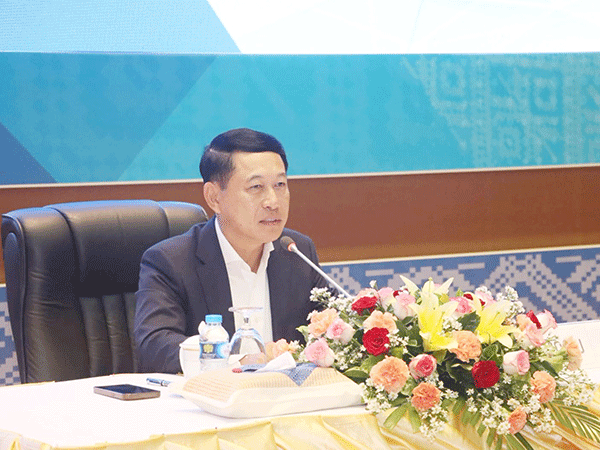
| Mr Saleumxay Kommasith chairs the first meeting of the National Steering Committee for the State One-Stop Service Mechanism on
July 23. |
Government advances one-stop public service delivery
The government is moving to simplify public services by creating more one-stop service facilities and introducing digital payment systems.
The National Steering Committee for the State One-Stop Service Mechanism convened its first meeting last week, marking the start of a nationwide effort to make government services faster, easier to use, and transparent.
The meeting was chaired by Standing Deputy Prime Minister and Minister to the Prime Minister’s Office, Mr Saleumxay Kommasith, who also serves as chairman of the Steering Committee. Deputy ministers, heads of provincial administrative committees, representatives of Vientiane, and committee members were in attendance.
Mr Saleumxay said the meeting reflected the Party and government’s strong commitment to improving public services by placing people at the heart of development efforts.
He said the government aims to make state services more accessible while improving efficiency through the use of online platforms, decentralisation, and the delegation of authority.
The reforms are expected to reduce administrative procedures, improve coordination among government agencies, and ensure quicker service delivery for citizens and businesses.
Mr Saleumxay said priority would be given to improving legislation governing the State one-stop service system, along with related regulations, to support more efficient public administration.
He said the reforms are guided by a government decree issued on June 26, which defines the roles, responsibilities and powers of the National Steering Committee.
The meeting also reviewed progress made under the one-stop service system over the past two decades from 2006 to 2026, and discussed the committee’s five-year action plan for 2026-2030.
Participants considered which government services should be delivered through one-stop service centres at the national, provincial and district levels, allowing people to access multiple public services in one location instead of having to visit several government offices.
The committee also discussed the funding needed to operate, upgrade and modernise the one-stop service system as demand for digital public services grows.
A key proposal agreed at the meeting was to introduce centralised electronic payment options for government fees and service charges.
The meeting also endorsed plans to set up Smart One-Stop Service Centres, which will integrate services from ministries, other agencies and provincial administrations into a modern digital platform.
Following the meeting, ministries, government agencies and provincial administrations will establish committees to oversee the rollout of the one-stop service system and the development of Smart One-Stop Service Centres.
These committees will work with the Public Administration Development Department and the Organisation Commission of the Party Central Committee to review laws and regulations, identify services suitable for one-stop centres and integrate them into the new digital system.
The initiative forms part of the government’s digital transformation agenda, which aims to modernise public administration by expanding digital government services and improving access for citizens and businesses.
Through the one-stop service mechanism, the government seeks to reduce paperwork, streamline administrative procedures, improve transparency, and build a more efficient, people-centred public service system.
By Times Reporters
(Latest Update July 27, 2026)
|

