 |
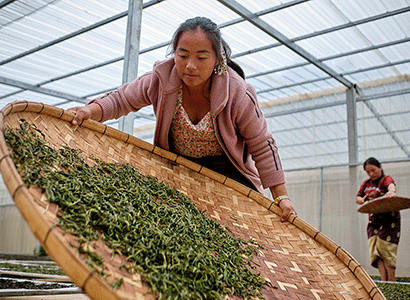 |
| The strong demand for Lao tea, particularly fermented wild tea of the Pu’er variety, presents a significant opportunity for smallholder cooperatives. By ensuring consistent quality and fair labour practices, farmers and cooperatives can become reliable suppliers to the Chinese market. --Photo Leonard Reyes |
At a large-scale tea processing plant, the leaves are laid out to dry inside a drying facility. Transparency in investment deals is essential for smallholders to benefit from Chinese investment. This requires clear contracts, fair pricing mechanisms, and a commitment to sustainable practices. --Photo Bart Verweij |
 |
 |
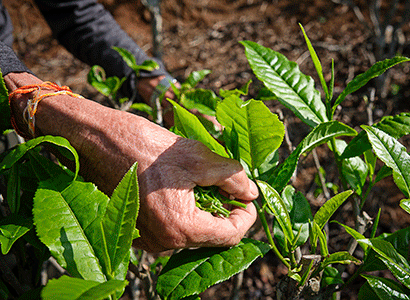
| Laos benefits from a climate and soil well-suited for tea cultivation. It boasts unique and desirable tea varieties that are attractive to consumers. --Photo Bart Verweij |
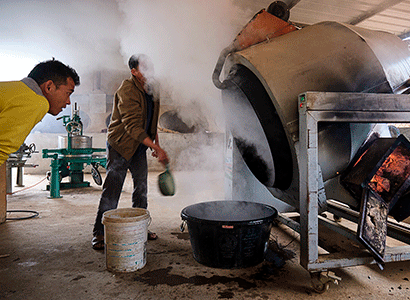
Tea leaves being dehydryated on an automated cooker. Encouraging Chinese investment in processing facilities within Laos can create additional income opportunities for smallholders. However, ensuring smallholders have fair access to these facilities is crucial. --Photo Bart Verweij |
Unlocking Laos’ tea potential: balancing growth with fair returns for farmers
 |
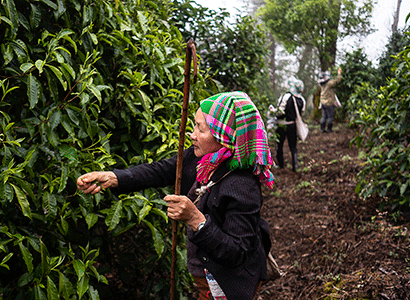
| Laos’ tea industry can boost income and reduce poverty in remote areas. While Laos has the potential for a thriving tea industry, several challenges need to be addressed. This could involve improving infrastructure, access to markets, and fairer investment models. --Photo Bart Verweij |
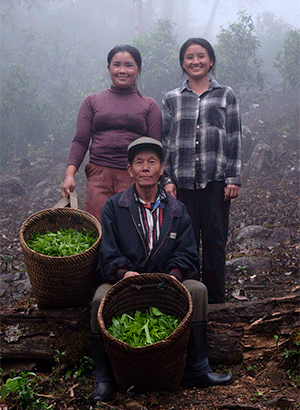
Tea farmers and labourers in Phousan, Xieng Khuang province, northern Laos, work tirelessly to pick tea leaves from the village’s wooded slopes. The daily schedule continues until December, when the tea-picking season ends.
After picking, the leaves are transported to neighbouring processing facilities, often financed by Chinese businesses that have played a key role in the sector’s expansion. These firms offer the technology and infrastructure required for processing tea, which is dried and packed before being sent to China, a major Laos export market.
Contract farming has been a cornerstone of Laos’ tea industry, providing an organised farming approach, connecting farmers with buyers, and ensuring a steady income. However, the system has come under fire for its lack of transparency, with some farmers receiving a meager share of the profits. Downstream actors, such as those involved in tea manufacturing and distribution, reap more significant benefits. This underscores the immediate need for fair investment models in the tea business.
Laos’ tea industry expansion holds immense promise for the nation’s economy and the tea industry, particularly for smallholder farmers. As the industry develops, the need for transparent and equitable investment models becomes more pressing. With the right support and collaboration, Laos can fully harness its potential, paving the way for a brighter future for its farmers and the broader economy.
The Mekong Region Land Governance (MRLG) programme aims to improve land governance and promote responsible agricultural investment in Cambodia, Laos, and Vietnam.
In Laos, MRLG is working with government partners to develop a Prime Minister’s Decree on the regulation of contract farming.
A study conducted by MRLG in 2023 reveals that smallholder farmers benefit from ideal growing conditions and high demand for Lao tea varieties in China.
The report emphasises the importance of choosing appropriate investment models for responsible agricultural investment, benefiting policymakers, investors, and farmers. See the full report here: bit.ly/46U8Zdj
--Text by Leonard Reyes, Leonard Reyes is Communications Manager for MRLG
By Advertorial Desk
(Latest Update August 26, 2024)
|

