 |
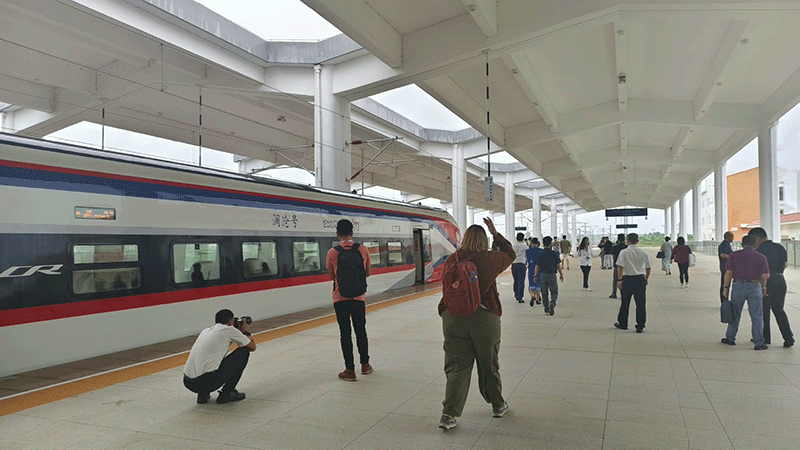
| Passengers board a Laos-China Railway train at Vientiane Station. (File photo) |
Laos-China Railway cross-border passenger trips surge more than 50 percent
Cross-border passenger traffic on the Laos-China Railway surged by more than 50 percent in the first eight months of this year, highlighting the railway’s growing role in helping Laos shift from a landlocked country towards a “land-linked country”.
The railway operated 972 international passenger trains during the period, carrying more than 244,000 cross-border passenger trips, up over 50 percent from the same period in 2025, according to data released recently.
Since opening to traffic on December 3, 2021, the railway, built through cooperation between Laos and China as a model project of the Belt and Road Initiative (BRI), has become an increasingly popular transport option for travellers from China and other countries.
The number of daily international passenger trains operating between Kunming and Vientiane has increased from two to four, while the number of seats has risen from 250 to 420.
Daily border crossings have also increased from about 300 to a peak of 1,640, supporting tourism development along the route and across the region.
As of September 7, the railway had operated 3,789 cross-border passenger trains since its launch, carrying a total of 926,000 passenger trips involving travellers from more than 120 countries and regions.
Passenger services have also been improved to make cross-border travel more convenient. International passenger trains and stations, including those in Xishuangbanna and Pu’er, provide services in Chinese, Lao and English. Staff assist passengers at key points, while dedicated service windows, wheelchairs and basic medicines are available for passengers with special needs. Customs clearance at the Mohan railway port takes about 50 minutes, while the journey between Kunming and Vientiane can be completed in as little as nine hours and 36 minutes. The improved service has made it increasingly possible for passengers to leave in the morning and arrive in the evening.
Meanwhile, the railway’s freight services are being upgraded, further strengthening its role as a trade corridor between Laos and China.
On August 23, Guizhou’s first return China-Laos freight train operating under a new “bonded logistics + fast railway customs clearance” model arrived at Guiyang International Land Port.
The train carried 40 standard containers containing 1,100 tonnes of imported potash fertiliser. It departed from Vientiane South Station and reached Guiyang in five days, providing a more convenient transport channel for Lao products entering the Chinese market.
The expansion of both passenger and freight services is strengthening the railway’s contribution to Laos’ socio-economic development and regional connectivity.
The China-Laos Railway is increasingly viewed not only as a transport link but also as a key corridor supporting tourism, trade and broader economic cooperation, with its role expected to grow as Laos continues efforts to strengthen its connectivity with regional and international markets.
By Advertorial Desk
(Latest Update September 17, 2026)
|

