 |
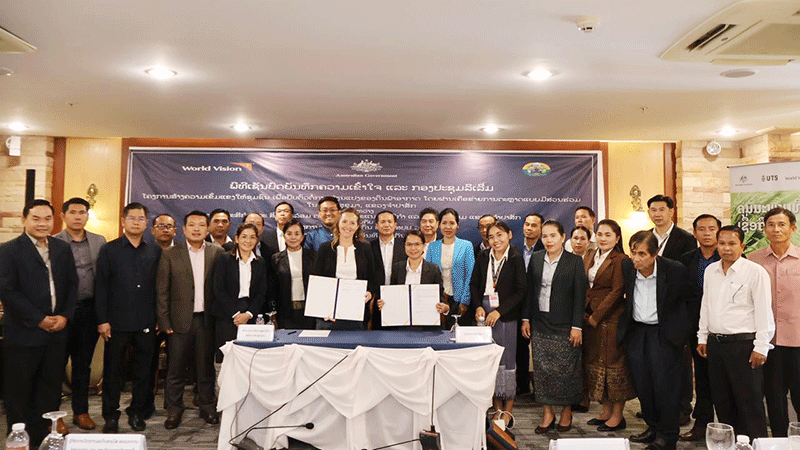
| Department of Agriculture and Environment of Champassak Province and World Vision International Lao PDR sign a MoU. |
New partnership to build climate-resilient livelihoods and a better future for children in Champassak
A new partnership in Champasak province aims to help vulnerable farming families build more resilient livelihoods, strengthen sustainable agriculture and create better opportunities for children facing the growing impacts of climate change.
The Department of Agriculture and Environment of the southern province and World Vision International Lao PDR signed a Memorandum of Understanding (MoU) on September 17 to support climate-resilient livelihoods and sustainable agriculture in Soukhouma district.
The partnership forms part of the Building Climate-Adaptive Solutions through Inclusive Market Networks (BASIN) Programme, funded by the Australian Government through the Mekong-Australia Partnership (MAP).
The programme brings together government agencies, communities, market actors and development partners to strengthen inclusive agricultural systems and help vulnerable families adapt to changing climate conditions.
For farming communities in Soukhouma, where household incomes and food security depend heavily on agriculture, changing weather patterns, flooding and environmental degradation are placing increasing pressure on livelihoods and family well-being.
These pressures can have significant consequences for children. Recent World Vision assessments in target communities show that rates of wasting, stunting and underweight children remain concerning. More than 20 percent of households experience hunger for at least one month each year, while 49 percent do not have access to a sufficiently diverse diet throughout the year.
“When families struggle to maintain stable incomes or secure enough nutritious food, children are often among the first to feel the impact,” said National Director of World Vision International Lao PDR, Mrs Rebecca Derry.
“Resilient livelihoods are therefore not only about increasing household income. They are about creating the stability families need so children can be healthy, safe, learn and reach their full potential.”
Building Markets That Work for Vulnerable Families
The BASIN Programme takes a market-based approach to climate resilience, working with farmers and the wider systems that influence their ability to earn sustainable incomes.
Through Inclusive Market Systems Development (iMSD), BASIN will connect farming households with producer groups, cooperatives, businesses, service providers and government agencies to strengthen agricultural value chains and create more sustainable market opportunities.
The approach will support farmers to respond to market demand, improve productivity and adapt to climate-related risks, while addressing barriers that can prevent women, people with disabilities, ethnic minorities and other vulnerable groups from participating fully in economic opportunities.
“BASIN is not simply about helping communities respond to climate change. It is about changing how local markets work so that vulnerable people have a stronger opportunity to participate, earn and prosper,” said BASIN Regional Programme Director at World Vision, Mr Thano Im.
“By working alongside communities, businesses and government partners, we can develop practical solutions that strengthen resilience and continue to create value beyond the life of the programme.”
Strengthening Inclusion and Local Leadership
Under the MoU, the Department of Agriculture and Environment and BASIN will collaborate to strengthen climate-smart agricultural production, improve market engagement and increase income opportunities for farming households in targeted communities.
The partnership will also contribute to evidence and learning on inclusive and sustainable agri-food systems, helping identify approaches that can potentially be strengthened or scaled through local agricultural value chains.
“Women, people with disabilities and ethnic minorities play important roles in local economies, yet they can also face significant barriers and risks associated with climate change,” said Mr Im.
“BASIN will work with communities to strengthen their participation, leadership and decision-making power, while engaging men and communities as partners in creating lasting social change.”
Investing in Resilient Families and Children’s Futures
By strengthening market access, agricultural production and household incomes, the partnership aims to help families become better equipped to cope with climate-related shocks and economic pressures.
For children, stronger and more resilient households can mean greater access to nutritious food, education, healthcare and opportunities to thrive.
“Climate resilience must ultimately be about people,” said Mrs Derry.
“When farming families are better equipped to adapt, access markets and build sustainable incomes, children have a stronger foundation for their future. This partnership is an investment in both resilient communities and the next generation.”
By Times Reporters
(Latest Update September 21, 2026)
|

