 |
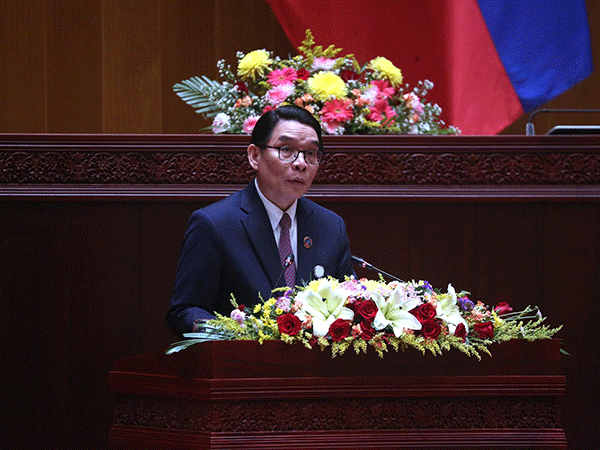
| Dr Vilayvong Bouddakham represents the NA Standing Committee at the second ordinary session of the National Assembly on Monday. --Photo Sangkhomsay |
Tougher measures needed to meet 2026 growth target, NA says
The National Assembly (NA) Standing Committee has called for stronger measures to spur economic growth and meet the 5.5 percent target for 2026, with growth currently projected at just 5.1 percent.
The call was made on Monday, the opening day of the National Assembly’s second ordinary session, which is scheduled to run until October 21.
Presenting the Standing Committee’s remarks, NA Vice President Dr Vilayvong Bouddakham said the economy continued to face a challenging external and domestic environment, including global economic volatility, instability in the Middle East, fuel supply shortages, rising fuel prices, inflationary pressures, flooding, and livestock disease.
Despite these challenges, the committee praised the government’s efforts to implement the national socio-economic development, State budget and monetary plans under the guidance of the Party Central Committee and oversight of the National Assembly.
Revenue collection reached 80.8 percent of the target during the first nine months of this year, while foreign exchange reserves remained sufficient to cover five months of imports. State and private investment is also projected to meet the full-year plan, while progress has been made on some cultural and social targets, rural development and poverty reduction goals.
However, the committee stressed that more must be done over the next three months to fulfil targets that have yet to be achieved and raise economic growth to the 5.5 percent target set by the National Assembly.
The committee called for stronger tax revenue collection, particularly from land rents and concession fees, mineral resource fees, and mineral taxes and royalties, which appear to be under-collected compared with approved projects.
Dr Vilayvong also urged the government to carefully manage monetary policy to contain inflation, promote wider use of the kip and increase foreign currency inflows from exports through the banking system.
At the same time, the committee recommended closer regulation of the price of consumer goods and fuel and the general cost of living, which continues to affect all citizens.
To support the development plan, the committee stressed the need to source additional sources of capital, particularly through Official Development Assistance, while strengthening the monitoring and evaluation of State-funded development projects.
It also called for the urgent repair of roads, irrigation systems and other infrastructure damaged by extreme weather.
Stricter regulation of mining and mineral processing operations was also highlighted, with the committee calling for measures to reduce raw mineral exports, strengthen domestic processing, and prevent damage to communities and the environment.
In the social sector, the committee called for continued efforts to address school dropouts, child malnutrition, skilled birth attendants, vocational training and unexploded ordnance clearance. It also urged the rehabilitation of health centres, schools and other infrastructure affected by severe weather conditions.
The government was further advised to pursue targets set under the National Agenda on Rural Development and Poverty Reduction and translate them into concrete plans and projects.
Looking ahead to 2027, the NA Standing Committee called for continued efforts to build an independent and self-reliant economy, while also promoting sustainable and quality economic growth.
Key priorities include improving trade and market access, modernising transport, expanding telecommunications networks, cracking down on cybercrime, improving education, vocational training and labour skills, and expanding social insurance coverage.
The committee also called for stronger management of land leases and concession projects, forest protection and environmental safeguards, as well as closer monitoring of mining, agricultural and other projects.
The Standing Committee supported the government’s proposed list of banned substances and drug precursors, saying it would provide a legal basis for more effective control of the drug trade.
The committee expressed confidence that, with continued Party leadership, National Assembly oversight, government administration and cooperation from the general public, the country would overcome the current economic and financial difficulties and meet the remaining targets set for 2026 and those on the agenda for 2027.
By Bounfaeng Phaymanivong
(Latest Update October 6, 2026)
|

