 |
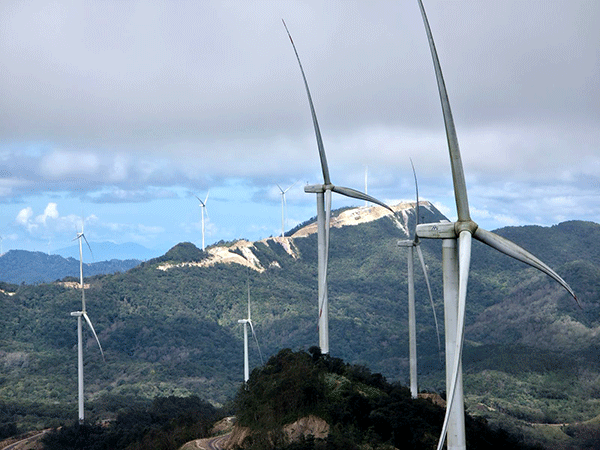
Wind turbines installed by the Monsoon Wind Power Project stretch across the forested mountains of Dakcheung district, Xekong province, generating renewable electricity for export to Vietnam.
|
Monsoon Wind Power Project eyes US$200m contribution to Laos
The Monsoon Wind Power Project in southern Laos, the largest in Southeast Asia, expects to contribute nearly US$200 million to the Lao government over 25 years while supporting local communities.
Project Development Director and General Manager, Mr Narut Boakajorn, outlined the expected benefits during a media visit to the 600-megawatt wind farm, which spans Dakcheung district in Xekong province and Sanxay district in Attapeu province.
Project managers signed a concession agreement with the government in 2022, began construction in 2023 and started generating electricity in late August 2025. The wind farm supplies power to Vietnam under a 25-year agreement with Vietnam Electricity.
Mr Narut said the developer paid about US$4 million in royalties and other fees during the construction period. The first operating royalty, covering four months in 2025, amounted to around US$600,000.
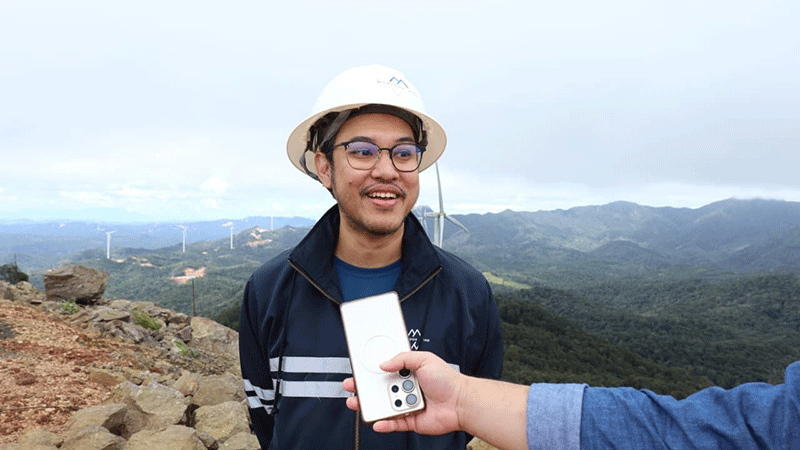 |
Mr Narut Boakajorn speaks to journalists during a media visit to a wind farm in Dakcheung district, Xekong province, with wind turbines visible across the surrounding mountains.
|
He estimated direct payments to the government, including royalties, corporate income tax and other obligations, would reach US$5-6 million a year.
Indirect contributions, including value-added tax and withholding tax, could total another US$50 million throughout the concession agreement.
“So in total, the project will give the Lao government almost US$200 million over the 25 years,” he told the Vientiane Times.
The figures are long-term projections, not revenue already collected.
The onshore project was initiated by Impact Electrons Siam (IES) and is developed and operated by Monsoon Wind Power Company Limited, a Lao-incorporated company.
It is backed by an international consortium of shareholders: Impact Electrons Siam, the project’s originator, ACEN from the Philippines, BCPG Public Company Limited and STP&I Public Company Limited from Thailand, Mitsubishi Corporation of Japan and its wholly owned subsidiary, Diamond Generating Asia, Limited (DGA), and SMP Consultation Sole Company Limited from Laos.
Director General of the Department of Enterprise Management under the Ministry of Industry and Commerce, Mr Aphisid Sengsourivong, also outlined the project’s economic benefits during a separate meeting with journalists.
Mr Aphisid said the project employed around 300 people, approximately 70 percent of them Lao nationals. He said the government wanted developers to train more Lao workers for technical, engineering and management roles. He also stressed the importance of Vietnam’s willingness to purchase electricity, saying access to the Vietnamese market had helped make the project possible and could encourage further wind power investment in Laos.
Beyond payments to the government, the developer has committed US$1.1 million annually to community development in Dakcheung and Sanxay districts, equivalent to US$27.5 million over 25 years.
Mr Narut said a committee involving the company, district administrations and villagers helps decide which projects receive support. Priorities include agriculture, education, healthcare and skills development.
One initiative encourages coffee cultivation as an alternative to traditional upland rice farming, with the aim of increasing incomes while reducing the need to burn fields.
“Instead of farming plots that get burned every year, we suggested trying coffee, because in the end it requires no burning and the value per area is higher than ordinary rice farming,” he said.
The company has also supported schools and health facilities. Mr Narut said the first group of 10 scholarship students studying in Ubon Ratchathani, Thailand, was in its third year, while support for medical and nursing studies could help bring skilled graduates back to the area.
Development has also affected farmland. Mr Narut said no households were relocated, but the project paid an estimated US$1-2 million in compensation for land used for turbines and related facilities. The project area includes 29 villages, although not all were directly affected.
He said the company must manage waste, monitor water quality, prevent erosion and protect biodiversity, while responding to complaints from communities.
The developer is also exploring conservation tourism as a source of future work.
For nearby families, the project’s lasting value will depend on how far its promised revenue, jobs and community programmes improve everyday life.
By Phonepaseuth Volakhoun
(Latest Update October 28, 2026)
|

