 |
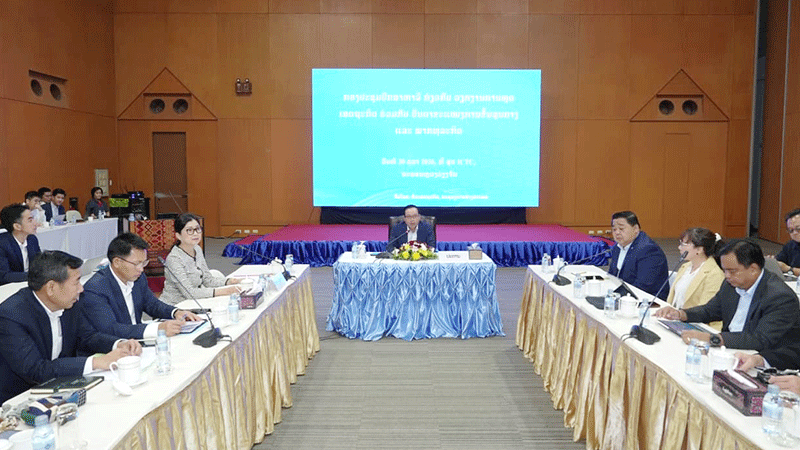
Mr Maythong Thammavongsa (centre) chairs a meeting on economic diplomacy.
|
Foreign ministry pushes robust economic diplomacy to boost trade, investment
The government is seeking to strengthen economic diplomacy in a bid to attract more foreign investment and boost exports amid rising geopolitical tensions, trade barriers and rapid technological change.
The Ministry of Foreign Affairs invited more than 100 government and business representatives to a meeting in Vientiane on October 30 to discuss draft guidelines aimed at making economic diplomacy more effective.
The meeting was chaired by Deputy Minister of Foreign Affairs Mr Maythong Thammavongsa, who also serves as Standing Vice Chairman of the government’s Economic Diplomacy Steering Committee.
The meeting sought recommendations from government agencies, the Lao National Chamber of Commerce and Industry, and businesses on ways to strengthen economic ties with foreign countries.
Mr Maythong stressed the need for closer coordination between government agencies, Lao diplomatic missions abroad, provincial administrations and the private sector.
The overall aim is to improve information sharing on investment opportunities, overseas markets and business needs, helping Lao companies find foreign buyers and international partners.
The initiative comes as global economic uncertainty creates new challenges for developing countries.
The Ministry of Foreign Affairs’ 2026 Handbook on Economic Diplomacy of Laos says more investment, technical expertise, advanced science and modern technology is needed to improve the quality and quantity of goods produced in Laos.
It describes economic diplomacy as increasingly urgent for securing overseas support, promoting consistent growth, and protecting national economic interests.
The handbook also links this work to the Party’s policy of connecting political and diplomatic relations with international economic cooperation.
It says geopolitical rivalries, tariffs, non-tariff trade barriers and restrictions on technology are disrupting global supply chains. The growth of green and digital economies is also creating new demands for developing countries.
Against this backdrop, the handbook calls for diplomacy to go beyond maintaining friendly relations and help strengthen economic bargaining power, attract quality investment, and open up more markets for Lao products.
Its priorities include investment in industry, agriculture and services, technology transfer, tourism and logistics, alongside Laos’ ambition to become a regional land-linked trade and transport hub.
Lao embassies and consulates have a central role in this approach. The handbook tasks them with studying overseas markets, finding prospective investors, promoting Lao goods, and helping businesses link up with international partners.
Diplomatic missions are also expected to monitor trade rules and economic policies abroad, while the steering committee guides efforts to check foreign investors’ backgrounds and ensure their operations comply with Lao laws.
The private sector is another focus. Businesses are encouraged to share feedback on policy and work with diplomatic missions to arrange trade exhibitions and business meetings overseas.
The handbook outlines ways to track progress, including regular reports, proposed performance scorecards and a possible online system to monitor important projects.
It states that the government established a 34-member Economic Diplomacy Steering Committee under Prime Ministerial Decision No. 67/PM, dated May 10, 2024.
By Times Reporters
(Latest Update November 4, 2026)
|

