|
Legacy of Lao forebears still alive today
Half a century after the founding of the Lao People’s Democratic Republic, the soul of the nation continues to shine through its enduring traditions, timeless customs, and collective pride. The legacy of Lao forebears—rooted in simplicity, harmony, and cultural creativity—remains deeply woven into the nation’s fabric, shaping both identity and destiny.
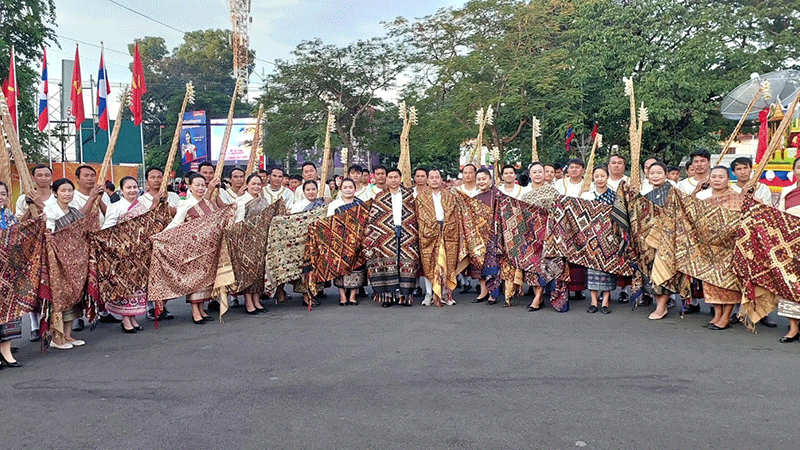
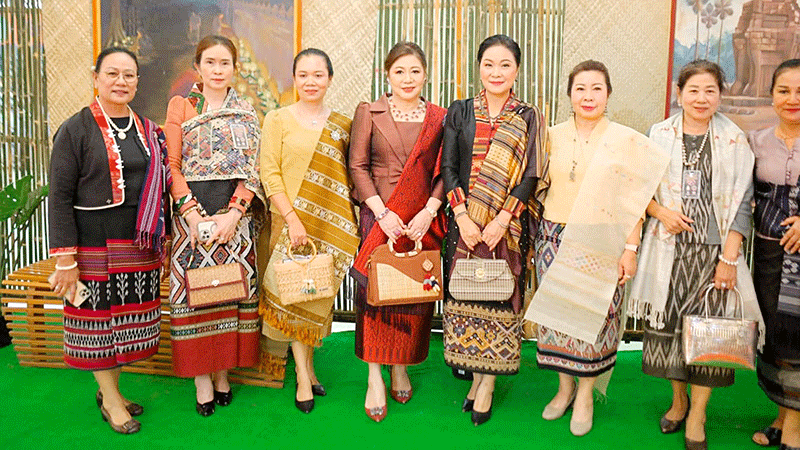
From the thatched villages of the north to the bustling streets of Vientiane, signs of the past live vibrantly in everyday life. Nowhere is this continuity more visible than in the sinh—the traditional long skirt that Lao women have proudly worn for generations.
Created by the country’s female ancestors centuries ago, the sinh is far more than a garment. It is a story told in threads—a tale of artistry, identity, and quiet resilience. Each woven pattern reflects a region, a tribe, and a history.
Today, young Lao women continue to wear the sinh not only during festivals or formal events but in their daily routines—at offices, in classrooms, and even in the fields. It is a living declaration that the essence of Lao womanhood, patience, and grace endures.
In many provinces, traditional weaving has been revitalised. Ethnic women’s groups transform cotton and silk into exquisite fabrics, reviving age-old techniques while generating new livelihoods. Many communities now sell sinh and woven products in domestic and international markets, turning cultural preservation into sustainable development.
 |
“The sinh is our national identity,” says one weaver in Luang Prabang. “When we weave, we weave our ancestors’ spirit into the fabric.”
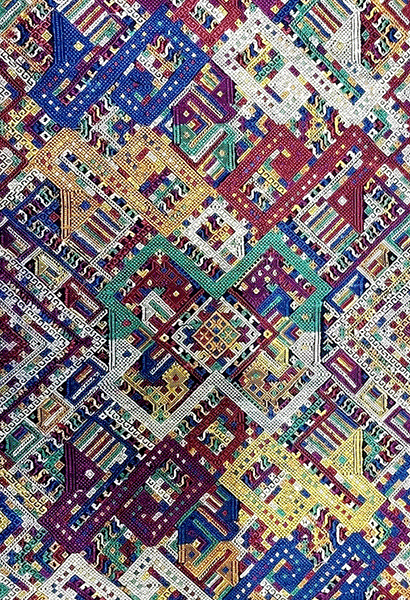
Among the many patterns woven into the sinh, the Naga motif holds the deepest spiritual significance. The Naga—believed to be a guardian of the Mekong River and protector of Lao people—appears in countless forms: coiled, rising, or gracefully flowing like water. Each depiction carries centuries of meaning tied to fertility, protection, and the harmony between humans and nature.
The Naga motif’s importance goes beyond aesthetics. It represents the spiritual and historical identity of Laos, linking communities along the Mekong with shared beliefs and cultural rituals.
In recognition of its profound symbolism and craftsmanship, the Naga motif has been inscribed by UNESCO on the list of Intangible Cultural Heritage, affirming its global cultural value. This honour has brought new pride to Lao artisans and raised international awareness of the intricate weaving traditions preserved through generations.
For many weavers, the motif is not merely an artistic choice; it is a sacred responsibility. “When we weave the Naga, we are honouring our ancestors and protecting our future,” says a master weaver in Huaphan province. “Every line has meaning.”
Since the country’s liberation in 1975, the Lao People’s Revolutionary Party and the government have consistently regarded culture as the foundation of national development. Cultural activities are seen as instruments to strengthen unity, promote social harmony, and nurture both material and spiritual growth.
The Party’s cultural directive encourages citizens to preserve and enhance traditional values while embracing modern creativity. Through community-based initiatives, Laos has established model cultural families and villages, ensuring that traditional practices—from folk songs and dances to village festivals—remain integral to everyday life.
 |
Politburo member and Deputy Prime Minister Prof. Dr Kikeo Khaykhamphithoune, Head of the Sub-Committee on Content for the celebration of the three historic anniversaries, has underscored the importance of culture in national progress.
“Over the past 50 years, our nation has developed significantly in all areas, but our true strength lies in our culture—our traditions, customs, and values that unite us as Lao people,” he said. “Cultural preservation is the key to sustainable development in the future.”
Prof. Dr Kikeo noted that the number of cultural families and villages has grown steadily, contributing to improved living standards and social harmony. According to government data, by 2014 Laos had 1,138,287 families, of which 682,803 were designated as cultural families. Of the nation’s 8,514 villages, more than 4,000 had been declared cultural villages—living examples of how tradition and modern life can thrive together.
Through state-supported cultural programmes, traditional festivals have regained vibrancy, drawing large public participation. Celebrations such as Boun That Luang, Bangfay, and Pi Mai Lao are not only occasions of joy but also moments that reaffirm national unity and Buddhist values of peace and compassion.
The Constitution of the Lao PDR enshrines the preservation and promotion of culture as a state duty. It mandates the protection of tangible and intangible heritage, from performing arts and literature to historical monuments and archaeological treasures. The State continues to renovate ancient temples, monuments, and artifacts—symbols of the nation’s wisdom and creativity.
Laos’ cultural richness is magnified by its diversity. The country is home to 49 officially recognised ethnic groups, each with its own customs, dialects, and art forms. Together, they weave the vibrant cultural mosaic that distinguishes Laos within ASEAN.
From the Lamvong circle dance of the lowlands to the bamboo mouth organ (khaen) melodies of the Lao Loum, from Hmong silverwork to Khmu wood carving, these traditions express unity in diversity. In every ethnic festival, one can feel the same heartbeat—the pride of being Lao and the respect for ancestors who taught that harmony with others and with nature is the key to happiness.
As Laos integrates more deeply into regional and global communities, cultural diplomacy has become another avenue of growth. Performing arts troupes, folk musicians, and artisans regularly represent Laos abroad, showcasing the nation’s unique identity while fostering cultural exchange and friendship.
The government and private sector have also joined hands to promote cultural industries such as textile design, traditional crafts, and tourism linked to cultural heritage sites. These initiatives not only preserve traditions but also create jobs and promote sustainable economic growth.
“Culture is the key to all kinds of work,” Prof. Dr Kikeo remarked. “When we protect culture, we protect our identity, our unity, and our future.”
As the nation celebrates the 70th anniversary of the Lao People’s Revolutionary Party, the 50th anniversary of the Lao PDR, and the 105th birthday of President Kaysone Phomvihane, the significance of cultural continuity becomes ever clearer.
The achievements of the past five decades—peace, progress, and unity—are rooted in values handed down by those who came before. The Lao forebears who envisioned an independent, culturally rich, and harmonious society would recognise their legacy alive in every sinh woven, every festival celebrated, and every song sung in praise of the land.
Across the nation, the fine traditions of Laos remain a guiding light for its people. They remind citizens that progress is not only measured in economic growth but also in the preservation of the nation’s spirit—its art, faith, language, and kindness.
The legacy of the Lao ancestors lives on—in the smile of a woman weaving silk in Huaphan, in the laughter of children dancing to the rhythm of the Khaen across the nation, and in the steadfast belief that culture is the heart of the Lao nation.
As Laos moves toward a new chapter of development, its people carry with them the timeless wisdom of their forebears: that a nation’s strength is not found only in its wealth or power, but in the unity of its spirit and the enduring beauty of its culture.
By Phon Thikeo
(Latest Update December 1, 2025)
|