 |
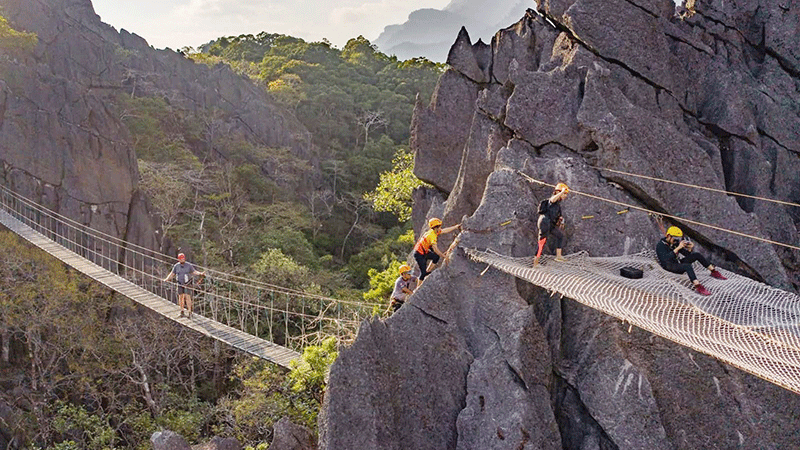
| Adventure activity at Phou Pha Marn hill in Khammuan province. --Photo Green Discovery Laos |
Exploring Laos at 50: A journey through nature, culture and adventure
As the Lao People’s Democratic Republic marks the 50th anniversary of its founding, the nation enters a moment of profound reflection, honouring its achievements in peace, development and unity, while celebrating its rapid rise as one of Southeast Asia’s most enchanting travel destinations.
This golden anniversary year coincides with a surge in visitor arrivals: more than 3.3 million foreign tourists came to Laos in the first nine months of this year, marking a 15 percent increase on the same period in 2024.
Improved facilities, better services and the high-speed railway have all helped open up the country’s wonders to travellers from around the world.
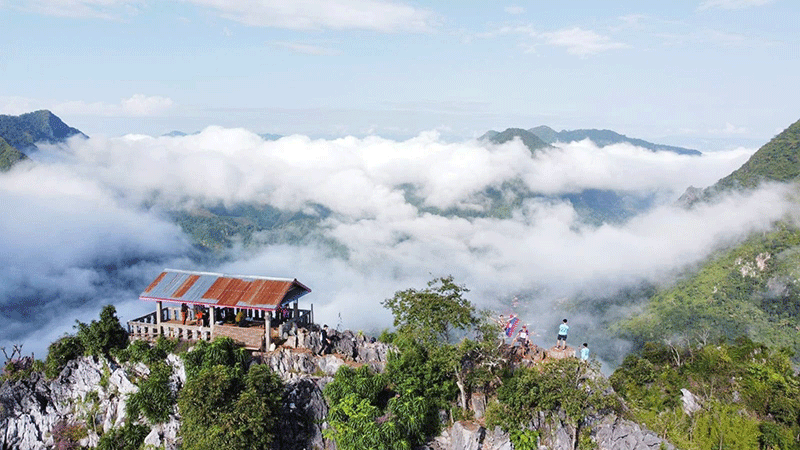 |
| Phou Phadeng mountain in Ngoy district, Luang Prabang province. --Photo Tourism Luang Prabang |
From the mountains of the far north to the river valleys of the central region and the waterfalls of the deep south, Laos presents a landscape woven with stories of history, ethnic identity, nature, and spiritual calm.
In the north, the UNESCO World Heritage Site in Luang Prabang city is one of the nation’s most treasured jewels. Its morning alms-giving rituals, centuries-old temples and riverside charm make it a timeless starting point for anyone exploring Laos.
The high-speed railway has transformed accessibility, drawing even greater numbers of travellers to the area’s blue-green waterfalls, craft villages, and hilltop viewpoints.
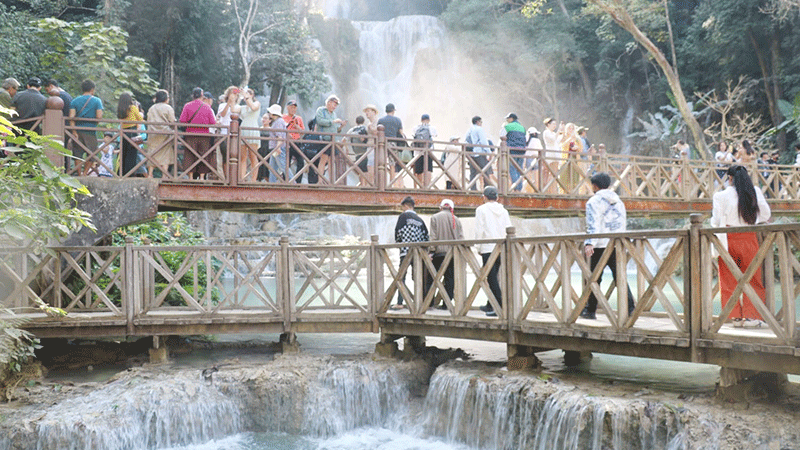 |
| Visitors admire the spectacular Kuang Xi waterfall in Luang Prabang province. --Photo Da |
Further north, the province of Phongsaly—one of the most remote regions in the country—offers an entirely different pace of life. Known for its misty mountains, ancient tea forests and multi-ethnic communities, Phongsaly invites visitors seeking tranquillity and authenticity.
Travellers can wander through winding old streets, visit Khmu and Akha villages tucked deep in the hills, and savour the region’s tea, some of which is made from leaves plucked from centuries-old trees. For those who want to experience a quieter, more introspective part of Laos, Phongsaly is a rare gem where tradition remains deeply rooted in daily life.
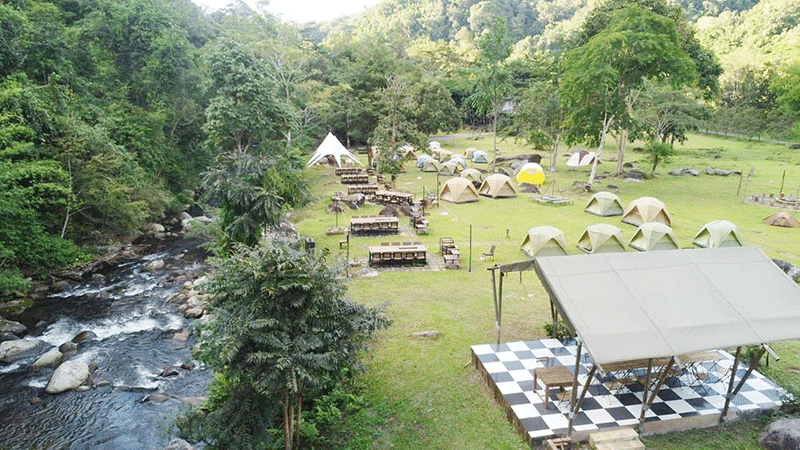 |
| The campsite at Namkat Yorla Pa in Oudomxay province.
--Photo Namkat Yorla Pa |
Oudomxay, another northern province connected by the high-speed railway, continues to grow in popularity. With its lush valleys, forest trails and vibrant cultural heritage, Oudomxay offers homestays and community-based tourism experiences that reveal the region’s ethnic richness and natural beauty.
Visitors often come seeking adventure but leave with an appreciation of the gracious hospitality of the local people.
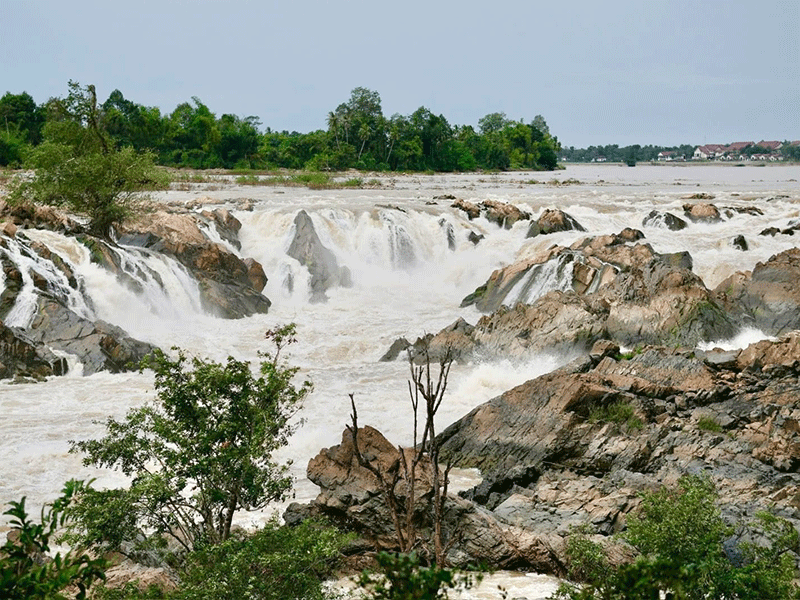 |
| The Khonephapheng falls in Champasak province. --Photo Pai Kup Parn |
In central Laos, the spotlight shines brightly on Khammuan province, home to craggy limestone mountains and some of the region’s most dramatic terrain.
Here, Phou Pha Marn hill has emerged as one of the country’s fastest-growing attractions. It is a paradise for adrenaline seekers: visitors can climb vertical limestone cliffs, glide across forest canopies on zip-lines, trek through mountain trails, and observe rare wildlife.
What sets Phou Pha Marn apart is not only its spectacular terrain but also its commitment to safety, with trained local staff guiding visitors every step of the way.
At the foot of these limestone formations, small cafés and family-run eateries offer affordable meals and panoramic views of the karst landscape.
Many visitors extend their stay simply to unwind, breathing in the crisp mountain air, listening to the soft hum of insects in the evening and enjoying the warm hospitality of local communities that make the experience unforgettable.
Further south, the Four Thousand Islands region in Champasak is another of Laos’ most popular destinations, with its star attraction being the Khonephapheng falls. The Mekong flows wide and steady here, dotted with tranquil islets where bicycles roll along riverside paths and fishermen cast their nets under the setting sun.
In contrast, the higher-altitude Bolaven Plateau offers a completely different type of scenery and is renowned for its cool climate, coffee plantations, and highland views.
As Laos celebrates its 50-year journey, these diverse landscapes reflect not only the country’s immense beauty but also its aspirations.
With rising visitor numbers, improved infrastructure and a growing emphasis on sustainability, the country is stepping confidently into a new era of global visibility.
From the mist-filled mountains of the northern provinces to the rugged limestone formations in the central region, and the serene islands of the south, Laos invites the world to join in celebrating its golden anniversary by exploring wonders that are both timeless and ever-evolving.
By Siladda Suliyong
(Latest Update December 3, 2025)
|

