|
What development spheres should the government prioritise in the next 50 years?
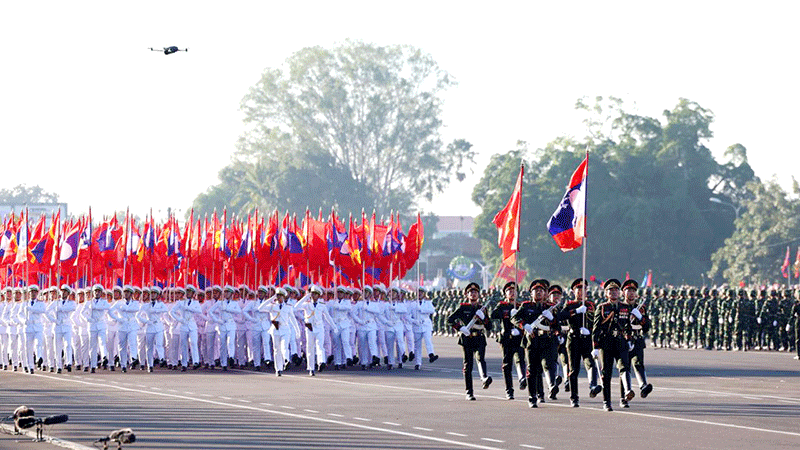
Celebrations marking the 50th anniversary of the Lao People’s Democratic Republic culminated on Tuesday morning at That Luang square in a spectacular display of national pride and unity. The profound significance of this event resonated deeply with onlookers, and the Vientiane Times took the opportunity to ask local residents about the goals to aim for in the coming decades.
Mr Somchan Hanxana, a retired veteran living in Xaythany district: The day was steeped in reverence and also a touch of regret. I woke up at 4am with the intention of securing a spot to witness the parade and other celebrations taking place at the square. But because there was no public transport until about 7am, I was unable to arrive in time for the main event. I was very disappointed to miss the parade, as I wanted to see it with my own eyes. Despite this disappointment, living through 50 years of sovereignty of the Lao PDR is a great reward. My ultimate pride has been witnessing the younger generation of leaders guiding the nation’s development to this point. For me, the most dominant and precious development of all is the peace and stability we enjoy, which lays the foundation for all other areas of progress.
Ms Soukanya Somvichit, a student in Sikhottabong district: This was the first time I’ve taken part in such a grand and glorious national event. I felt an overwhelming sense of joy and pride to be born in Laos. This event taught me a lot about Laos’ history and my aspirations are now clearer. I will focus on my studies so that I can acquire the knowledge and skills necessary to further develop Laos and help the country make faster progress. The first thing I want to see is a vastly improved standard of education, and for all children to attend school. I’ve seen posts on social media that report how some children in rural areas are unable to go to school for a variety of reasons. I believe that only education will enable Laos to truly become a least developed country.
Mr Sithone Chanthavong, a retired government official: My greatest pride is seeing how far we have come from the difficult early years. I single out developments in infrastructure and education as the two most notable transformations over the past five decades. Looking forward, I passionately advocate for continued development in healthcare and social welfare, ensuring that the gains of the past benefit all citizens equally.
Ms Sithiphone Keopaserth, a government official: The pace of modernisation in the past decade, particularly in digital infrastructure and connectivity, has been incredible. I am immensely proud of Laos’ rising profile in the region and hope that in the future the government will improve infrastructure, especially in rural areas. Another thing that needs attention is the business environment and administrative efficiency, in order to attract sustainable foreign investment.
Ms Ma Thi Kim Cuong, a Vietnamese national resident in Laos: I have lived in Laos for 30 years and consider it my second home. My impressions of the celebrations were of warmth and inclusivity, which is a testament to the strong bonds I feel with the Lao people. I have witnessed tremendous growth in Vientiane. The most impressive thing is the way Laos has managed to modernise while maintaining its unique culture and peaceful social fabric. However, there are many things that the government must improve, especially infrastructure, education, and health services.
Ms Marina, a Russian language teacher: What impresses me the most about Laos is people’s hospitality and the country’s stunning natural beauty. I like Lao food, cultural traditions, the strong sense of community, and the relaxed ‘sabaidee’ way of life is something truly special that Laos should try to preserve. For me, Laos’ success lies not just in its economy, but in its intangible charm and strong sense of national identity.
By Lamphone Pasanthong
(Latest Update December 3, 2025)
|