 |
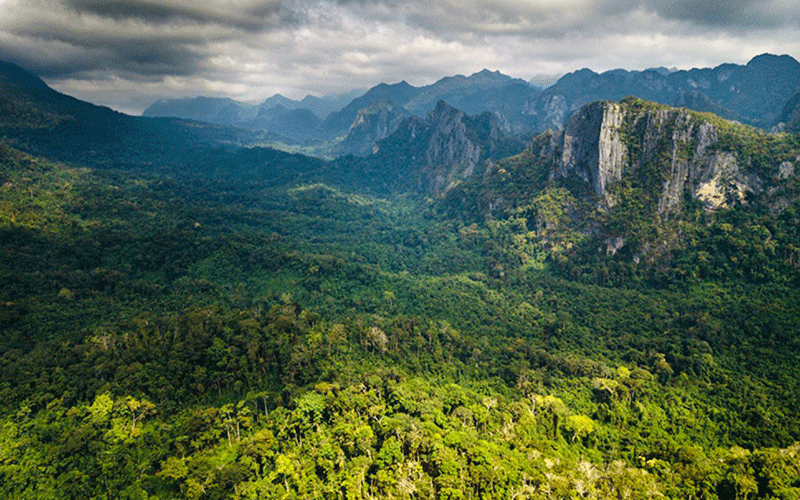
| The dramatic landscape of the Hin Nam No National Park.--Photo GIZ |
Forged in stone: enduring Laos-Vietnam bond
The Annamite Range (Sai Phou Luang) is more than a natural boundary; it is the physical and symbolic backbone of the enduring relationship between Laos and Vietnam. This great, mountainous spine literally and figuratively anchors a profound, enduring connection—often described as a unique and invaluable treasure—forged in shared history and directed towards a common future.
Forged in friendship: the revolutionary bedrock
The foundation of this solidarity rests on the personal, ideological friendship between the nations’ founding fathers: President Ho Chi Minh (affectionately known as Uncle Ho) and Lao President Kaysone Phomvihane. Their relationship was built on mutual respect, trust, and the selfless principle of revolutionary support.
Uncle Ho considered the liberation of Laos to be intertwined with that of Vietnam, stating that “helping our friend is helping ourselves”. He gave crucial guidance to President Kaysone about establishing revolutionary bases and military alliances.
This bond—a “rare, exemplary, loyal, and pure” relationship—established the unshakeable strategic compass for both nations, ensuring their political systems and national interests would remain closely aligned for decades to come.
The mountains: crucible of a wartime alliance
The Annamite Cordillera was the crucible of their critical wartime alliance. During the long fight for independence, the mountainous corridors transformed into the legendary Ho Chi Minh Trail.
It was along these rugged paths, crossing the shared border, that Lao and Vietnamese forces, cooperating closely with the Pathet Lao, fought shoulder-to-shoulder. This network of trails was the strategic lifeline that connected the two revolutionary movements, demanding immense sacrifice from both peoples. The shared mountain passes and dense jungles cemented a trust and mutual dependency that remains central to the relationship’s narrative today.
The green testament: from military trail to conservation beacon
Today, the spirit of solidarity has transitioned its focus from military struggle to sustainable development and conservation. The mountain range is now a beacon of international collaboration, epitomised by the recent UNESCO World Heritage inscription of the Hin Nam No National Protected Area in Laos’ Khammuan province, Laos.
The 47th Session of the UNESCO World Heritage Committee held in Paris, France, on July 13 this year passed a decision to include the Hin Nam No National Park with the World Natural Heritage Phong Nha-Ke Bang National Park in Vietnam’s Quang Tri province, forming a transboundary World Heritage Site - the first in Southeast Asia.
This inscription is historic because it officially links Hin Nam No with Vietnam’s neighbouring Phong Nha-Ke Bang National Park. Together, they form the first-ever transboundary World Heritage Site between the two countries, creating the world’s largest contiguous limestone karst landscape. This joint achievement, rooted firmly in the Central Annamite Mountains, showcases the commitment to conserving a shared, globally significant ecosystem and cultural heritage.
A priceless strategic asset
This bond, often described as “one of a kind” in international relations, transcends normal diplomatic ties. Forged in the crucible of shared independence and cemented by the 1977 Treaty of Friendship and Cooperation , the two Parties and States treat the relationship as a priceless, strategic asset.
Connecting people and prosperity
In the modern era, the focus has shifted towards economic integration and connectivity, unlocking the potential for greater trade. For landlocked Laos, Vietnam is key to realising the vision of becoming a land-linked nation.
Joint infrastructure projects are rapidly materialising, notably the Vientiane-Hanoi Expressway and the highly anticipated Laos-Vietnam Railway, which will link the Lao capital directly to the Vietnamese coast at Vung Ang Port. Access to this port is a transformative game-changer, dramatically reducing logistics costs and solidifying Vietnam’s crucial role as Laos’ reliable gateway to the sea.
Vietnamese investment remains one of the largest foreign capital contributors in Laos, focused heavily on strategic sectors like energy, mining, and transport services.
The continuous growth in bilateral trade, driven by streamlined border procedures and joint trade agreements, underscores the dynamic economic trust propelling both nations towards sustainable growth and shared prosperity.
Investing in the future generation
The commitment to the future generation is perhaps the most profound demonstration of the two countries’ special solidarity.
The Vietnamese government provides developmental aid for Lao officials and students, with annual scholarship allocations surpassing one thousand grants based on the Bilateral Agreement on Education. This is building a strong pool of qualified personnel, essential for Laos’ ongoing development process.
Furthermore, cooperation is expanding into 21st-century strategic areas like digital transformation and technology.
Vietnam is actively assisting Laos in building national digital data platforms and enhancing cybersecurity capacity. This collaboration ensures that the special bond is not just rooted in history, but is actively co-piloting Laos into a secure and digitally enabled future.
The comprehensive cooperation between Laos and Vietnam serves as a vibrant, living monument to the spirit of mutual support. As Laos celebrates its achievements and looks toward realising its development goals, the Special Solidarity and Comprehensive Cooperation with Vietnam remains the most reliable foundation for long-term national success.
This enduring strength has been visibly reaffirmed with the visit of Lao President Thongloun Sisoulith to Vietnam in September, and the planned official visit to Laos next week of Vietnam’s President To Lam, demonstrating the power and depth of this continued strategic alignment.
By Times Reporters
(Latest Update December 4, 2025)
|

