 |
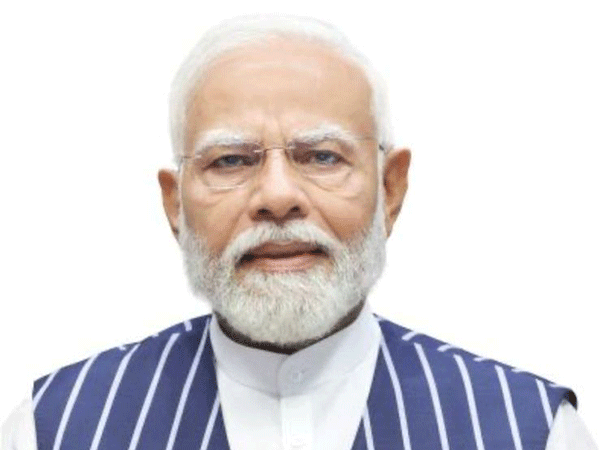
| Prime Minister Narendra Modi spearheaded labour legislation reform. --Photo Indian Embassy to Laos |
India introduces new Labour Codes to modernise workforce rules
India has announced sweeping reforms to its labour legislation through the introduction of four new Labour Codes in a bid to modernise workplace standards, simplify compliance, and expand protections for workers across the country.
Labour governance in India, which falls under the Concurrent List of the Constitution and is shared by both central and state governments, has undergone a major restructuring aimed at improving working conditions, easing compliance, and aligning regulations with the country’s evolving economic landscape.
India previously had 29 separate labour laws. However, many of these were enacted before independence and had become outdated amid technological and industrial changes.
Their complexity, overlapping mandates, and multiple enforcement authorities were seen as barriers to both worker welfare and business efficiency.
The Indian government, under Prime Minister Narendra Modi, therefore undertook a comprehensive reform effort to streamline the regulatory framework.
The reforms follow recommendations by the Second National Commission on Labour, which suggested consolidating existing legislation into four or five broad codes.
The Ministry of Labour and Employment subsequently began rationalising and simplifying the laws between 2015 and 2019 through extensive tripartite consultations with government officials, employer associations, industry representatives, and trade unions.
In November 2025, the government of India introduced four Labour Codes: the Code of Wages (2019), the Code on Social Security (2020), the Industrial Relations Code (2020), and the Occupational Safety, Health and Working Conditions Code (2020).
These reforms form part of India’s Atmanirbhar Bharat (Self-Reliant India) initiative.
The new Codes will ensure timely and universal minimum wages, equal pay and employment opportunities for women, expanded social security coverage for 400 million workers, mandatory free annual health check-ups, and full health protection for workers in hazardous sectors.
Other key objectives include modernising labour regulations to reflect contemporary work patterns and technological advancements, increasing employment opportunities by creating a more business-friendly environment, and promoting digital administration through online registration, licensing, and inspections.
The consolidation of laws is also expected to harmonise procedures, reduce administrative burdens, and enhance transparency.
The new Labour Codes represent one of the most significant updates to India’s labour framework in decades. Their successful implementation will depend on continued cooperation between central and state governments, employers, and workers.
Author: Ambassador of India to Laos, Yogeshwar Sangwan
(Latest Update December 12, 2025)
|

