 |
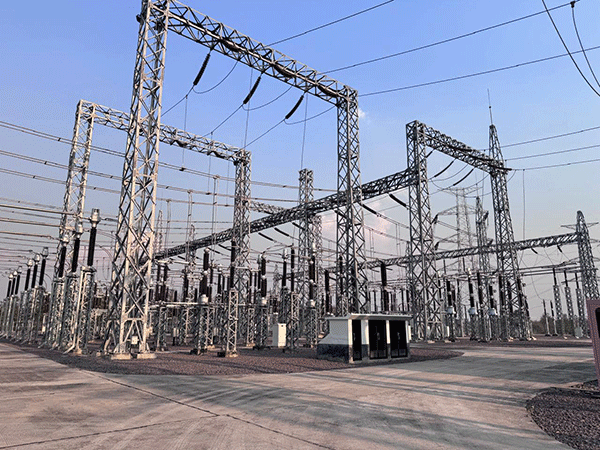
| An Électricité du Laos substation supplies power to the national grid. –Photo EDL |
EDL ramps up reforms to tackle debt, reduce electricity costs
Électricité du Laos (EDL) has stepped up organisational reform, debt restructuring, and energy price negotiation, aiming to ease financial pressures and help reduce the cost of electricity bills.
Speaking at a meeting of the State Enterprise Reform Committee this week, Managing Director of Électricité du Laos, Dr Akhomdeth Vongsay, said the reforms aim to stabilise the state enterprise and improve services for households and businesses.
The changes come as the government continues to push for stronger performance by state-owned enterprises after years of financial losses that have affected public finances and electricity prices.
In 2024 alone, fully-state-owned enterprises posted a combined loss of more than 2,358 billion kip, the committee’s Vice Chairman Dr Kikeo Chanthabouly told the meeting.
 |
| |
Mr Akhomdeth said organisational reform has been the starting point, with four rounds of restructuring completed to make EDL more efficient and its operations more transparent. As part of this effort, the company has cut 395 management positions to lower costs and speed up decision-making.
Meanwhile, several new units have been set up to strengthen oversight and daily operations.
These include an inspection department to improve internal checks, a legal and contracts department to manage power purchase agreements, an information and communication technology department to support modern systems, and a performance system based on key performance indicators and objectives and key results.
“To change our working culture and move closer to international standards, we had to simplify the structure,” he said.
Mr Akhomdeth said the impact is already clear. In 2025, EDL cut operating costs by 21 percent compared to 2024, while revenue rose by 12.8 percent.
Debt restructuring remains a central focus, as heavy debt repayments have long placed pressure on the company’s cash flow.
Under the reform programme, annual debt servicing has been reduced from US$600-700 million to about US$350-400 million, a major improvement that is easing financial strain and allowing EDL to focus more on its core business.
The approach includes replacing high-interest loans with lower-interest financing and negotiating longer repayment periods with creditors. Over the next five years, this is expected to improve cash flow and support long-term stability.
EDL has also moved firmly to recover unpaid bills. Outstanding retail customer debt has been reduced sharply and is expected to be fully cleared by early 2026, improving fairness between paying customers and those in arrears.
Regional power trading has also improved. Mr Akhomdeth said payment issues with Thailand have been resolved and energy trading is expected to generate a profit by the end of this year.
He added that talks with Power China over the Nam Ou hydropower dam are progressing through a joint committee, with a debt restructuring agreement expected to deliver positive results.
Another reform with direct public interest is the negotiation of electricity purchase prices. EDL has held talks with 55 power producers on the adjustment of sale prices, which is expected to save about US$20 million a year over the next five years.
“We are asking to purchase electricity according to the policy of ‘cheap at the start and gradually increasing at the end’ over 5 years, and we will save US$20 million per year,” he said.
Electricity prices will also be adjusted gradually to better reflect real costs, a move aimed at reducing losses while keeping prices manageable for consumers. Mr Akhomdeth said EDL aims to meet its loss-reduction targets by 2030.
To support the reform process, he proposed separating social debt, such as the cost of extending power lines to poor or remote communities, from commercial debt.
Another proposal is to clear long-standing arrears owed by government agencies and state enterprises, and allowing more hydropower output to serve domestic demand.
In addition, EDL calls for the government to consider converting hydropower projects with expired concessions from export supply to domestic use, which would lower costs and strengthen energy security.
By Times Reporters
(Latest Update December 19, 2025)
|

