Population and housing census now 69 percent complete
The country’s first fully digital Population and Housing Census is gaining momentum, with data collection progressing steadily nationwide and nearing completion in several areas, marking a major milestone in Laos’ national data and digital transformation efforts.
Nationwide, data collection is now 69 percent complete, according to the latest report from the Lao Statistics Bureau. The nationwide census operation, which began on November 3, is scheduled to conclude on December 28.
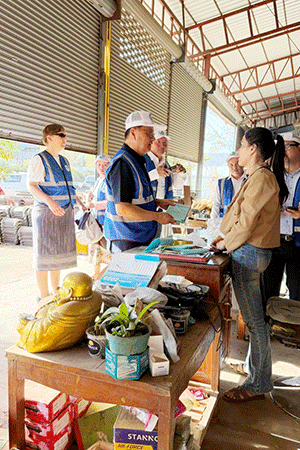 |
| Lao officials and representatives of development partners check census data in Champasak province. |
Minister of Finance, Mr Santiphab Phomvihane, together with representatives of development partners, visited census field sites on December 16 to observe ongoing data collection in Champasak, encourage census workers, and review progress and challenges in the implementation of the 5th Population and Housing Census.
During a meeting with Champasak authorities, Mr Santiphab and the delegation discussed the status of fieldwork and measures to ensure the census is completed on schedule.
According to a report from the Champasak census steering committee, enumeration has been completed in 867 out of 882 Enumeration Areas, reflecting strong coordination and commitment at the local level.
The delegation later visited selected villages to observe enumerators collecting data using digital tools, review progress on the ground, and discuss practical solutions to challenges encountered.
Speaking during the visit, Mr Santiphab, who is Deputy Head of the National Steering Committee for the 2025 Population and Housing Census, welcomed the significant progress achieved so far.
The 2025 Population and Housing Census is essential for generating reliable data that will inform policymaking and guide the country’s future development planning, he said.
UNFPA Representative Dr Bakhtiyor Kadyrov said the census goes far beyond a simple population count. He noted that the introduction of a fully digital census represents a major step forward in strengthening national data systems and supporting evidence-based, inclusive and forward-looking policies.
“It enables real-time monitoring and decision-making during fieldwork, improves data quality, and enhances transparency,” he said.
He added that the UNFPA was honoured to work alongside Australia, Switzerland, Luxembourg, Germany, the United States, China Aid and UNICEF in supporting Laos to build a modern, future-ready national statistical system.
Australian Ambassador to Laos Ms Megan Jones reaffirmed Australia’s support, describing the digital census as a strong foundation for digitalisation and sustainable development.
“This modern census will provide accurate, high-quality data that underpins good governance and effective planning,” she said.
“Reliable data will help prioritise investments, particularly in education and health, to ensure that economic growth benefits everyone.”
Planning for the 2025 census began in 2021, followed by four years of preparation with support from UNFPA and development partners, laying the groundwork for one of the most significant national data initiatives undertaken by Laos.
By Times Reporters
(Latest Update December 19, 2025)
|

