 |
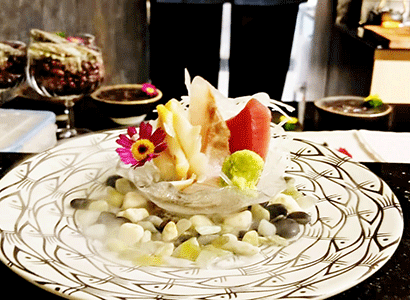 |
| The fresh fish, paired with freshly grated wasabi, is simply indescribable. |
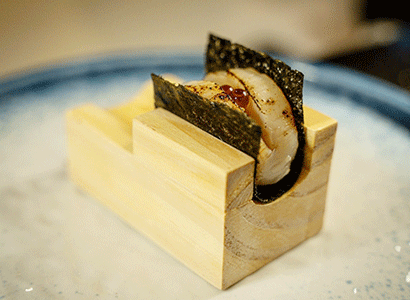
This single bite delivers the aroma of seaweed and the texture of shellfish. |
Leaving it to the chef: an Omakase experience in Vientiane
The city outside was still humming, motorbikes threading through the midday streets and the Mekong’s warmth lingering in the air. Then the door closed behind me, and Vientiane seemed to fall away. The restaurant, Tomo Omakase, sits quietly on the first floor of the CK Building, tucked behind Vientiane Secondary School and close to Patuxay Park—easy to reach, yet far removed from the city’s noise once inside.
It was my most unforgettable lunch, thoughtfully arranged by the restaurant’s owner, a gesture that set the tone for an experience defined by care, trust, and quiet attention to detail.
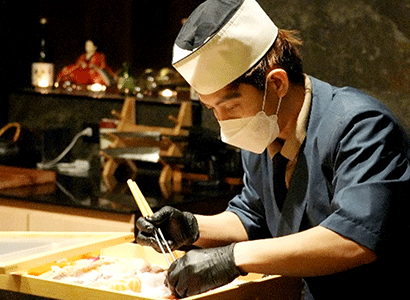 |
| With years of experience, the Japanese chef meticulously decorates each dish for diners seated at the counter, turning every plate into a work of art. |
Though I had previously experienced Japanese cuisine both in Laos and in Japan, this lunch felt different—truly authentic, with every dish offering flavours so fresh and precise that I felt like I was discovering them for the first time. Each bite brought surprise and delight, as if I were new to Japanese food all over again.
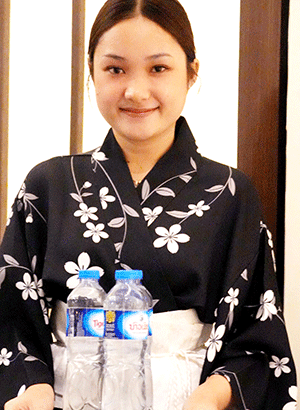
The dining room exudes a classic, calm atmosphere, enhanced by a smiling waitress who attends to diners with quiet attentiveness. A small wooden counter faces the chef, whose calm presence seems to slow time itself.
There was no menu to browse, no choices to make. Instead, a single invitation awaited: I leave it up to you. Tomo Omakase, literally “I leave it up to you”, felt like more than that. It was a conversation conducted in slices of fish, grains of rice, and the rhythmic sound of a knife on the board. Each piece was a deliberate statement, arriving with perfect timing.
A long-time Japanese chef, with years of experience, meticulously decorates each dish for the diners seated at the counter, turning every plate into a work of art. The chef began without ceremony. A sliver of fresh fish, paired with freshly grated wasabi, was placed gently before me. “Eat this now,” he said softly. And so the rhythm was set.
Piece by piece, the meal unfolded. The chef shared stories of the fish—where it came from, how long it had been aged, why it was prepared this way. Some pieces were lightly seared, others raw, some seasoned, others bare, letting the ingredient speak for itself. Watching him work was hypnotic: every motion economical, practised, and almost meditative. Rice was shaped carefully, supporting but never overpowering the fish. Every bite felt purposeful, every pause intentional.
Between courses, there was silence—but not emptiness. A pause to savour, to reflect, to reset the palate. In that quiet, I realised how rare it is to eat with such focus: no phone, no distractions, just the meal and the moment.
As the lunch progressed, the experience deepened. Lighter flavours gave way to richer ones; familiar textures mingled with surprising ones; subtle umami lingered on the tongue. The chef observed attentively, adjusting the pacing, smiling when a bite landed just as he intended.
I can still remember every moment of that lunch, every carefully prepared piece, even if the details of each dish have blurred. But the final course of tomo rolls stays vividly in my mind—a perfect summary of the artistry, flavour, and care that marked the entire meal.
 |
 |
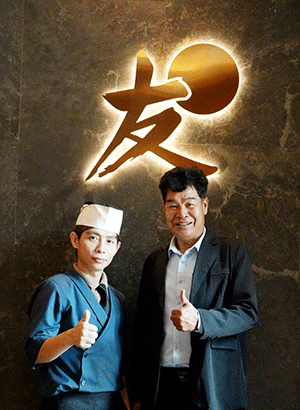
| The master chef (left) brings many years of experience in Japanese cuisine. |
A smiling waitress serves guests in the intimate dining room. |
TOMO is more than just a restaurant; it is an invitation—to step away from the outside world, to experience the true essence of each ingredient.
Walking back into the streets of Vientiane, the city felt louder, faster—but also somehow softer. Tomo Omakase had done exactly what it promised: it asked for trust, and in return offered immersion, delight, and quiet artistry. That lunch—arranged with thoughtfulness by the owner and guided by the chef—was not just a meal. It was an unforgettable journey, one step at a time.
By Bounfaeng Phaymanivong
(Latest Update March 11, 2026 )
|

