 |
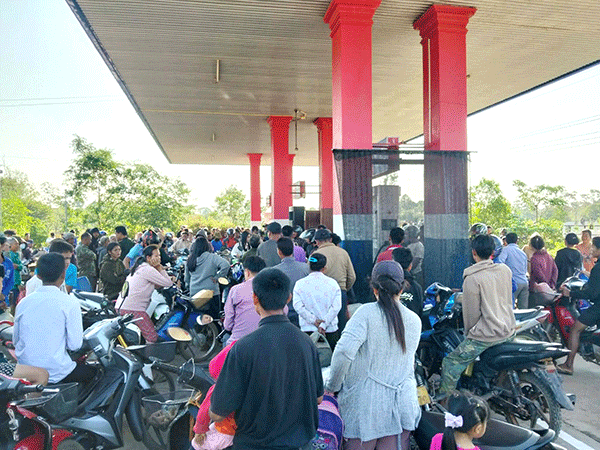
| Motorists line up to refuel their vehicles in Attapeu province. |
Govt takes steps to stabilise fuel price amid global volatility
The government and private sector have agreed to adjust the fuel pricing structure, including reducing the import tax on premium gasoline (95) to match that of regular gasoline (91), in a move aimed at easing pressure on retail fuel prices.
The tax cut was discussed at a meeting held by the Ministry of Industry and Commerce on Monday in response to Order No. 40/PM issued by Prime Minister Sonexay Siphandone on Friday.
 |
| Minister of Industry and Commerce, Mr Malaythong Kommasith, chairs a meeting on Monday. |
The meeting, chaired by Industry and Commerce Minister Malaythong Kommasith, brought together officials from the Ministry of Finance, Bank of the Lao PDR, Prime Minister’s Office, National Assembly, and business leaders, including from fuel and gas associations, importers and distributors.
The talks considered proposals and policy changes to address the current situation, particularly measures to guarantee a stable supply of fuel.
Representatives of fuel import and distribution companies said they would continue supplying fuel to the best of their ability, to ensure availability as normal and allay public concern over shortages.
Motorists in Vientiane and several provinces are already struggling after the temporary closure of many petrol stations. In response, the government has urged civil servants to work in shifts or, where possible, work from home in order to reduce fuel consumption and ease pressure on supplies.
The Prime Minister’s order also instructed ministries and state organisations to reduce physical participation in meetings that require long-distance travel. Instead, agencies are encouraged to conduct meetings via video link whenever possible to reduce fuel use.
The Ministry of Industry and Commerce will step up checks on fuel reserves and distribution systems to ensure adequate allocation across Laos, particularly in remote areas, to prevent supply disruption.
The Ministry of Finance will work alongside the ministry to issue updated price notifications so that retail prices reflect market conditions.
Officials discussed the use of a fuel price stabilisation mechanism, with a subsidy fund estimated between 300 billion and 600 billion kip available to intervene if global fuel prices fluctuate sharply.
The fund will be used in a targeted manner to help stabilise fuel prices and prevent sudden increases that could affect businesses and households.
Meanwhile, the cost of travel on buses from Vientiane to several northern and southern provinces has increased due to rising fuel costs. For example, a ticket for a journey from Vientiane to Don Khong Island in Champasak province rose from 300,000 kip to 400,000 kip earlier this month, with similar increases reported on other routes.
Under the Prime Minister’s order, ministries and state organisations are required to implement energy-saving measures, reduce administrative costs and strictly regulate the use of official vehicles and fuel, while encouraging the use of electric vehicles where appropriate.
Additional measures include improving public transport, promoting domestic electricity production, strengthening agricultural productivity, and ensuring sufficient foreign currency is available to buy imported fuel.
Local authorities nationwide have been instructed to circulate the order and monitor its implementation, while ministries and provincial administrations are required to submit regular progress reports to the Prime Minister’s Office.
By Times Reporters
(Latest Update March 17, 2026 )
|

