How will the global fuel shortage and skyrocketing prices affect Laos’ foreign currency reserves and inflation?
The armed conflict in the Middle East has caused fuel shortages in many countries, with prices rising steadily in the short term and expected to continue to rise if the fighting continues.
This situation has had a significant and widespread impact on people's livelihoods, with the economy struggling, prices rising, freight services being delayed, and the amount of foreign exchange needed to pay for oil imports likely to increase.
Laos is also affected by these impacts. So what will be the effect on foreign currency reserves and inflation if the war is prolonged, global fuel supplies are insufficient to meet demand, and prices in Laos continue to rise?
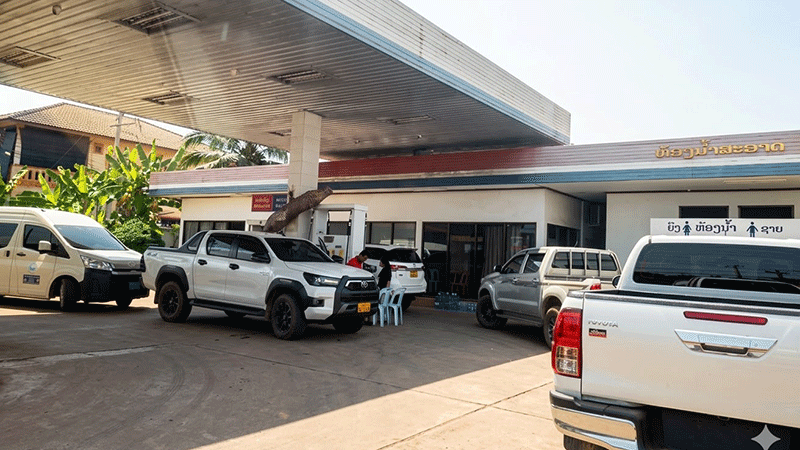
The fuel shortage has made it impossible for gas stations to provide full service. Some open in the morning and close in the afternoon, indicating that they have run out of fuel, while others display signs to inform customers that they are out of diesel or that they are out of gasoline. This has led to long lines of cars as drivers wait to get some precious fuel, even though they cannot fill their tanks. This has caused traffic jams in some places as cars block roads around gas stations.
According to statistics cited in the Bank of the Lao PDR’s 2025 Quarter 4 report, foreign currency reserves were sufficient to purchase 6.45 months’ worth of imports. The report also predicted the economic trend for the first quarter of 2026. Laos’ economy is expected to continue to grow in the first quarter of this year by 4.2 percent to 5.9 percent, with an improving trend but at a slower pace due to the risks inherent globally, such as trade disputes, political and military tensions with major trading and investment partners, rising energy prices, etc.
At the same time, the inflation rate in Laos during the current quarter will be quite volatile and may increase, especially in March, when inflation is expected to increase to double digits due to the impact of the war in the Middle East, which has affected oil prices worldwide, causing Laos to rapidly increase prices.
The inflation rate in January this year was recorded at 5.10 percent, rising to 6.20 percent in February, an increase of 1.10 percent.
The rise in oil prices has forced manufacturers, suppliers, and retail traders to adjust their prices accordingly.
To cope with the difficult situation and reduce the impact on the economy and people’s livelihoods, the government has implemented a number of measures.
These include rotating duties among office staff as appropriate so that people don’t have to travel to work every day. In addition, meetings will be organised remotely instead of requiring participants’ travel to other provinces. The use of electric vehicles instead of gasoline-powered vehicles is also encouraged, along with controls on the price of consumer goods and increased production of goods in Laos.
By Times Reporters
(Latest Update March 17, 2026 )
|