 |
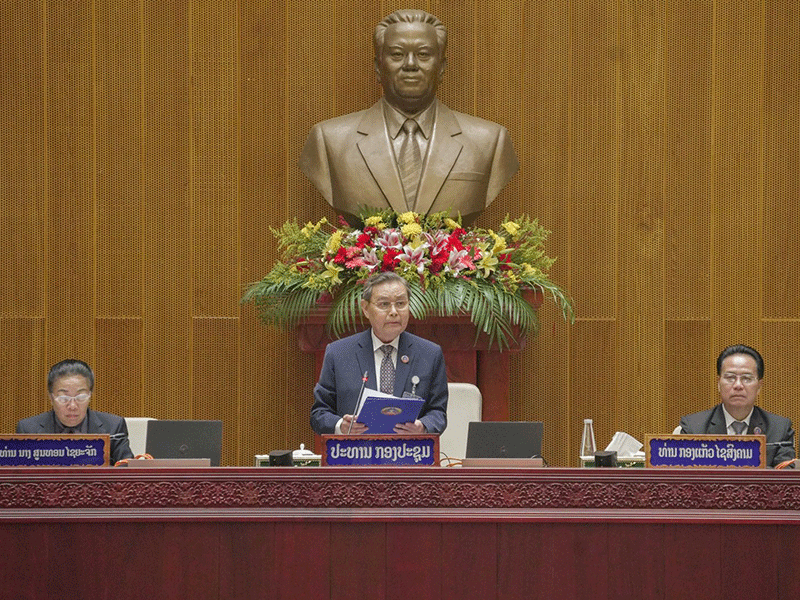
| President of the National Assembly, Dr Xaysomphone Phomvihane, stands with the Vice Presidents at the closing session of the 10th National Assembly on Friday. |
Assembly sets new development path, backs key reforms
The National Assembly ended the first sitting of its new term on Friday after endorsing new state leaders, the government’s five-year development plan, legal reforms, and the construction of a major railway.
The inaugural session of the 10th National Assembly took place from March 23-27 under the chairmanship of its President, Dr Xaysomphone Phomvihane, with state President Thongloun Sisoulith and other government leaders in attendance.
In his closing remarks, Dr Xaysomphone said the session achieved its goals and laid a strong foundation for the new term.
The Assembly elected and approved top leaders, including the President, Prime Minister, deputy prime ministers, and leaders of the legislature, judiciary and oversight bodies. It also approved the structure of the National Assembly and the government, along with cabinet members.
A key outcome was the endorsement of the 10th National Socio-Economic Development Plan for 2026-2030. The plan sets out six main goals and outlines more than 200 priority projects to drive economic growth, strengthen governance, and improve living standards.
The Assembly praised the government for progress made under the previous five-year development plan, noting gains in economic stability, political order, and social security. But it urged stronger direction and closer coordination to ensure results are delivered.
Members also approved in principle the construction of a railway linking Thakhaek in Khammuan province to Mu Gia on the Laos-Vietnam border. The railway will be built under the build-operate-transfer model and form part of the East-West Economic Corridor.
The railway is expected to boost regional connectivity and support Laos’ goal of becoming a land-linked country. The Assembly called on the government to review the concession terms carefully, ensure fair compensation for people who will lose land when the railway is built, and set clear roles for central and provincial authorities.
The session approved the five-year plans of the Supreme People’s Court and the Supreme People’s Procuracy, and endorsed the appointment of 15 judges to the Judicial Council. These moves aim to improve the quality of the courts and build public trust in the justice system.
The five-year work plans of the State Inspection Authority and the State Audit Organisation were also approved, with a focus on strengthening oversight and accountability.
In addition, the Assembly endorsed a five-year legislative plan covering 91 laws, including 19 new laws and 72 revisions. These will focus on governance, economic management, social development, and national defence and security.
Dr Xaysomphone said the outcomes reflected the collective effort of Assembly members.
“The achievements of this session are the fruit of the collective wisdom of National Assembly members who acted with great responsibility in reviewing each important issue,” he said. He also called for swift action to turn resolutions into results.
“I call on all sectors and the Lao people to take ownership and act on these resolutions so they deliver real benefits,” he said.
By Times Reporters
(Latest Update March 30, 2026)
|

