 |
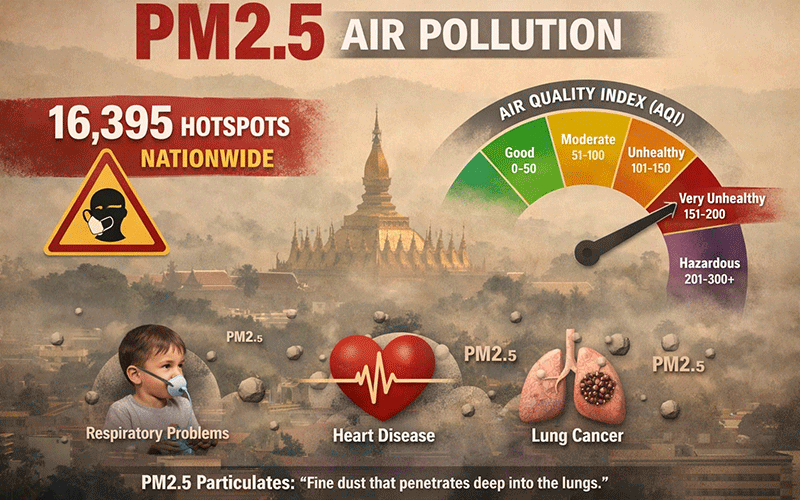
An image showing the various categories of PM2.5 pollution and the effects high levels can have on the body.
|
Air pollution exceeds safe levels, with PM2.5 levels soaring nationwide
Air pollution levels exceeded safety standards in almost all provinces up to and including April 1 this year, with 16,395 “hotspots” detected nationwide, raising serious concerns over PM2.5 pollution.
Deputy Director General of the Forestry Department, Ministry of Agriculture and Environment, Mr Khampheua Sirivong, said satellite monitoring through the Pollution Data Management System recorded these hotspots.
But, although the figure appears high, it is a decrease compared to those recorded in same period in the years 2023–2025.
Hotspots were detected at 5,360 locations in protected forest areas, 3,432 in production forests, 1,389 in conservation parks, 580 in national parks, and in 5,634 other places.
A record 895 hotspots were recorded on April 1, with the highest number reported in Luang Prabang at 220.
In addition, 103 hotspots were recorded in Oudomxay, 80 in Savannakhet, 75 in Xiengkhouang, 57 in Huaphan, 50 in Khammuan, 43 in Bolikhamxay, 42 in Vientiane, 41 in Xekong, 35 in Xayabouly, 33 in Phongsaly, 31 in Attapeu, 30 in Xaysomboun, 19 in Bokeo, 15 in Salavan, 13 in Luang Namtha, 7 in Champasak, but only 1 hotspot in the capital Vientiane.
Authorities said the main causes were human activities such as burning scrubland before the planting of new crops, burning grass to free up land for livestock, and burning in forests to enable the gathering of non-timber forest products.
The thick smog covering Vientiane and the north of Laos is mainly attributed to pollution carried by the wind from neighbouring countries.
On April 4, the Department of Meteorology and Hydrology recorded a PM2.5 concentration of 170 micrograms per cubic metre in That Luang village in Luang Prabang city, with an Air Quality Index (AQI) of 220.
In Nonsaart village, Xaythany district, Vientiane, PM2.5 was recorded at 158 micrograms per cubic metre, with an AQI of 208. Saphanxay village in Pakse district, Champasak province, recorded the same figures.
AQI levels are classified as follows: 0–50 (good), 51–100 (moderate), 101–150 (unhealthy for sensitive groups), 151–200 (unhealthy), 201–300 (very unhealthy), and above 300 (hazardous).
PM2.5 is considered the most dangerous air pollutant due to its ability to penetrate deep into the lungs and bloodstream.
Health authorities warn that children, older people, pregnant women, and people with underlying health conditions are at highest risk. Long-term exposure increases the risk of heart disease, stroke, lung cancer, and chronic respiratory illnesses.
The public is advised to monitor AQI levels regularly and follow health guidance, including wearing PM2.5-rated masks, using air purifiers indoors, and avoiding outdoor activities when pollution levels are high.
Reducing emissions alongside personal protective measures remains crucial, particularly during the peak of the burning season. People who experience symptoms such as sustained coughing or shortness of breath should seek medical attention.
By Times Reporters
(Latest Update April 6, 2026)
|

