The living traditions of Pi Mai Lao
The vibrant traditions of Pi Mai Lao, or Lao New Year, have been passed down through generations, remaining deeply rooted in the lives of the Lao people today.
These customs, practiced by our forefathers for hundreds of years, continue to be preserved and celebrated, reflecting the enduring spirit of Lao culture. The former Head of the Culture Research Institute, Mr Houmphanh Rattanavong, said that while Pi Mai celebrations are widely observed across the country, many people remain unaware of the deeper history behind this important festival.
Having spent years studying Lao culture, including the origins of Pi Mai Lao, he explained that the festival is closely tied to religious beliefs and spiritual practices. “Pi Mai is a great festival of the Buddhist religion,” he said. “During this time, Buddhists flock to temples to make merit through various activities. The most significant events of Pi Mai take place in temples.”
Each year, as Pi Mai approaches, temples across Laos come alive with activity. Devotees gather to gently pour scented water over Buddha statues, a symbolic act of cleansing and renewal. Many spend more time than usual in temples, eager to take part in these meaningful and time-honoured rituals.
However, the origins of Pi Mai traditions go beyond Buddhism alone. According to Mr Houmphanh, many customs associated with the festival can be traced back to ancient beliefs known as the Pham religion, which is rooted in Brahmanism and animism. Over centuries, Buddhism and these earlier belief systems became intertwined, shaping the unique cultural identity seen today.
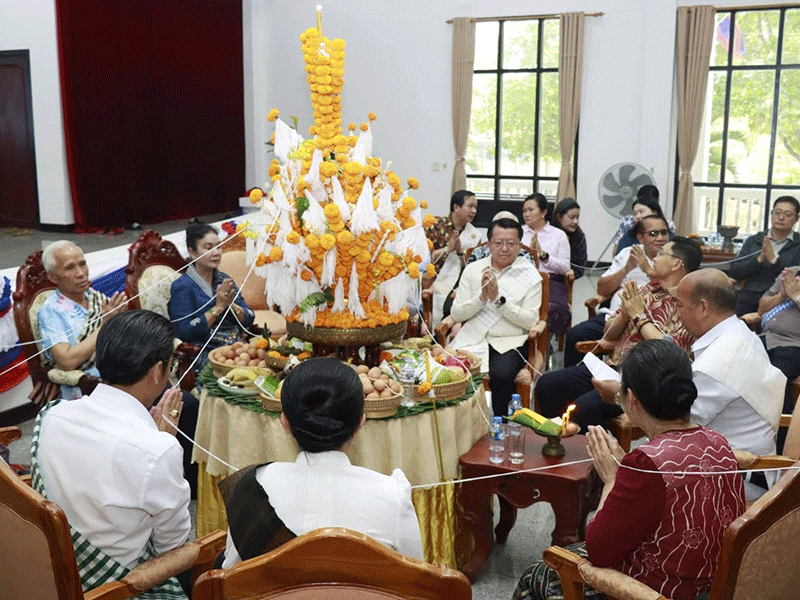
“If we look deeply into our history, we can see clear differences between the Pham and Buddhist traditions,” he explained. “For example, the Baci ceremony – held to wish happiness and good fortune – actually originates from the Pham belief system. It reflects both Brahmanist and animist influences.”
The timing of Pi Mai Lao in April also holds special significance. Many people have wondered why this particular month was chosen for the New Year.
Mr Houmphanh said that, according to ancient beliefs, the period from January until the arrival of Pi Mai in April was considered a “dark” or inauspicious time of the year. The New Year, therefore, marks the transition into a brighter and more prosperous period.
“In Buddhist understanding, the final day of the old year represents the end of darkness, while the New Year symbolises renewal and hope,” he said. “This is why our ancestors chose April as the time to celebrate.”
This belief continues to influence how people celebrate the occasion today. During Pi Mai, Buddhists make offerings at temples, seeking to wash away misfortune and begin the new year with a clean slate. For many, it is also a time of reflection – an opportunity to acknowledge past mistakes and to strive to become better individuals.
As the old year draws to a close, families come together to perform Baci ceremonies in their homes. People visit parents, relatives, friends and respected elders, offering blessings of happiness, good health, and prosperity. These gestures are not only acts of respect but also expressions of hope for a brighter future.
Temples host Baci ceremonies led by monks, believed to bring good fortune and spiritual protection. Other well-known traditions include building small sand stupas along river banks and releasing animals, symbolising compassion and the letting go of negativity.
Many of these customs closely mirror the practices of earlier generations. In the past, people would cut their hair and nails as a sign of renewal. Water that had been poured over Buddha statues was used to bathe, as it is believed to carry blessings. Similarly, water from Baci ceremonies was collected and used for cleansing rituals.
One lesser-known tradition involves the playful smearing of soot on a person’s face. According to Mr Houmphanh, this act once carried a deeper meaning.
“In earlier times, soot was applied to indicate that a person had behaved improperly, either in words or actions,” he said. “Anyone, regardless of status, could apply soot – even to highly respected individuals. It was a subtle but clear reminder of personal shortcomings.”
While the original meaning of this custom has faded, it survives in some parts of Laos today, where friends playfully mark each other’s faces in good humour.
Despite the passage of time and the influence of modern life, the essence of Pi Mai Lao remains unchanged. The festival continues to serve as a time for spiritual renewal, family unity and cultural reflection. Remembering the stories behind these traditions is essential. As Mr Houmphanh emphasised, understanding their origins can help younger generations appreciate the deeper values embedded in Lao culture.
As Pi Mai Lao returns each year, it is more than just a celebration – it is a living connection between the past and the present, reminding us of who we are and the traditions that continue to shape our identity.
By Phon Thikeo
(Latest UpdateApril 13, 2026)
|