 |
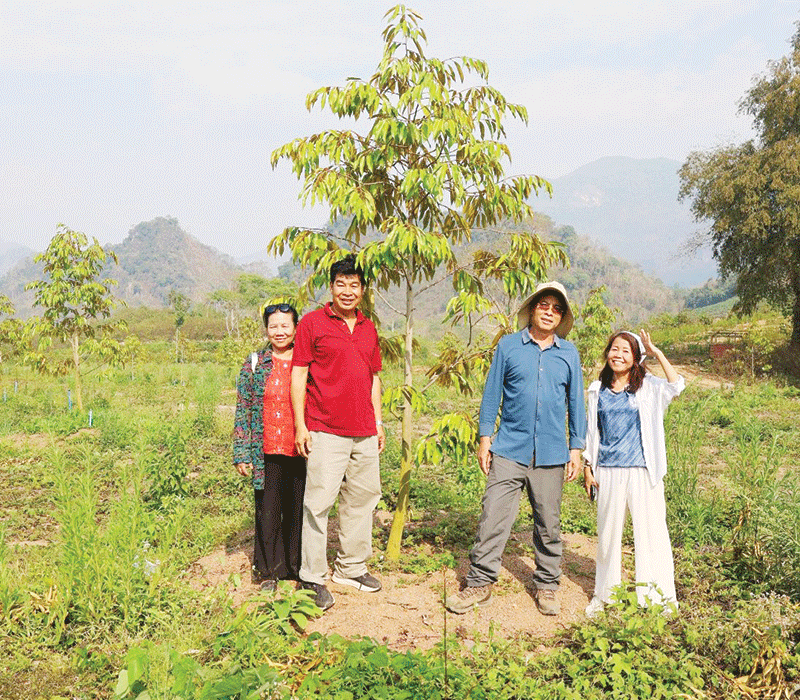
| Mr Bounthieng Duangpaseuth with the Vientiane Times team at his planned agritourism project. |
The infinite falls: How agritourism is redefining the Luang Prabang landscape
Picture yourself drifting down the emerald curves of the Khan River. As the sun dips behind the jagged limestone karsts of Luang Prabang, the air grows heavy with the scent of tropical blossoms. Then, you hear it—a distant, thunderous roar. Rounding the final bend, a spectacular 80-metre waterfall comes into view, its plumes of mist catching the golden light as they plunge down a sheer, ancient cliff.
This isn’t a hidden relic of the prehistoric jungle, however. It is the future of Lao tourism—a fusion of raw majesty and hi-tech engineering.
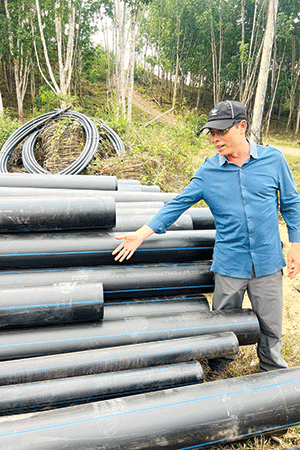 |
| Mr Bounthieng Duangpaseuth explains how he provides water using piping from Toyo Lao. |
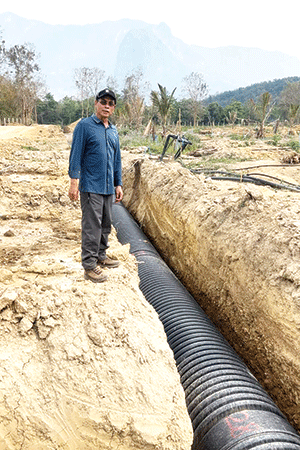 |
| Mr Bounthieng Duangpaseuth explains how he provides water using piping from Toyo Lao. |
Local developer Mr Bounthieng Duangpaseuth is the man behind this ambitious vision. In an interview with the Vientiane Times, he revealed his plans to transform 400 hectares of his land into an agritourism destination.
Located in Xieng Lorm village in Xieng Ngeun district, Luang Prabang province, just 20 kilometres from the UNESCO World Heritage centre, the project is set to redefine the Luang Prabang experience.
The centrepiece of the development is an “orchestrated” waterfall. While the cliff itself is a natural wonder, the flow of water will be expertly managed to ensure year-round beauty.
“The landscape gifted us with this magnificent cliff,” Mr Bounthieng explains, gesturing towards the rugged terrain. “We are now installing a sophisticated water system that allows us to control the scale of the falls. In the rainy season, we harness mountain runoff and the Sae River; in the dry season, we pump water from the Khan River, allowing it to tumble back into its source in a continuous cycle.”
“It will offer a completely different feeling to anything else in the area,” he says. “It is a marriage of the landscape—our rivers, forests and mountains—with modern ingenuity.”
For years, this land was occupied by rubber and teak plantations. However, Mr Bounthieng saw an opportunity to create something more sustainable and interactive. He is systematically replacing the timber with “green gold” in the form of durian.
Above the cliffs lies a sprawling plateau dedicated to agritourism. Of the 80 hectares earmarked for durian, 40 are already lush with two-year-old trees. In just three years, these orchards will bear fruit, ready for both export and “pick-your-own” tourist experiences.
“We have 12,000 saplings ready for planting,” Mr Bounthieng says. “Alongside the durian, we are planting coconut groves and fields of flowers. We want to create viewpoints at different elevations so visitors can truly appreciate the scale of the landscape.”
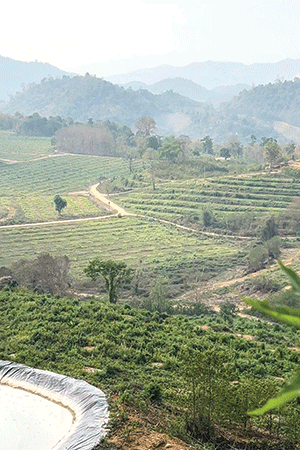 |
| A general view of the varied landscape that forms the project site. |
Creating a mountain-top oasis requires more than just a green thumb; it requires a massive investment. Mr Bounthieng has invested about US$400,000 in the piping and water system to bring his vision to life.
He uses high-grade products from Toyo Industry Lao Factory Sole Company Limited. These Lao-made pipes were chosen for their durability and the speed with which they can be installed in challenging, vertical terrain.
“These are high-quality, locally made products,” Mr Bounthieng says. “They are durable and fast to install, making them a very efficient investment for a project of this scale.”
The system feeds into a massive high-altitude reservoir, ensuring a steady supply for both the crops and the waterfall. Perhaps most impressively, the entire network is digitised, using Wi-Fi-enabled technology for precise, automatic control.
As Luang Prabang continues to draw record numbers of visitors, the need for diverse activities has never been greater. For Mr Bounthieng, this project is a labour of love and a gift to his home province.
“I wanted to create a new product for Luang Prabang that complements our famous cultural and natural sites,” he says. “By providing more activities and unique landscapes, we give visitors a reason to stay longer, explore further, and see a different side of our beautiful country.”
Construction is moving at a brisk pace and, if all goes to plan, the first boats will be catching the spray of the Khan River’s newest wonder by next year. For the travellers of 2027, the journey down the river is about to become a lot more spectacular.
By Times Reporters
(Latest UpdateApril 27, 2026)
|

