 |
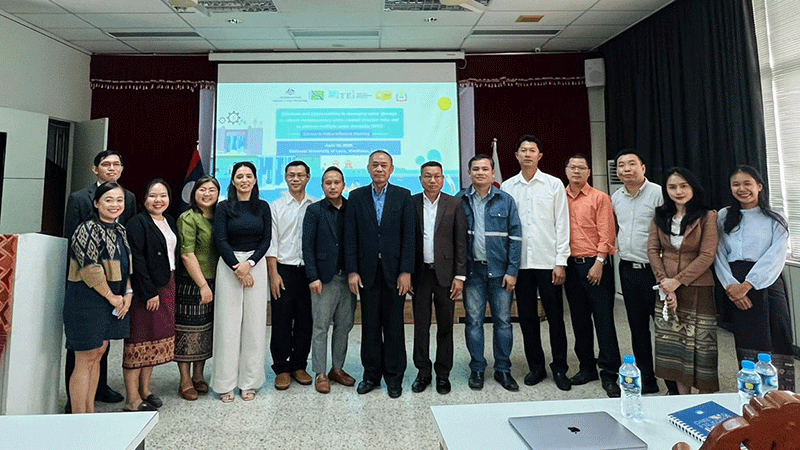
| A group of experts, policy planners and local leaders last week attended a meeting to discuss solutions and opportunities in managing water storage. |
Shaping a more equitable and water-secure Mekong through integrated water storage management
For generations, the Mekong River has been the lifeblood of Southeast Asia, setting the pace for farming, fishing, and daily life. But today, that rhythm is changing. New dams and unpredictable weather are shifting how the river flows, leaving the region in need of an “SOS”.
This isn’t just a cry for help; it is a call for new Solutions and Opportunities in Managing Water Storage in the Mekong between Laos and Thailand.
The SOS project is implemented by Stockholm Environment Institute (SEI), Asia Center in partnership with National University of Laos (NUOL), Mahasarakham University (MSU) and Thailand Environment Institute (TEI), funded by Mekong-Australia Partnership (MAP), the Department of Foreign Affairs and Trade (DFAT), Australia, under the Mekong Thought Leadership and Think Tanks Network (MTT) Program.
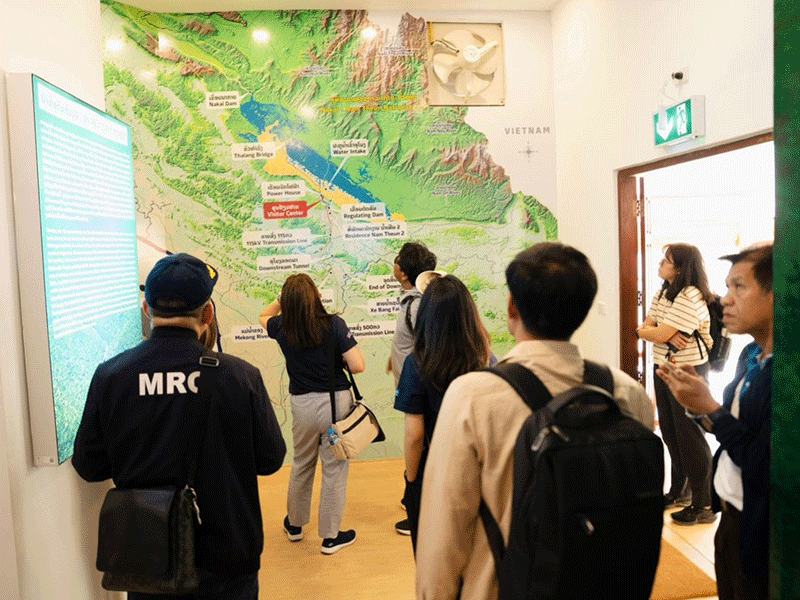 |
Last Thursday, the project called a group of experts, policy planners and local leaders to discuss a tough reality: while we are building more dams and infrastructure, the benefits aren’t reaching everyone. In fact, for many communities, the risks are growing.
In places like Pakkading and Xebangfai, the meeting highlighted a major problem: the “digital divide”. Most river- and dam-related warnings today are sent through Facebook or WhatsApp. While this is fast, it completely misses elderly residents and poor families who don’t have smartphones.
Even traditional methods are struggling. In some parts of Laos, village loudspeakers are often broken. This means that when a dam needs to release water, the warning never reaches remote homes. People only realise the danger when the water is already on their doorstep, leading to preventable property damage and fear.
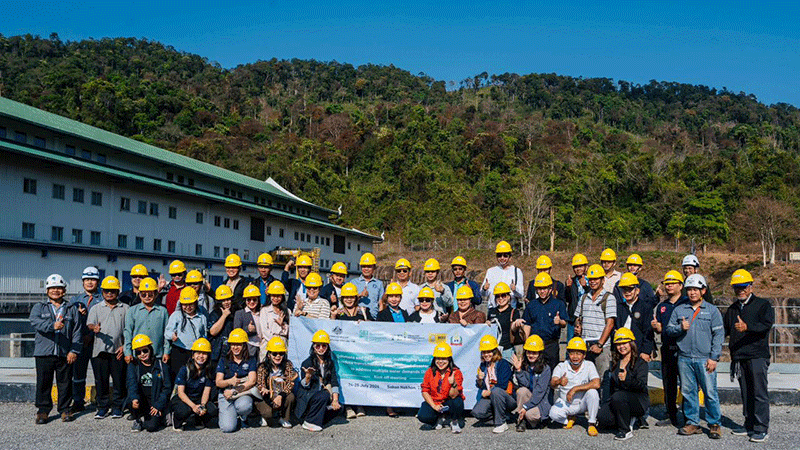 |
| The project team visited Nam Theun 2 in Khammuan province. |
The meeting looked at how these water issues affect people differently. This is often called a “GEDSI” focus, looking at gender, disability, and social inclusion.
The findings were clear: women often bear the heaviest load. In the Xebangfai river basin, the water has become too salty. Since women are usually responsible for the household’s water, they are forced to buy bottled water, which is driving families into debt.
Furthermore, while women are often involved in the early stages of planning water projects, they are usually pushed out when the actual work begins. The goal now is to move women from being “passive participants” to having real leadership roles in River Basin Committees.
The “SOS” project is studying eight different sites—five “grey” sites (like dams) and three “green” sites (natural wetlands)—across Thailand and Laos. The idea is to find a balance between the two to support benefit sharing and transboundary flood and drought mitigation.
Some things are already working well: Better Data: Projects like NT1 and NT2 in Laos are using real-time weather stations to track storms and manage water levels before problems start. Local Resilience: Villagers aren’t just waiting for help; many have adapted by switching to dry-season rice farming to handle the changing river patterns. Redefining “Benefits”: The meeting argued that “benefit sharing” should mean more than just electricity. It should include access to safe drinking water, protecting native fish stocks, and helping people find new ways to make a living.
The vision for the next three years is what experts call “Spiderweb Governance”. This means creating a tight network of cooperation between Thailand and Laos.
The plan is to stop working in silos and start sharing weather and hydrological data as business as usual between two countries, particularly at the provincial level. It also includes building a “hybrid” warning system that uses both digital alerts and fixed loudspeakers so that no one is left behind.Improvement of water storage coordination and cooperation for both gray and green water storage is crucial in the Mekong region to maximise the benefits and reduce negative impacts.
As the meeting concluded, the message was simple: water storage shouldn’t just be about concrete and power. It must be about people and wetland ecosystems. By combining modern technology with a human touch and integrated water storage management, the Mekong region can build a future where every community regardless of their economic status or location is safe and included.
By Keoxomohou Sakdavong
(Latest Update May 8, 2026)
|

