 |
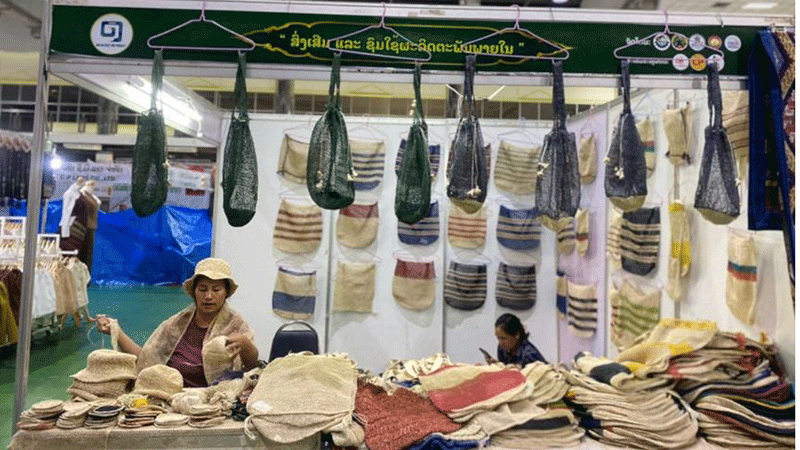
All the displayed items are handmade using the fibres of Kheua Piad.
|
Kheua Piad: The jungle vine weaving hope for Khmu women
In the forested hills of northern Laos, a resilient jungle vine known as Kheua Piad is quietly transforming lives. Once used solely for household items, this natural resource is now an important source of income for the Khmu ethnic group, especially in Oudomxay province, where it has become a symbol of cultural identity and economic opportunity.
The plant, also known by its Japanese name of kudzu, grows abundantly across northern Laos, southeastern China, southern Japan, and parts of the southern United States. In Oudomxay, where many Khmu families live, Kheua Piad has long been part of their daily lives.
For generations, Khmu women have harvested the vine to produce durable natural fibres. These are then processed into silk-like threads and woven using techniques similar to crochet or carpet weaving, often forming traditional patterns inspired by nature.
 |
 |
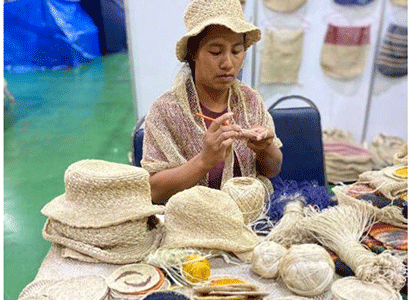
| Ms Khom weaves eco-friendly products from Kheua Piad fibres. |
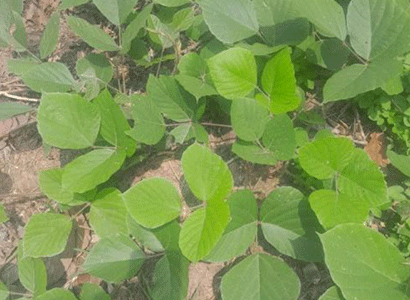
The Kheua Piad vine, which grows wild in northern Laos, is valued for its strong fibres used in traditional weaving by the Khmu ethnic group. |
Today, this humble jungle vine is playing a much bigger role, offering hope and a sustainable source of income to families in remote areas.
One woman helping lead this quiet transformation is Ms Khom Chuengtawalat, a mother from Mang village in Beng district of Oudomxay province. Her story reflects a powerful blend of tradition, creativity and perseverance.
“Before 2018, I worked as a rubber tapper,” she said. “It was tough work, but it helped put food on the table. Everything changed after I gave birth. I couldn’t leave the house anymore, my baby was too young, and there was no one else to cook or care for him while I worked.
“The thought of leaving him alone tore at my heart. That’s when I knew I had to find a way to earn a living from home, something that would allow me to be both a mother and a provider.”
With limited options, Ms Khom turned to Kheua Piad, the plant that had always grown in nearby forests. Inspired by foreign tutorials on YouTube, she began experimenting with new weaving methods. By combining global ideas with local knowledge, she learned to craft attractive and functional bags from Kheua Piad fibres. Her handmade items soon caught the interest of other villagers, and the idea began to grow.
The process of making of Kheua Piad products begins in the rainy season, when the vines are at their strongest. Once harvested, the vines are dried in the sun and soaked to soften the bark. Women in the village then peel away the outer layer and extract the soft inner fibres by hand. These are twisted into strands and rubbed against the leg to create long, smooth threads. The finished thread is then ready to be woven into various traditional Kheua Piad items.
The weaving technique involves looping and knotting the threads into intricate patterns. One of the most popular motifs is shaped like a fish hook, believed to symbolise abundance and good fortune in Khmu culture.
To give each Kheua Piad product its own unique appearance, the artisans rely on traditional dyeing methods passed down from their parents and elders. Based on local wisdom, they use natural materials such as tree bark, turmeric, leaves and other plant-based ingredients to create vibrant, earthy colours. This creative use of nature not only adds beauty and character to the woven items but ensures the process remains environmentally friendly and sustainable, just as it has been for generations.
What started as a way to make simple straw bags has now expanded into a wide variety of products. Today, Ms Khom and her fellow villagers produce coasters, tablecloths, scarves, skirts, trousers, shirts and hats, all woven from Kheua Piad. Each item reflects the craftsmanship and cultural heritage of the Khmu people.
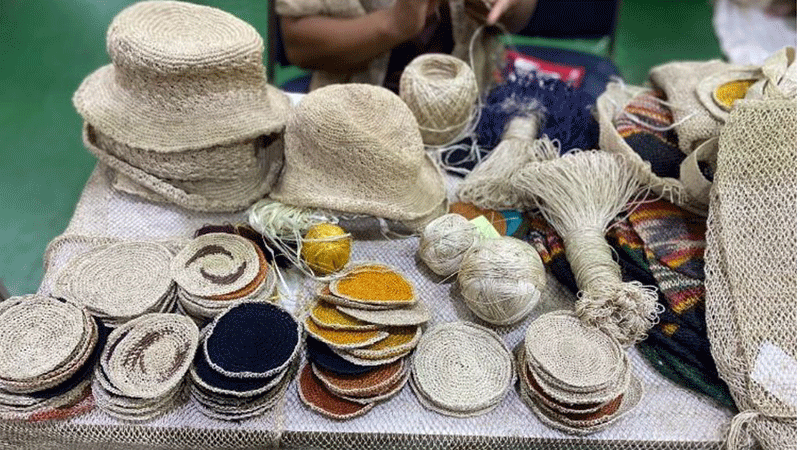 |
Coasters, hats and fibres made from Kheua Piad.
|
Currently, the group has around 100 members and plays a key role in reducing poverty in the region. It creates meaningful opportunities for women, especially mothers such as Ms Khom, who can now earn a steady income from home while caring for their families.
However, despite this progress, challenges remain. The products are mostly sold at local fairs and events, with little presence on digital platforms.
“We have the skills and the products,” Ms Khom said, “but we don’t yet have access to online markets where more people can see and buy our work.”
With more support in areas such as digital literacy, online marketing and product development, these artisans could significantly expand their reach. Experts say that promoting the Kheua Piad industry through e-commerce platforms could not only increase incomes but raise awareness of Khmu culture and sustainable living practices.
If you’re looking for an authentic cultural experience, a visit to Mang Village in Beng district of Oudomxay province is a journey worth taking. Nestled in the lush mountains of northern Laos, this peaceful village is home to the Khmu people, who live in harmony with nature and preserve traditional ways of life through farming, weaving and spiritual rituals. The village can be reached by road from Xay district, followed by a scenic drive through winding hills and quiet countryside. It’s a perfect opportunity to immerse yourself in the beauty of rural Laos and witness the rich heritage of one of its oldest ethnic groups.
Kheua Piad may appear to be just another forest vine, but in the hands of Khmu women, it has become a lifeline. More than a source of income, it represents a bridge between generations, preserving the past while building a better future.
By Sengchalean Phommakhan
(Latest Update May 15, 2025)
|

