 |
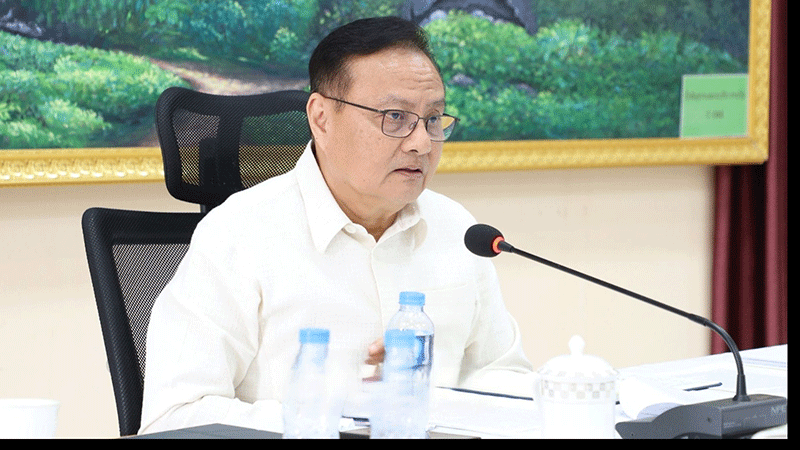
| Mr Santiphab Phomvihane addresses the meeting. |
Govt pushes for stronger debt management
The government is stepping up efforts to strengthen public debt management and tighten controls on inefficient borrowing as Laos’ public debt remains high despite progress in reducing debt levels in recent years.
The renewed push was highlighted during the 2nd Plenary Meeting of the Party Committee of the Ministry of Finance held on Friday, where senior officials reviewed fiscal reforms and measures aimed at ensuring economic stability.
Party Central Committee member and Secretary of the Ministry’s Party Committee, Mr Santiphab Phomvihane, called for stronger public debt restructuring and more responsible borrowing practices to support the government’s broader fiscal consolidation efforts.
The measures are intended to reinforce tighter fiscal discipline, improve public finance management, and help maintain macroeconomic stability while boosting domestic revenue collection to nearly 20 percent of gross domestic product (GDP).
Laos has made significant progress in reducing its debt to 88 percent of GDP in 2025 from 112 percent in 2022, reflecting ongoing efforts to improve fiscal management and restructure liabilities. Public debt is also projected to remain below 70 percent of GDP in the years ahead.
Mr Santiphab, who is also Deputy Prime Minister and Minister of Finance, instructed the relevant sectors to take more responsibility for assessing and restructuring public debt while limiting high-interest and inefficient borrowing.
The meeting was attended by alternate members of the Party Central Committee, deputy secretaries of the Ministry’s Party Committee, and other committee members.
Participants discussed ways to speed up implementation of the resolution adopted by the 4th Congress of the finance ministry’s Party Committee and reviewed measures linked to the resolution passed at the 1st Extraordinary Session of the 10th National Assembly concerning the finance sector.
Reports presented at the meeting reviewed progress in revenue collection, expenditure management, international cooperation, modernisation, statistics, and other areas under the supervision of the Ministry of Finance.
On state revenue collection, Mr Santiphab urged authorities to expand revenue sources, including land and environmental taxes, while accelerating modernisation and the wider use of electronic invoicing to improve efficiency and transparency.
He also stressed the need to strengthen expenditure approval and budget disbursement procedures through modern management systems to ensure greater accountability and cost-effectiveness in public spending.
In addition, the Deputy Prime Minister called for stronger human resource management within the ministry through merit-based promotion policies that prioritise ethics, capability, and collective interests.
He further underscored the importance of implementing the Politburo’s resolution on building an independent and self-reliant economy capable of delivering sustainable development outcomes.
Mr Santiphab called on Party committees of the Ministry of Finance to strengthen political responsibility and actively implement reforms aimed at modernising public finance management and promoting strong, green, and sustainable socio-economic development.
By Times Reporters
(Latest Update May 19, 2026)
|

