 |
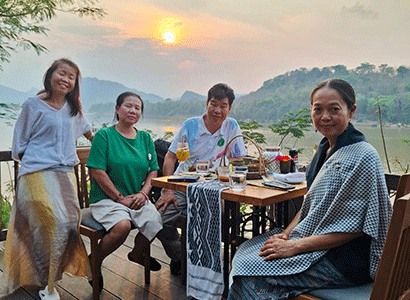
Mrs Veomanee Douangdala with guests at her restaurant. |
Where the sunset meets the loom: how Ock Pop Tok threaded a 25-year legacy along the Mekong
As the sun begins its slow descent over the Mekong River, casting a soft amber and violet glow across the water, a quiet magic settles over the riverside tropical garden of the Ock Pop Tok Living Crafts Centre.
Located just a short, scenic drive from the heart of Luang Prabang’s UNESCO World Heritage town, this vibrant hub has spent a quarter of a century quietly revolutionising the preservation of Lao heritage.
While many visitors first discover Ock Pop Tok through its boutique shops in town, those who step aboard the centre’s complimentary electric tuk-tuk find themselves transported to a stunning 100-metre riverfront sanctuary.
Here, the ancient art of weaving transitions seamlessly into a space for cultural dialogue, sustainable hospitality, and what is widely regarded as one of the most breathtaking sunset dining spots in the region.
A dream born of cultural exchange
Ock Pop Tok—a name meaning "East Meets West" in Lao—reflects the philosophy of its co-founders, Mrs Veomanee Douangdala and her English friend Joanna Smith. Established at the end of 2000, the social enterprise grew out of a shared passion for textiles and a mutual desire to showcase Lao craftsmanship to the world.
"We didn't want to have a Western name," recalls Veomanee, who grew up in a traditional weaving family in Xangkhong village, learning the complex craft from her mother. "We want to maintain our design philosophy of cultural sharing between East and West. And we had quite a big dream when we started."
That dream sparked in 1999 when Veomanee taught Joanna to weave at her mother’s home studio. The fusion of traditional Lao techniques with a contemporary international eye created an immediate epiphany.
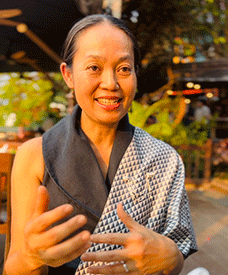 |
Mrs Veomanee Douangdala |
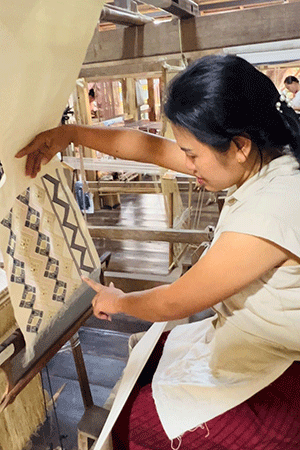 |
A local woman working at Ock Pop Tok shows the craftsmanship involved in producing a Japanese design. |
"She put the colour palette on the textile, and that just gave me a 'wow'," Veomanee says. "How can a foreigner create these colours that we never thought of? It was very modern, like London or New York colours. We realised we have to be open-minded. We have to make something that people can take home, but still remember us."
From a humble beginning with just five weavers, Ock Pop Tok has grown slowly over 25 years into a flourishing "big tree". Today, the enterprise employs over 80 full-time staff and supports more than 500 families spanning 17 ethnic groups across 14 provinces, from Phongsaly in the far north down to Salavan in the south.
From fibre to finished product: a living cultural centre
During the pandemic, the Lao government officially designated Ock Pop Tok as Luang Prabang's first private Cultural Centre. Far from being a static museum or a mere tourist trap, it serves as an active educational ecosystem. Local primary school groups, university students, and provincial women’s committees regularly gather here to look and learn.
Visitors can walk into the lush grounds for a free, guided textile tour that demystifies the entire production process, from tracking the lifecycle of a silk cocoon to watching skilled artisans at work on intricate Hmong batiks, natural dyeing, and bamboo basket weaving.
For those seeking a hands-on connection, the centre offers workshops ranging from a two-hour introduction to immersive three-day masterclasses, allowing guests to create their own pieces alongside local weavers.
Dining and staying on the Silk Road
As the centre evolved, hospitality naturally followed textile artistry. To complement the sensory experience of the looms, the enterprise opened the Silk Road Cafe, positioned high up on the Mekong riverbank.
The cafe's culinary concept is cleverly intertwined with its textile identity. "Our head chef used to be a weaver," Veomanee says. "So we opened the Silk Road Cafe, which heightens the link with silk and textiles. We have a menu based around the Silk Road, starting from China, through the Middle East, to Europe. But we mainly offer traditional Lao food with vegetarian options."
Adjacent to the cafe sits a boutique five-bedroom guest villa. Each room is styled around a textile theme, offering an immersive stay where guests can wake up to the sound of the river, attend weaving classes by day, and unwind by the water at night.
 |
The riverfront is family-friendly, featuring a "treasure hunt" designed to keep children engaged. Young explorers search the grounds to decode weaving motifs, uncover the secrets of silk cocoons, and receive a small handmade gift at the end of their quest.
Uplifting communities and eyeing the global stage
At its core, Ock Pop Tok remains anchored to the principles of fair trade and women's empowerment—concepts that were far from mainstream when the business was founded two decades ago.
"Twenty-five years ago, ethical fashion was not popular," says Veomanee. "But this is how we grow together along with the many people who have worked with us from the beginning. We give opportunities mainly to women so that they can earn a decent income, recognition, and the chance to travel. We take our employees to many countries. It’s the experience of a lifetime for them, and they bring back that pride to share with other weavers."
The economic ripple effect has been profound. Countless weavers within the Ock Pop Tok network have been able to send their children to school and university, fundamentally elevating the quality of life in rural communities.
Looking ahead, Veomanee believes Lao textiles have immense untapped potential on the global luxury market. Ock Pop Tok is currently collaborating with international consultants to introduce high-end Lao fabrics into boutique fashion and luxury home decor brands in style capitals like New York and Singapore.
"When you travel abroad, you find that most people still don’t know about Laos," Veomanee says. "But Laos has the most beautiful, organic, handmade textiles in the region. We have the know-how and the knowledge. We can take this to the next level, and those benefits will flow directly back to the local community."
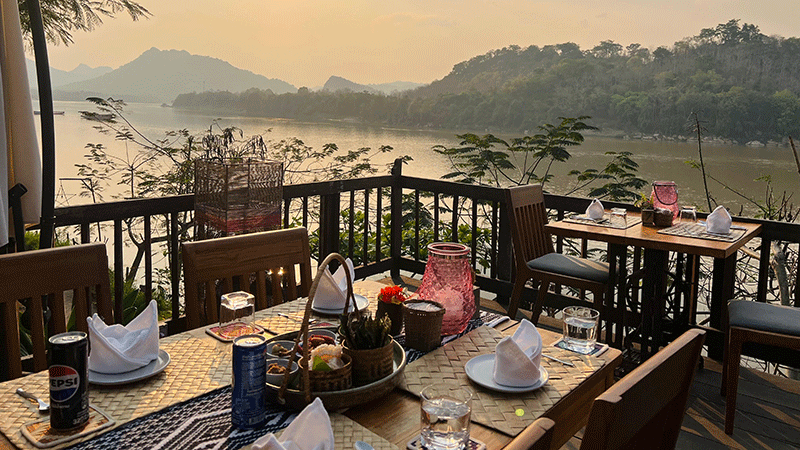 |
| A stunning view across the Mekong from Ock Pop Tok's Silk Road Café. |
Visiting Ock Pop Tok
Whether you are seeking a deep dive into artisanal heritage, a hands-on craft workshop, or simply a tranquil spot to watch the sun dip below the Mekong with a refreshing drink in hand, Ock Pop Tok offers an unparalleled Lao hospitality experience.
Getting There: Free transport is available from downtown Luang Prabang via the centre's signature electric tuk-tuks.
Vientiane Flagship: For travellers in the capital, Ock Pop Tok recently expanded its footprint by opening the Vientiane Lifestyle Shop near the Nam Phou fountain.
By Keoxomphou Sakdavong
(Latest Update May 26, 2026)
|

