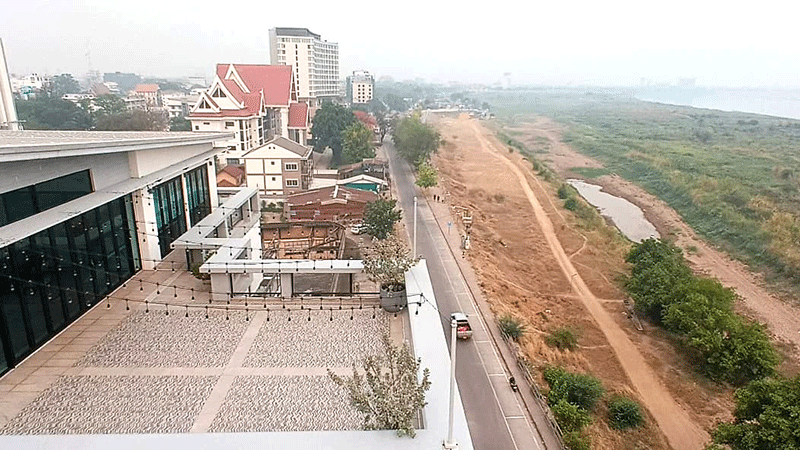
 |
| More investment is being poured into apartments and the hospitality sector in Vientiane, while infrastructure is also developing rapidly. |
Vientiane pushes for self-reliant growth, urban development
Vientiane authorities have set political stability, economic self-reliance, infrastructure development, and improvements in living standards as top priorities under the capital’s five-year Socio-Economic Development Plan for 2026-2030.
These priorities were highlighted during a meeting on Monday at the Vientiane Administration Office to review implementation of the socio-economic development plan for the first half of 2026 and outline directions for the second half of the year.
The meeting was attended by former senior Party Central Committee leader Mr Bouasone Bouphavanh, Deputy Secretary of the Vientiane Party Committee, Mr Thavixay Maoxomphou, and Deputy Secretary of the Party Committee and Chairman of the Vientiane Administrative Committee, Mr Sililatthongsinh Thongpheng, along with other senior Party and government officials, district leaders, and heads of departments.
Representing Vientiane, member of the Party Standing Committee and Vice Chairman of the Vientiane Administrative Committee, Mrs Vilayvone Chanthalaty, presented a report on progress made under the 10th Five-Year National Socio-Economic Development Plan in conjunction with Vientiane’s 2026-2030 development framework.
The report said the plan aims to implement the Resolution of the 12th National Party Congress, the Party’s 3rd Political Programme, the Resolution of the 8th Vientiane Party Congress, and the national socio-economic development strategy for 2026-2035.
The development framework is also intended to support Laos’ graduation from Least Developed Country status, fulfilment of the United Nations Sustainable Development Goals for 2030, and the Politburo’s Resolution on building an independent and self-reliant economy.
Under the national development strategy, Vientiane has adopted seven broad directions, six major goals and 24 priority work plans tailored to the capital’s development needs.
Key priorities include maintaining political stability and public order, strengthening local political foundations, improving living standards, resolving economic and financial difficulties, and promoting sustainable and high-quality economic growth.
Authorities also pledged to improve urban infrastructure and public utilities, ensure cleaner and greener urban management, strengthen disaster resilience, and expand education and healthcare services.The plan further emphasises human resource development, promotion of Lao cultural identity, modernisation of public administration, and stronger regional and international cooperation.
To achieve the overall objectives of the five-year plan, six main development goals are identified.
These include building an independent and self-reliant economy, developing a skilled workforce capable of using modern technology, improving livelihoods, protecting natural resources and the environment, strengthening regional and international connectivity, and improving state administration and governance.
At the conclusion of the meeting, participants were given advice by the chair of the meeting, who praised the achievements in national protection and socio-economic development while acknowledging ongoing economic and financial challenges.
He stressed the importance of implementing the vision outlined by Party Secretary General and President of Laos Thongloun Sisoulith, which calls for Laos to move away from dependency and firmly pursue the goal of building an independent and self-reliant economy.
Officials said that Vientiane, as the political, economic, cultural and social heart of Laos, must continue to implement the Resolution of the 12th Party Congress alongside the Resolution of Vientiane’s 8th Party Congress.
A recent report showed that Vientiane recorded average annual economic growth of 5.34 percent over the past five years, below the target of 7-8 percent set under the 2021-2025 national development plan.
Between 2020 and 2025, agriculture’s contribution to GDP declined from 14.3 percent to 13 percent, below the 14 percent target, while industry slipped slightly from 49.5 percent to 49 percent, but still meeting the target for this sector. The services sector rose from 36.2 percent to 38 percent, surpassing the 37 percent target.
Investment in development in Vientiane reached 104,783 billion kip, exceeding the five-year target by 28.16 percent. Official Development Assistance totalled 3,619 billion kip, while private investment reached 99,517 billion kip, both surpassing the target figures by more than 50 percent.
By Times Reporters
(Latest Update May 27, 2026)
|

