 |
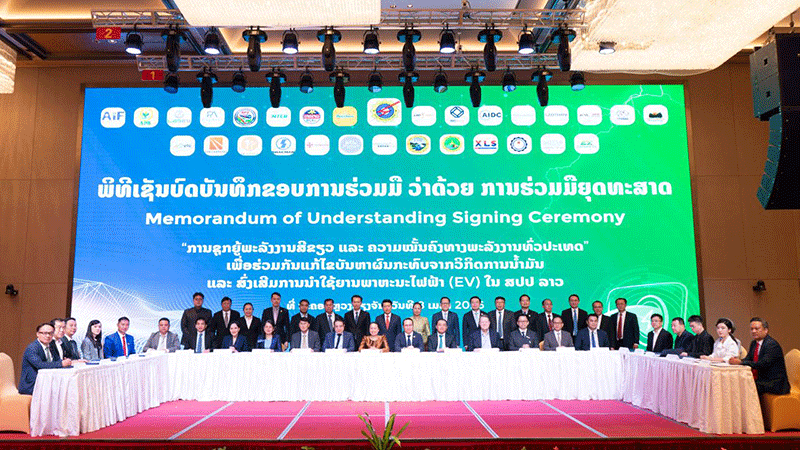
| Representatives from government agencies and private companies gather for the signing of a Memorandum of Understanding on electric vehicle use. |
Laos advocates use of EV trucks to counter soaring fuel price
The government is stepping up efforts to reduce fuel dependence by encouraging the use of electrically-powered trucks, through a nationwide cooperation agreement signed in Vientiane this week.
The initiative follows Prime Ministerial Order No. 40/PM issued on March 13, aimed at easing the impact of rising fuel prices on the economy and people’s living standards.
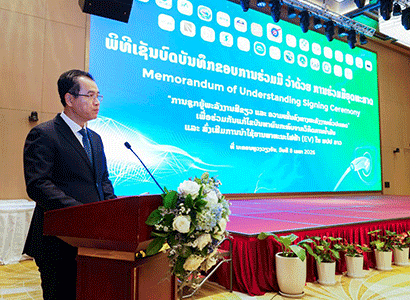 |
| Minister of Industry and Commerce, Mr Malaythong Kommasith. |
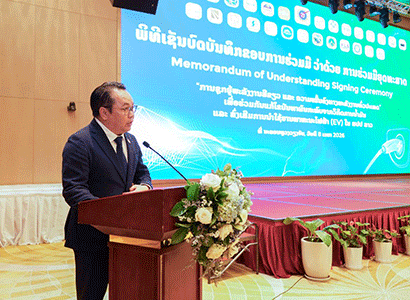 |
| Director General of Électricité du Laos, Dr Akhomdeth Vongsay. |
The current global unrest has triggered a fuel crisis, with sharp changes in supply and prices affecting Laos. In response, Électricité du Laos took the lead in bringing together state agencies and private businesses to promote the use of electric trucks, making use of the country’s abundant electricity resources.
To initiate this transition, Électricité du Laos (EDL) organised the signing of an agreement in Vientiane on April 8, involving 27 public and private groups.
These were Lao Thani Heavy Machinery Sole Co., Ltd.; JAC Motor Co Ltd.; CK Trading Import-Export Co., Ltd.; Shaanxi Heavy Duty Automobile Import and Export Co., Ltd.; Maniyom Auto Group Co., Ltd.; Phing Ann EV Co., Ltd.; Hongxin Import-Export Sole Co., Ltd.; AIDC Co., Ltd.; AIF Group Co., Ltd.; Extreme Lao EV Co., Ltd. (MEV); BlueDOT; Southeast Asia Tower Co., Ltd.; Lao Brewery Co., Ltd.; Lao Post Co., Ltd.; Inter Transport Co., Ltd.; Sopha Transport Co., Ltd.; Lorduangkham Transport Co., Ltd.; Bounlum Transport Co., Ltd.; Chansy Transport Co., Ltd.; Phatthaphong Transport Co., Ltd.; Lao Houngheuang Co., Ltd.; Vilabouly Development Construction Co., Ltd.; Inthra Corporation Co., Ltd.; Exim Logistics & Service Co., Ltd.; Banque pour le Commerce Extérieur Lao (BCEL); Agricultural Promotion Bank (APB); and BIC Bank Lao.
 |
The signatories include EV truck suppliers, EV truck charging installers and developers, transportation businesses (users), and financial institutions.
The agreement sets out a clear plan to support the gradual shift to electric trucks. Key priorities include setting up charging stations and battery-swap facilities, developing a centralised digital system for managing charging services and advance bookings, and studying loan options to help businesses purchase electric vehicles.
The Ministry of Industry and Commerce will also review and refine policies to support the transition, while encouraging the use of digital technology in energy management and transport operations.
The meeting acknowledged that introducing widespread use of electric trucks will be challenging. Current models can travel for only 100-150 kilometres per charge, far less than the 500-600 kilometres possible with fuel-powered trucks. This limits their use, especially for long-distance transport in mountainous areas.
In addition, there is currently no dedicated charging infrastructure for heavy vehicles. High-capacity power supply systems and battery-swap technology are still in the early stages of development. The cost of electric trucks also remains high, at more than twice that of fossil-fuel-powered vehicles, although operating costs become lower over time.
These constraints mean transport companies cannot immediately make the transition, but the new cooperation agreement aims to address each issue step by step through coordinated action among partners.
Director General of Électricité du Laos, Dr Akhomdeth Vongsay, said the initiative would help drive wider adoption of electric trucks across the country.
“EDL, together with its partners, believes we will be a strong force in expanding electric truck use,” the director was quoted as saying
“We call on the government to continue guiding this transition and to encourage more partners from both the public and private sectors to take part.”
He added that the shift would help make the Lao economy more sustainable, dynamic, and regionally competitive.
Minister of Industry and Commerce, Mr Malaythong Kommasith, said the initiative would reduce fuel imports and ease pressure on foreign currency reserves, while also cutting vehicle emissions and pollution.
This programme will improve transport efficiency through the use of digital technology and reduce long-term costs, especially for fuel and maintenance, he said.
He added that Laos should also expand the use of renewable energy, including solar and wind power, to support the growing demand for electricity for transport purposes.
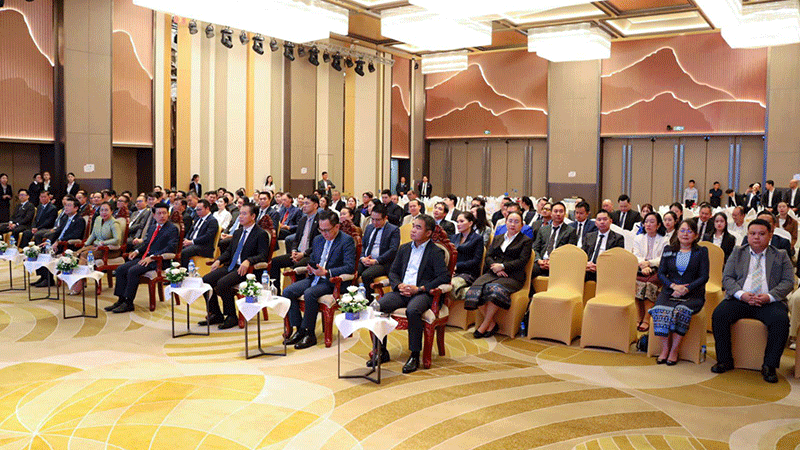
Senior leaders attending the agreement signing ceremony included Standing Deputy Prime Minister Mr Saleumxay Kommasith; Governor of the Bank of the Lao PDR, Mrs Bounkham Vorachit; Minister of Technology and Communications, Mr Santisouk Simmalavong; other senior officials and business leaders.
The agreement marks an important step as Laos works towards a cleaner energy future while building a more efficient and modern transport system.
By Times Reporters
(Latest UpdateApril 10, 2026)
|

