 |
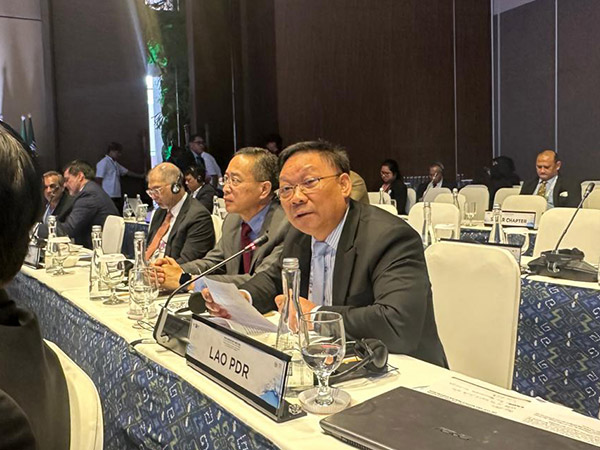
| Mr Khammouane Xomsihapanya. |
Lao voices heard at World Water Forum
Bali, Indonesia: Senior officials from the Lao government and its legislative branch are attending the 10th World Water Forum in Bali, Indonesia this week, pledging Laos’ commitment to upholding citizens’ right to access clean water and have sustainable use of this essential natural resource.
Deputy Chairman of the Economy, Technology and Environment Committee of the National Assembly, Mr Khammouane Xomsihapanya, delivered a statement on May 21 at the Parliamentary Session of the Forum.
Mr Khammouane said that as a member of the Inter-Parliamentary Union (IPU), Laos’ legislative body would collaborate with global counterparts to increase the number of people able to access clean and safe water.
According to a UNICEF report, about 2.2 billion people worldwide lack access to safely managed water services, with 115 million still collecting drinking water directly from rivers, lakes, and other surface water sources.
Mr Khammouane highlighted the main challenges which he said the global community must unite to address. These include water management and use, the impact of climate change on water security, capacity-building in water sanitation-related activities and programmes, and sustainable supplies of freshwater.
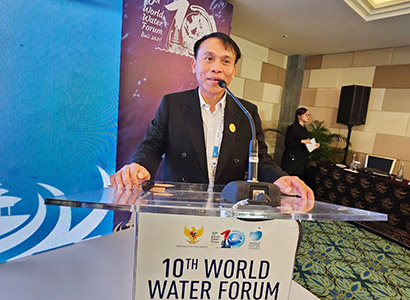 |
| Mr Oudomsack Philavong. |
He noted that Laos has abundant natural resources, with 90 percent of its territory in the Mekong Basin. However, only 11 percent of the water is utilised in various sectors.
To ensure sustainable water use, the National Assembly has approved laws and strategies on water resources and actively oversees their enforcement, he said.
Director General of the Water Resources Department at the Ministry of Natural Resources and Environment, Mr Oudomsack Philavong, also delivered a statement at the ministerial conference, one of the sessions at the forum, which runs until May 25.
Mr Oudomsack said water resources are essential for the survival of all living beings and must be managed carefully to ensure sustainability.
Increasing water demand due to population growth and socio-economic development has made water resource management more challenging, and intensified climate change is posing additional threats to water security.
To address these challenges, Laos has adopted policies and strategies on water resources and installed water information systems in key rivers to monitor and provide regular forecasts of water flow, flooding and drought, along with early warning measures.
Laos has made significant progress in achieving the water-related SDG6, evidenced by improvements in water supply coverage and the proportion of the population using improved drinking water sources, he added.
Regarding transboundary water resources management, Laos is working closely with neighbouring countries to balance development and conservation under the “One Mekong, One Spirit” initiative to achieve mutual benefits among riparian nations.
By
Ekaphone Phouthonesy
(Latest Update May 23, 2024)
|

